
- Home
- Products
- Hot
- About Us
- Services
- Industry
- Contact
Views: 0 Author: Site Editor Publish Time: 2026-09-05 Origin: Site


Shifting from bottled nitrogen or oxygen to air-assist cutting promises massive cost reductions. You can cut operational expenses dramatically. However, under-sizing or over-sizing your compressor immediately kills those margins. If you choose the wrong equipment, you will waste energy or halt production entirely. You need precise matching for optimal performance.
The 15 kW (approximately 20 HP) tier is arguably the most common entry point today. Mid-tier fabrication shops often select this size when upgrading their gas setups. They want independence from rigid gas delivery schedules. We see this transition happening constantly across the fabrication industry. This specific power tier provides an excellent balance of affordability and output.
This objective evaluation guide helps you determine if a 15kW unit provides specific flow, pressure, and purity. You will learn how to match these technical specifications to your exact cutting schedule. We will help you align the compressor capacity directly to your fiber laser wattage. By following these steps, you can confidently upgrade your facility.
Mismatching your compressor capacity against your laser head nozzle size creates serious production problems. You will quickly experience severe edge burring on finished parts. Dross accumulation will slow down your post-processing team. In many worst-case scenarios, your entire production line halts completely. Calculating laser cutter air demand requires careful planning rather than basic guesswork. You must base your sizing on hard data.
We must examine pressure versus flow dynamics carefully. A standard 15kW unit typically delivers 1.2 to 1.5 cubic meters per minute. It operates efficiently at 1.6 MPa or 16 Bar. Peak pressure matters heavily for piercing tough materials. However, sustained volumetric flow matters significantly more for continuous cutting. Air constantly pushes through specific nozzle diameters. These nozzles usually measure between 1.5mm and 2.0mm. If your air volume drops, cut quality degrades instantly.
We see highly specific sweet spots for supported laser wattages. A 15kW machine pairs perfectly alongside 1.5kW, 2kW, and 3kW fiber lasers. These combinations offer excellent stability and clean cuts. You can process thin to medium sheets continuously without waiting for pressure to build. This matching keeps your laser head moving at optimal speeds.
Borderline cases also exist in busy shops. Pushing a 15kW unit on a 6kW laser introduces heavy operational tradeoffs. You will inevitably sacrifice cutting thickness. You must also reduce cutting speed to maintain acceptable edge quality. If you cut thick carbon steel plates daily, this setup will struggle to clear molten material from the kerf.
Table 1: Laser Wattage Suitability Matrix for 15kW Units
| Fiber Laser Wattage | Suitability Rating | Optimal Material Thickness | Expected Cut Quality |
|---|---|---|---|
| 1.5kW - 2kW | Excellent | Carbon Steel: up to 8mm | High, dross-free edges |
| 3kW | Very Good | Carbon Steel: up to 10mm | Smooth, minimal burring |
| 4kW | Moderate | Stainless Steel: up to 3mm | Acceptable, slower speeds needed |
| 6kW+ | Poor (Borderline) | Not recommended for thick plates | High risk of pressure drop |
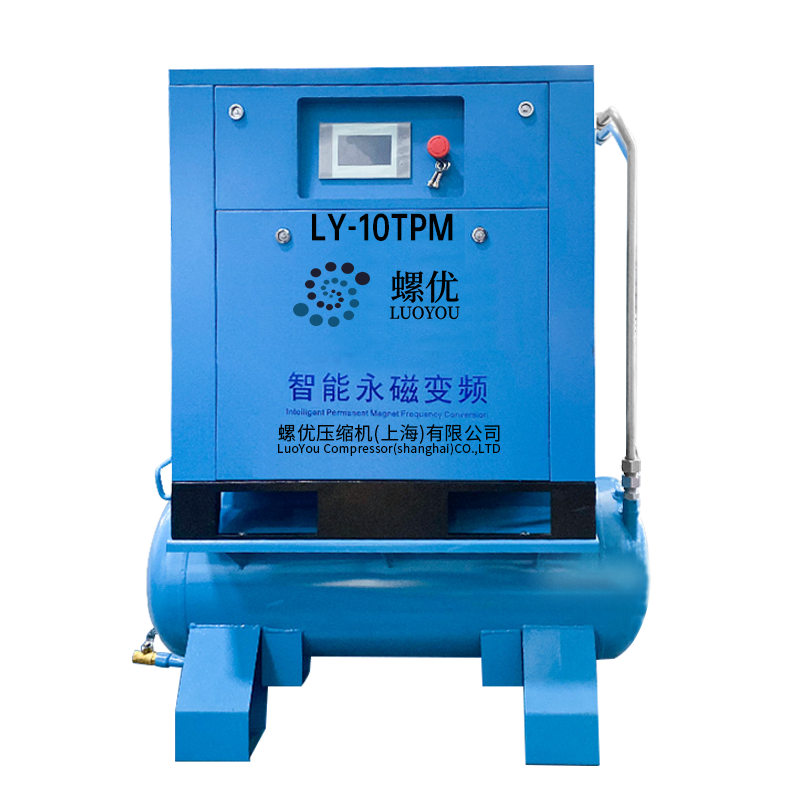
Many fabrication shops compare rotary screw designs against traditional piston compressors. In industrial laser applications, screw technology easily wins this debate. The mechanical design of twin rotors compressing air provides massive advantages. You avoid the mechanical limitations inherent in older piston designs. We strongly advise against using piston units for precision laser cutting.
You need continuous operation for long material nesting jobs. Piston units require frequent cooling periods to prevent catastrophic failure. Rotary screw designs offer a 100% duty cycle. They run continuously without overheating or losing efficiency. This stamina allows you to leave the laser running unattended during long shifts.
Piston compressors create heavy air pulsation during operation. This pulsation causes uneven cutting edges and erratic gas delivery. Screw models deliver compressed air smoothly and consistently. This stable delivery keeps your cutting line pressure perfectly constant. Constant pressure guarantees a clean, dross-free cut every single time.
You should carefully consider Variable Frequency Drive (VFD) options. We highly recommend investing in a Permanent Magnet (PM) VSD 15kW screw compressor. Standby times drain shop power aggressively. Laser operators frequently pause for material loading or unloading. A VSD controller slows the compressor motor during these idle moments. You reduce energy waste instantly while maintaining ready pressure.
You must protect your delicate laser head at all costs. Water, oil vapor, or tiny particulates pose a severe threat to your equipment. If these contaminants pass into the air system, they will destroy the protective lens. High-intensity laser light hits the contamination and burns it directly into the glass. Your focusing optics will fail shortly after this happens.
These optical failures cost thousands of dollars in replacement parts. Unplanned downtime ruins your production schedule and damages client trust. You must strictly follow the ISO 8573-1 international standard for air purity. We strongly require Class 1.4.1 or Class 1.3.1 air purity for laser cutting. You simply cannot compromise on this technical requirement.
Your filtration setup requires several integrated components working together. First, you need a high-performance refrigerated dryer. This dryer manages strict dew point requirements effectively. It prevents dangerous moisture condensation inside your shop airlines. Dry air ensures the molten metal blows away cleanly without oxidizing prematurely.
Next, you must install precision filtration to trap microscopic threats. We recommend a complete four-stage approach.
You must acknowledge the daily maintenance reality. Consumables require regular scheduled replacement to remain effective. You must buy fresh filter elements routinely. You also need specialized compressor oil to prevent internal varnishing. Factor these recurring expenses into your expected payback period calculations.
Most fabrication shops face strict footprint constraints on the production floor. You probably lack a dedicated, climate-controlled compressor room. Floor space remains highly valuable in heavy industry environments. Moving large metal sheets requires wide aisles and open zones. Traditional sprawling compressor setups waste too much of this valuable space.
Equipment manufacturers developed the 4-in-1 skid solution for this exact scenario. We call this integrated system a compact compressor package. It mounts the compressor, air receiver tank, dryer, and filters onto a single steel frame. You receive a complete air system ready for immediate deployment.
We evaluate the specific pros and cons of this design carefully.
However, you must manage several distinct implementation risks.
Noise levels usually hover around 65 to 70 dB(A) for enclosed models. You must manage these acoustics to protect your team. We recommend positioning the skid near a well-ventilated exterior wall. This placement helps reject exhaust heat while keeping noise directed away from the primary workstation.
You need a reliable framework to finalize your equipment choice. Review our success criteria checklist before making any purchasing commitments. We want you to avoid common sizing mistakes. Proceed with a 15kW laser cutting air compressor if your operation matches these specific conditions.
First, you should operate a 1kW to 3kW fiber laser system. Second, you must primarily cut thin-to-medium sheet metal staying under 10mm thickness. Third, you want to eliminate expensive nitrogen bottle logistics completely. If you meet these three criteria, this equipment size fits perfectly.
Conversely, you should look for a larger unit (22kW or above) under different circumstances. If you run multiple laser machines simultaneously, you need more volume. If you use a 6kW or higher laser on thick carbon plates, demand exceeds a 15kW limit. Finally, long and complex pipe routing causes heavy pressure drops. You need extra horsepower to overcome long piping friction.
Apply these practical vendor evaluation tips during your sourcing phase. Check for explicit high-temperature shutdown ratings. Heat causes most early equipment failures in metal shops. Verify the receiver air tank holds valid ASME or CE certifications. Workplace safety always comes first.
Demand transparent sizing charts from every potential supplier. Ask for actual free air delivery (FAD) data at the specified operating pressure. Do not base your decision solely on the motor horsepower rating. FAD tells you the true usable air volume reaching your laser nozzle.
A perfectly matched 15kW air system offers a highly efficient operational choice. It remains an excellent investment when you pair it alongside the correct laser wattage. You can reduce cutting costs significantly compared to bulk liquid nitrogen. However, you must maintain strict filtration protocols to protect your cutting head.
Take direct action today to secure your upgrade. Check your laser manufacturer’s exact flow and pressure specifications first. Request an onsite air audit from your chosen vendor. Demand a comprehensive FAD chart before issuing any purchase order. These steps guarantee you buy exactly what your production line needs.
A: It depends heavily on the material thickness. It can support a 6kW laser cutting thin sheets using high speed and standard pressure. However, it will struggle with thick plates requiring sustained high flow and maximum pressure. This mismatch risks severe pressure drops and ruined parts.
A: You should replace them typically every 2,000 to 3,000 hours. High ambient humidity or dusty shop environments can halve this expected lifespan easily. We recommend relying on differential pressure gauges rather than just following the calendar to ensure optimal safety.
A: Yes, it is mandatory for standard industrial operations. While 13 Bar or 14 Bar may work for thin aluminum or galvanized steel, 16 Bar provides necessary overhead. This extra pressure blows away molten material cleanly on thicker stainless or carbon steel.


