| Availability: | |
|---|---|
| Quantity: | |
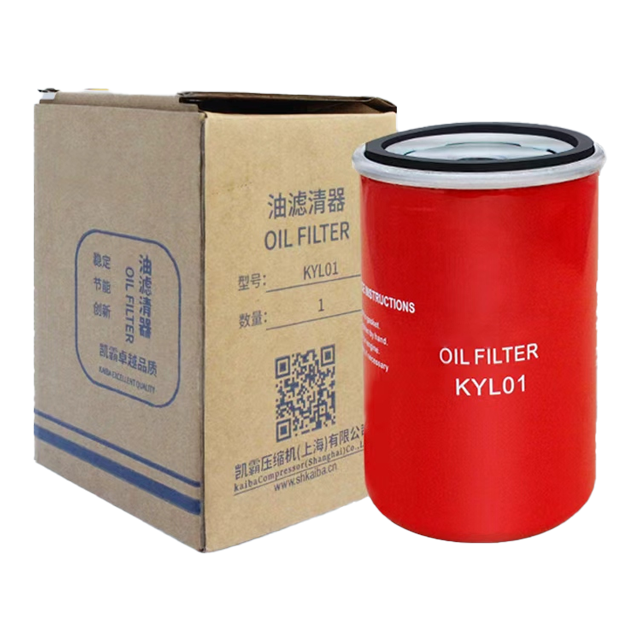
The Filtration-Enhanced Air Compressor Oil Filter protects the lubrication circuit of industrial air compressors. It removes metal debris, carbon deposits, and oil sludge from the lubricating oil before these contaminants reach rotors, bearings, and other precision components. Luoyou supplies this filter for screw and piston compressors, in full-flow and by-pass configurations, so enterprise customers and maintenance teams can match filtration to their machine design. A clean oil circuit controls wear, stabilizes compressed air quality, and makes service intervals predictable.

The filter removes metal particles generated during operation, including the larger volume produced during the break-in of a new machine. Left in the oil, these particles cause abrasive wear on bearings and rotors.
Oxidized oil forms carbon deposits, and oil sludge builds up over time. The filter captures both, keeping oil passages clear and oil flow stable through the lubrication system.
By holding contaminants back, the filter keeps compressor performance consistent, maintains compressed air quality, and reduces the risk of efficiency loss. It also limits corrosion and degradation in the lubrication system, extending the useful life of the oil and the equipment.
The air compressor Oil Filter is the "blood purifier" of the air compressor lubrication system. Its core function is to filter impurities such as metal debris, carbon deposits, and oil sludge in the lubricating oil, preventing pollutants from entering precision components like rotors and bearings, avoiding exacerbated wear and reduced efficiency, thereby prolonging equipment lifespan and stabilizing the quality of compressed air. The following is its key information:
Classification by Filtration Method
Full-flow oil filter: Connected in series between the oil pump and the main oil gallery, it filters all lubricating oil (a mainstream design, commonly adopted in screw air compressors, for example).
By-pass oil filter: Connected in parallel with the main oil gallery, it only filters part of the lubricating oil (mostly used in multi-stage filtration systems of large piston air compressors).
Classification by Filter Element Material
Paper filter element: A mainstream choice with a filtration precision of 5~20μm and a dirt-holding capacity of ≥8g. It is low in cost but requires regular replacement.
Metal mesh filter element: Features high corrosion resistance and is reusable and washable (suitable for piston air compressors with high oil mist content).
Composite filter element: Such as the two-stage structure of "strong magnet + paper" (see), which first adsorbs metal debris via strong magnetism, then filters non-metallic impurities with a paper filter element, enhancing protection for screw compressor bearings.
Regular Replacement Cycle
New machine’s first operation: Must be replaced after 500 hours of operation (a large amount of metal debris is generated during new machine break-in).
Normal working conditions: Replace every 1500–2000 hours or every 6–12 months.
Severe working conditions: Shorten to 1000–1500 hours or 3–6 months in high-temperature, high-dust environments (e.g., mines, construction sites).
Abnormal Situations Requiring Immediate Replacement
The oil filter pressure difference continuously exceeds 0.07MPa (even if it cannot be restored after cleaning).
The filter element is damaged or deformed (judged by visual inspection or pressure difference alarm).
The air compressor experiences abnormal vibration, increased exhaust temperature, or increased oil consumption (after ruling out other faults).
The lubricating oil turns black with obvious impurities (lubricating oil must be replaced simultaneously).
Replacement Operation Steps
Shut down and relieve pressure: Turn off the air compressor and release the pressure in the oil-gas tank (open the drain valve).
Install the new filter: Apply lubricating oil to the seal ring of the new filter element, tighten it manually, then lightly tighten it with a wrench (avoid over-tightening).
Add new oil and exhaust air: Add new oil to the oil-gas tank up to the scale line, manually turn the pulley to discharge air, and check for oil leakage after startup.
The Oil Filter boasts exceptional filtration efficiency, capable of trapping even minute impurities that other filters might overlook. Its specialized media ensures thorough purification without restricting oil flow.
Designed to fit a wide range of air compressors, including screw, piston, and large industrial models, the filter offers versatile protection across diverse applications.
Built with high-quality materials, the Oil Filter resists corrosion and wear, ensuring long-term reliability even in harsh operating environments. Its robust design minimizes the risk of filter element damage or leakage.
By extending the life of lubricating oil and reducing equipment wear, the filter lowers overall maintenance costs. It also simplifies upkeep with easy replacement procedures, minimizing downtime.
Ideal for screw air compressors, the Oil Filter supports continuous operation in manufacturing plants. Where consistent performance and long equipment life are essential.
Well-suited for piston air compressors used in heavy-duty industries. The filter handles high oil mist content and effectively removes contaminants common in these machines.
The Oil Filter thrives in demanding settings such as mines, construction sites, and manufacturing facilities, where dust, high temperatures, and heavy usage increase contaminant buildup. It ensures reliable performance even in extreme conditions.
Common signs include increased compressor vibration, elevated exhaust temperatures, or darkening of lubricating oil with visible impurities. A persistent pressure difference above normal levels also indicates the need for replacement.
It depends on the filter element type. Metal mesh elements are reusable after cleaning, but paper and composite elements are designed for single use and should be replaced to maintain filtration efficiency.
While the filter is designed for broad compatibility, it’s recommended to check your compressor’s specifications or consult the manufacturer to ensure a proper fit. Most standard models are compatible with leading brands.