
- Home
- Products
- Hot
- About Us
- Services
- Industry
- Contact

From 22th July to 24th July, Luoyou Compressor Company attending this Expo in Bangkok,Thailand, This Expo received good feedback from customers not only in Thailand but also from other regions of area in Southeast Asia. Some customers are planning to order Luoyou screw air compressors on site for the project.We were encouraged from this Expo and we will promote our products quality and service to meet all customers demands in near future.

A Turkish manufacturing customer visited our factory in China. After two‑day in‑depth technical discussion, he placed a bulk order for 20 sets of 4‑in‑1 laser cutting machines matched with industrial nitrogen generators. The all‑in‑one machine supports cutting, welding and cleaning for various metals. The PSA nitrogen generator supplies high‑purity nitrogen to guarantee processing quality for 24‑hour running. This cooperation demonstrates our one‑stop solution including custom scheme, equipment delivery and cross‑border after‑sales service for global buyers.

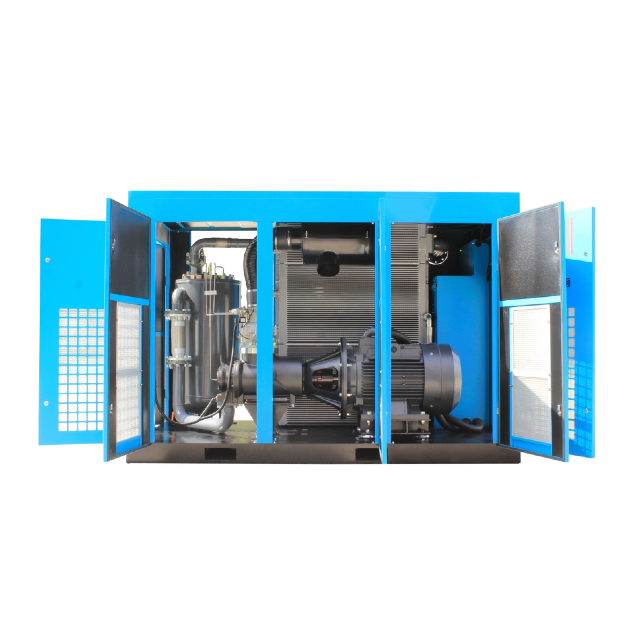
The LY‑180CV single‑stage screw air compressor is a tailor‑made export unit for Mexico projects. Configured with local 460V/60Hz three‑phase power, English control panel, IP54/IP55 split motor and complete English technical documents. It adopts export‑special wooden case with forklift holes for long‑distance ocean shipment. Suited for metal processing, general manufacturing and other industrial scenarios across Latin America, supporting OEM branding customization for distributors.

On June 5, 2026, Luoyou Compressor joined the Air Compressor Industry Hero Conference in Yantai, presenting oil-free air compressors, energy-saving VSD compressors, and industrial compressed air system solutions.

Learn how to select compressed air filters to protect downstream equipment, minimize pressure drop, and meet ISO 8573-1 standards.
Discover the differences between air oil separators and precision filters, and how to sequence them to optimize your compressed air system.


