
- Home
- Products
- Hot
- About Us
- Services
- Industry
- Contact
Views: 0 Author: Site Editor Publish Time: 2026-06-10 Origin: Site


In a rotary screw compressor, oil does far more than lubricate moving parts. It provides critical sealing between rotors and delivers essential cooling during compression. If you install an underspecified air compressor oil filter, you jeopardize the entire airend. Facility engineers and maintenance managers face a constant challenge here. You must evaluate replacement components carefully to protect your system. You need to balance upfront expenses against long-term operational reliability. Choosing the wrong component can lead to catastrophic downtime.
Our guide outlines objective evaluation criteria for this exact problem. We will show you how to select the correct filter for your equipment. You will learn to protect precision components without risking equipment failure. We also cover how to maintain warranty compliance smoothly. By following these practical steps, you safeguard your most expensive machinery. Let us explore how to optimize your compressor health today.
Filter media choice (cellulose vs. synthetic) must align with the specific lubricant type and operating temperature of the screw compressor.
Bypass valve specifications are critical; an incorrect opening pressure risks either oil starvation or unfiltered oil bypassing the media during cold starts.
Evaluating OEM vs. aftermarket compressor maintenance parts requires calculating Total Cost of Ownership (TCO) rather than just upfront unit costs.
Absolute micron ratings are a more reliable performance indicator than nominal ratings when protecting precision airend rotors.
To understand component selection, we must first define the exact role of filtration. A high-quality compressor lubrication filter performs several demanding tasks simultaneously. It removes abrasive metal particulates generated by normal rotor wear. It also captures microscopic carbon dust and filters out degraded oil derivatives. Your compressor relies entirely on this clean fluid. When debris circulates freely, it acts like liquid sandpaper inside the system.
Failing to capture these contaminants leads to severe cascading effects. A poor-quality filter sets off a dangerous chain reaction inside your machinery. You will face several distinct failure risks if you compromise on filtration.
Premature Bearing Wear: Abrasive particles score the delicate surfaces of rotor bearings. This wear introduces vibration and destroys airend alignment.
Compromised Air-Oil Separator Lifespan: When the primary filter fails, excess sludge migrates to the separator. This clogs the fine separator media rapidly and increases oil carryover.
Elevated Operating Temperatures: Dirty oil loses its thermal transfer efficiency. As fluid friction increases, your system temperatures spike dangerously.
You can avoid these disasters by establishing clear success criteria. A successful filter selection minimizes pressure drops across the lubrication circuit. It maximizes dirt-holding capacity to ensure fluid remains pristine between changes. Most importantly, it strictly adheres to the compressor manufacturer's service intervals. You should never stretch replacement timelines to save minor upfront costs. Your airend represents the most expensive part of your compressor. Treat filtration as your primary insurance policy against catastrophic mechanical failure.
You cannot judge a filter by its external appearance. The true value lies inside the metal housing. Evaluating an oil filter element requires a deep understanding of fluid dynamics. We must look at four specific technical parameters.
Many buyers confuse nominal and absolute micron ratings. A nominal rating means the filter captures *most* particles of a certain size. An absolute rating guarantees the filter captures *all* particles of that size under specific test conditions. Rotary screw equipment demands absolute precision. Standard tolerance requirements for these machines typically dictate 10-20 microns absolute. Relying on a nominal 10-micron filter leaves your precision airend rotors vulnerable to microscopic damage.
Rating Type | Definition | Compressor Safety Level |
|---|---|---|
Nominal Rating | Captures approximately 50-90% of specified particles. | Low. Allows abrasive micro-debris to pass. |
Absolute Rating | Captures 98.9% to 99.9% of specified particles. | High. Meets tight rotor clearance requirements. |
Your filter relies heavily on an internal bypass valve. This mechanism proves necessary for cold-start scenarios and high-viscosity states. When oil is cold, it thickens significantly. This thick oil cannot flow through the filter media fast enough. The bypass valve opens to supply unfiltered oil temporarily. This prevents immediate oil starvation at the bearings. You face a major implementation risk if you use standard hydraulic filters here. Mismatched bypass pressure settings will ruin your compressor. If the valve opens too easily, you constantly circulate dirty oil. If it opens too late, your bearings run dry.
The internal media determines dirt-holding capacity. Manufacturers traditionally use cellulose paper for standard duty applications. Cellulose works adequately for basic mineral oils and light usage. However, modern applications demand micro-glass or synthetic fibers. Synthetic media offers exceptionally high dirt-holding capacity. It resists degradation and performs better for aggressive synthetic oils. The uniform pore structure in synthetic fibers also reduces flow restriction.
Industrial compressors operate under intense physical stress. Heavy-duty housing requirements are non-negotiable. The canister must withstand continuous pressure cycling day after day. A cheap housing suffers from metal fatigue quickly. Without adequate burst pressure ratings, the filter can literally explode off the mounting block. You must verify structural integrity to prevent catastrophic housing fatigue.
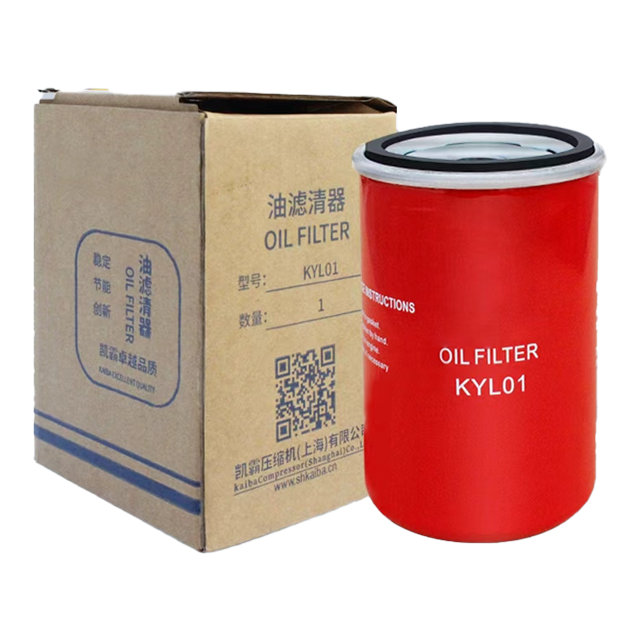
Equipment does not operate in a vacuum. Your physical environment directly influences maintenance requirements. Selecting a screw compressor oil filter means matching the component to your specific reality. Two primary factors dictate this selection process.
Modern compressors frequently utilize advanced synthetic lubricants. Polyalkylene Glycol (PAG) and Polyol Ester (POE) oils offer incredible thermal stability. However, these aggressive synthetic oils can degrade cheap filter adhesives rapidly. They also attack incompatible rubber components. You must pay close attention to the sealing gaskets. Standard Nitrile seals often swell or dissolve when exposed to PAG oils. You need premium Viton seals to withstand these aggressive chemical environments. Always cross-reference your specific oil chemistry against the filter manufacturer's material sheet. A dissolved internal adhesive will dump raw glue straight into your airend.
Your ambient operating environment changes everything. High-dust environments demand specialized filtration strategies. Cement plants, foundries, and woodworking shops overwhelm standard filters quickly. These aggressive atmospheres require filters featuring exponentially higher dirt-holding capacities. If you use standard filters here, they will clog in half the expected time. You must also consider extreme ambient temperatures. High ambient temperature applications accelerate oil varnishing significantly. Varnish coats the filter media and restricts flow prematurely. In hot environments, you might need a synthetic media specifically designed to handle rapid oxidation.
Procurement teams constantly debate replacement part sourcing. You want to reduce expenses without compromising machine integrity. This debate requires a rigorous evaluation framework.
Original Equipment Manufacturers build parts specifically for their machines. The OEM argument relies on guaranteed compatibility. They provide predictable failure curves based on extensive testing. Buying OEM also ensures strict warranty compliance during the initial ownership period. You never have to guess if the part matches the system flow rate. The engineering is already done for you.
Quality third-party suppliers offer compelling alternatives. You must learn how to vet reputable manufacturers carefully. Look for facilities holding current ISO 9001 certifications. Demand guaranteed spec matching before you buy. Reliable aftermarket producers engineer their parts to meet or exceed original specifications. They offer substantial savings for out-of-warranty machines.
We strongly advise against using generic automotive filters. Automotive filters lack the structural integrity required for industrial compression. Emphasize to your purchasing team that reliable compressor maintenance parts must be specifically engineered. They must handle unique rotary screw dynamics and intense thermal loads.
You need a standardized checklist for procurement. Do not purchase off-brand air compressor spare parts without verifying the following details:
Verify Thread Pitch: Ensure the mounting threads match perfectly to prevent pressure leaks.
Check Seal Material: Confirm Viton or highly compatible Nitrile based on your oil type.
Confirm Bypass Pressure: Match the exact cracking pressure of the original equipment valve.
Validate Flow Rate: Ensure the media handles your maximum gallons-per-minute requirement.
Even the best components fail if you ignore maintenance schedules. Proper implementation requires discipline and consistent tracking.
You must establish strict baseline timelines for your facility. Standard replacement intervals typically fall every 2,000 to 4,000 operating hours. This schedule should seamlessly coincide with full oil changes. Operating beyond 4,000 hours risks severe media degradation. The filter paper becomes brittle and may tear under pressure. Once the media tears, you have zero filtration.
Smart operators know how to identify a clogged filter before catastrophic failure occurs. Watch your daily operational logs closely. Look for rising operating temperatures across the system. Listen for unusual airend noise, which indicates bearing friction from oil starvation. Monitor pressure differentials across the lubrication circuit if your machine includes those sensors. A sudden pressure drop indicates the bypass valve has locked open.
We advise replacing the oil filter, air filter, and air-oil separator simultaneously. Treating these parts as a unified kit prevents cross-contamination. If you leave a dirty air filter in place, it passes dust that ruins the new oil filter instantly. Replacing them together establishes a clean operational baseline. This best practice maximizes the lifespan of your expensive synthetic lubricants.
Choosing the correct filtration components ensures your equipment runs efficiently for years. We must reiterate our summary verdict clearly. The oil filter acts as the absolute frontline defense for your compressor's most expensive component. Protecting the precision airend rotors remains your highest maintenance priority. Do not gamble your facility's productivity on underspecified or mismatched parts.
Take proactive steps today to secure your compressed air system. We strongly instruct you to consult your equipment manual first. Find the exact thread sizes and bypass pressure specifications required. Next, audit your current operating environment to determine your dirt-holding capacity needs. Finally, contact a certified supplier to build a standardized maintenance kit. Keep these replacement kits stocked on your shelves. Consistent, high-quality maintenance guarantees a reliable air supply and protects your bottom line.
A: Emphatically no. Automotive filters cannot handle industrial pneumatic environments. They feature lower burst pressure limits that risk catastrophic housing explosions. Furthermore, their internal bypass valve settings rarely match compressor flow requirements. Automotive filter media also frequently lacks chemical compatibility with aggressive synthetic compressor oils.
A: Look for sudden spikes in your machine's operating temperature. A clogged filter restricts fluid flow, reducing cooling capacity immediately. You might also notice abnormal pressure drops across the lubrication circuit. Some modern compressors display differential pressure alarms on the main control panel when clogs occur.
A: In the US, the Magnuson-Moss Warranty Act protects consumers. Manufacturers cannot void your warranty simply because you used aftermarket parts. However, they can deny a claim if they prove the specific aftermarket part caused the machine failure. We advise cautious sourcing during active warranty periods.
A: Spin-on filters feature a self-contained metal housing integrated with the media. You unscrew and discard the entire unit during service. Cartridge styles consist only of the drop-in filter media and seals. You place the cartridge inside a permanent, reusable metal housing built into the compressor block.


