
- Home
- Products
- Hot
- About Us
- Services
- Industry
- Contact
Views: 0 Author: Site Editor Publish Time: 2026-10-20 Origin: Site


Sourcing heavy-duty industrial equipment internationally brings immense operational advantages. However, this strategy introduces significant transit and customs risks. Buyers must actively mitigate these physical and regulatory hurdles to ensure successful machine deployment. Damage during ocean freight can quickly erase the upfront price advantages of importing. Similarly, severe delays at customs caused by improper labeling or undocumented materials create massive supply chain bottlenecks.
You need a highly structured approach to prevent these expensive logistical failures. This guide provides procurement teams and engineers a definitive framework for specifying, evaluating, and verifying export compliance. We will explore essential crating standards, moisture protection protocols, and mandatory shipping documentation. Read on to master the logistics of moving heavy compressed air assets across global supply chains safely.
Proper 75 kW screw air compressor export packaging requires ISPM-15 certified wooden crating tailored to the unit’s asymmetrical center of gravity.
Ocean freight mandates multi-layer moisture barriers (VCI packaging and desiccants) to protect the sensitive electronics of a PM VSD screw compressor.
Customs clearance depends on exact alignment between physical equipment nameplates, exterior shipping marks, and export documentation (e.g., HS Code 841480).
Evaluating a manufacturer’s logistics and compliance maturity is as critical as assessing their technical specifications.
Logistics failures carry heavy financial and operational stakes. A standard 75 kW air compressor typically weighs between 1,200kg and 1,800kg. Moving this massive asset across the globe exposes it to extreme mechanical stress. A single drop or violent shift during transit can permanently misalign internal rotors. You cannot afford to treat export crating as an afterthought.
Ocean freight presents unique transit vulnerabilities. The equipment faces multiple handling events during roll-on/roll-off procedures and container loading. Dock workers often operate under tight schedules. Forklift mishandling remains a constant threat at busy ports. Additionally, the marine environment exposes the cargo to severe g-force shocks from rough seas and highly corrosive high-salinity air.
You must clearly define success criteria before finalizing any international purchase. A successful delivery means the unit arrives with zero structural damage. The internal electronics and inverter panel must remain completely intact and dry. Furthermore, the shipment should experience zero days delayed in the destination port. Achieving these criteria requires robust 75 kW screw air compressor export packaging engineered specifically for heavy industrial machinery.
Standard shipping pallets cannot support heavy industrial compressors. The equipment features a massive cast-iron airend and a dense permanent magnet motor. These components sit closely together, creating a severely uneven center of gravity. You must specify customized base load-bearing structures. The crating chassis must distribute this asymmetrical weight safely to prevent tipping during crane lifts.
International quarantine laws strictly regulate wooden packaging. You must mandate ISPM-15 compliance for all timber used in the crate. Suppliers must use heat-treated or fumigated wood. The crate must clearly display the globally recognized wheat stamp. Without this stamp, customs officials will reject the shipment. They may destroy the crate or force expensive repackaging at the port.
Vibration isolation forms the next critical defense layer. Ocean vessels vibrate constantly, transferring kinetic energy directly through the container floor. You must require high-density shock-absorbing bases to protect the machine.
We recommend following this standard shock mitigation sequence:
Secure the compressor chassis directly to the heavy-duty wooden pallet using high-tensile steel bolts.
Install industrial-grade rubber isolation mounts between the machine base and the pallet surface.
Brace the internal piping and delicate valves with temporary rigid supports to prevent transit fatigue.
Reinforce the exterior crate walls with diagonal timber cross-bracing to resist lateral crushing forces.
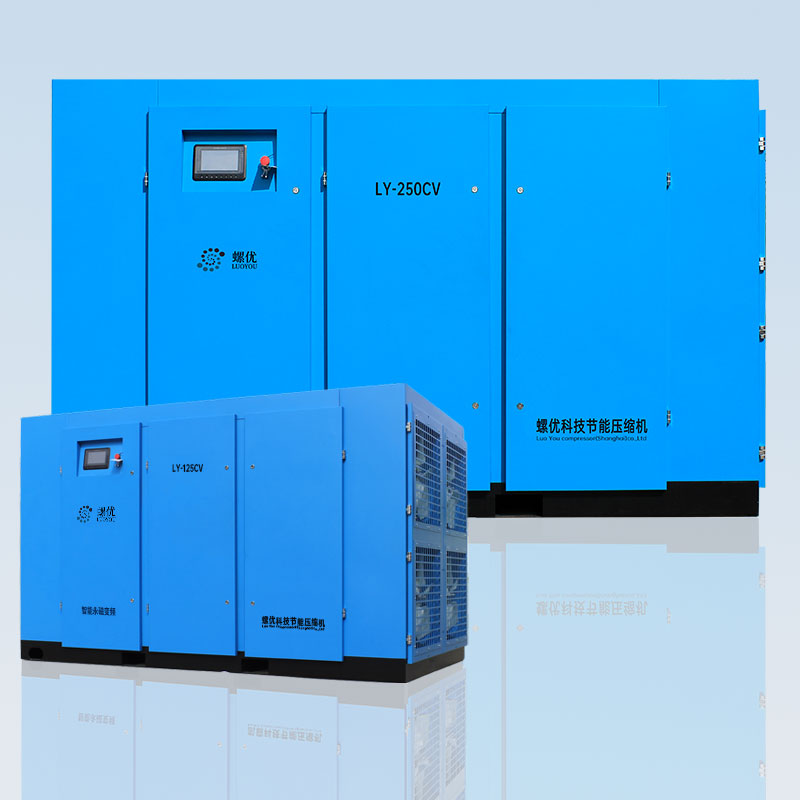
Ocean freight exposes machinery to extreme humidity fluctuations. The threat of moisture is relentless during a multi-week sea voyage. Condensation forms inside the shipping container as temperatures drop at night. This phenomenon, known as container rain, directly threatens the delicate components of your equipment.
Salt-air corrosion acts quickly on unprotected metal. It aggressively attacks the VSD (Variable Speed Drive) panel, circuit boards, and permanent magnet motor windings. Bare metal rotors inside the airend are also highly susceptible to flash rusting. You must implement a strict moisture defense strategy to protect a PM VSD screw compressor.
Volatile Corrosion Inhibitor (VCI) packaging serves as the primary defense layer. Suppliers should never use standard plastic wrap. VCI film emits protective molecules. These molecules settle on metal surfaces and form an invisible, moisture-repelling barrier. The manufacturer must place the entire compressor inside a heavy-duty VCI bag and vacuum-seal it completely.
You cannot rely on VCI film alone. You must also mandate strategic desiccant placement. Desiccants absorb trapped ambient moisture before it condenses. Industry standards dictate calculating desiccant unit requirements based on the total cubic volume of the sealed bag.
Moisture Defense Layers for Ocean Transit
Defense Layer | Application Area | Primary Purpose |
|---|---|---|
Silica Gel Packets | Inside the VSD electrical cabinet | Absorb micro-condensation near sensitive microprocessors. |
Industrial Clay Desiccants | Hanging inside the VCI bag enclosure | Regulate ambient humidity within the sealed packaging volume. |
VCI Vacuum Bag | Encasing the entire compressor unit | Prevent external salt air from reaching the machine chassis. |
Foil Barrier Bag (Optional) | Over the VCI layer for extreme climates | Provide maximum impermeability against aggressive tropical humidity. |
Accurate exterior crate labeling dictates how freight forwarders handle your cargo. Vague markings invite careless handling. You must require the supplier to print high-visibility visual indicators on all four sides of the crate. Freight handlers rely on these symbols to position forklift tines safely.
Essential exterior shipping marks include:
Center of Gravity: Crucial for preventing the crate from tipping off a forklift.
Fragile & Keep Dry: Universal symbols indicating sensitive electronics inside.
This Way Up: Arrows ensuring the crate is never stacked on its side.
Gross and Net Weight: Precise weight figures required for safe crane capacity planning.
Beyond exterior markings, equipment nameplate verification is mandatory. The permanent metal nameplate riveted to the machine must perfectly match your commercial invoice. Customs inspectors routinely cross-reference these details. The nameplate must display the correct Voltage/Hz, kW rating, and exact serial number. It must also feature relevant safety certifications like CE, UL, or ASME.
Traceability prevents catastrophic losses in consolidated shipments. If you ship via LCL (Less than Container Load), your machine shares a container with other goods. Cargo gets unpacked and sorted at various cross-docking facilities. Clear consignee details, destination port marks, and unique handling numbers ensure your asset does not end up on the wrong delivery truck.
Customs officials process millions of shipments daily. They rely entirely on standardized documentation to assess tariffs and clear goods. Any discrepancy between your paperwork and the physical cargo triggers immediate holds. You must proactively manage your export documentation suite.
HS Code alignment drives the entire customs process. The standard Harmonized System code category for rotary screw compressors typically falls within the 8414.80 subheading. Accurate classification dictates the exact import tariffs you will pay. Using an incorrect or vague code can result in unexpected tax liabilities or penalty fees upon arrival.
Your supplier must generate a flawless, non-negotiable documentation suite. Treat this paperwork as strictly as the machine's engineering specifications.
Required Documentation Suite and Purpose
Document Name | Issuing Party | Customs Purpose |
|---|---|---|
Commercial Invoice | Manufacturer | Declares the exact transaction value for duty assessment. |
Packing List | Manufacturer | Details gross/net weights, dimensions, and total crate count. |
Bill of Lading (B/L) | Ocean Carrier | Serves as the title of goods and contract of carriage. |
Certificate of Origin (COO) | Local Chamber of Commerce | Verifies manufacturing location to apply specific trade treaty rates. |
Fumigation Certificate | Certified Treatment Facility | Proves the wooden crate meets ISPM-15 quarantine standards. |
Use documentation readiness as a strict supplier evaluation lens. A credible manufacturer understands global trade compliance. They will gladly provide draft documents for your pre-clearance review. We highly recommend sending these drafts to your customs broker weeks before the vessel departs. This proactive step eliminates surprises at the destination port.
Evaluating a manufacturer’s logistics maturity requires diligence. Technical prowess means little if the supplier cannot ship the asset safely. You must audit their export readiness during the final negotiation stages.
We strongly recommend mandating Pre-Shipment Inspections (PSI). Hire third-party auditors like SGS or TÜV to visit the factory. They will verify the packaging integrity before the container doors close. If a physical audit exceeds your budget, demand comprehensive video verification. The supplier must record the VCI sealing process, desiccant placement, and structural bracing steps.
You must also carefully consider Incoterms alignment. Your chosen trade terms dictate liability when packaging fails. Under FOB (Free On Board), you assume risk once the cargo crosses the ship's rail. If the crate collapses mid-voyage due to poor wood quality, you bear the loss. CIF (Cost, Insurance, and Freight) offers marine insurance, but claims processes are notoriously difficult. DDP (Delivered Duty Paid) places maximum liability on the seller, forcing them to take packaging seriously.
Your next-step action is simple. Do not rely on verbal promises. Include specific packaging, labeling, and documentation clauses directly in your final Purchase Order (PO). Stipulate financial penalties if the supplier uses non-compliant wood or fails to vacuum-seal the electronics.
Specifying high-quality internal machine components represents only half the procurement battle. Securing the physical journey of the asset makes up the other crucial half. Overlooking crating standards, moisture protection, or documentation alignment leaves your supply chain dangerously exposed. You must take full control of the logistics framework to ensure a seamless import experience.
We encourage buyers to take a firm stance with overseas manufacturers. Demand documented proof of standard operating procedures (SOPs) for export packing from your short-listed vendors. Write ISPM-15 and VCI requirements directly into your contracts. By enforcing strict packaging guidelines, you protect your equipment, streamline customs clearance, and guarantee immediate operational readiness upon arrival.
A: The standard classification falls under the Harmonized System subheading 8414.80. However, specific digits trailing this subheading vary by country. We advise consulting your local customs broker to verify the exact code. Accurate verification ensures you pay the correct import tariffs and avoid clearance delays.
A: Yes, steel crating offers excellent structural integrity. The main advantage is bypassing ISPM-15 fumigation requirements completely, as pests do not inhabit steel. However, steel adds significant gross weight, increasing freight costs. It also generally commands a higher upfront material cost from the manufacturer.
A: When applied correctly, VCI packaging provides robust corrosion protection for 12 to 24 months. The exact duration depends on the bag's thickness and the ambient storage environment. The protection remains fully effective only if the vacuum seal remains completely unbroken during transit and warehousing.
A: Customs authorities treat non-compliant wood as a severe biosecurity threat. They will immediately reject the shipment at the destination port. You face heavy fines and mandatory repacking fees. In extreme cases, authorities may mandate total destruction of the crate and the cargo at your expense.


