
- Home
- Products
- Hot
- About Us
- Services
- Industry
- Contact
Views: 0 Author: Site Editor Publish Time: 2026-02-04 Origin: Site


Plant engineers usually don’t search for textbook definitions when the production line is waiting for stable air pressure. They search for what is dual stage air compressor because they want a clear, practical explanation of how the technology works and why it is commonly used in high-pressure industrial environments. A dual-stage system is designed to deliver higher pressure with better efficiency and reliability, which is exactly what many factories need when compressed air is part of the process itself. Luoyou Compressor, a Shanghai-based manufacturer exporting to global markets since 2015, builds dual-stage screw air compressors for demanding applications where consistent airflow, energy control, and dependable operation matter every day.
Dual-stage compression is best understood as a smarter way to reach higher pressures without forcing the compressor to do all the work in one aggressive step. The goal is stable output with lower heat and reduced energy waste.
In a dual-stage screw air compressor, air is compressed twice in sequence. The first stage raises the pressure partway, then the second stage brings it up to the final discharge pressure. Splitting the compression duty across two air ends reduces the burden on each stage. Instead of pushing one air end to perform a large compression ratio, each stage works in a more efficient range.
This matters because compression is not just about squeezing air. It is also about controlling internal leakage, mechanical resistance, and thermal load. When the compression ratio is too high in a single stage, the system tends to generate more heat and lose efficiency. With two stages, the process becomes smoother and more controlled, improving overall performance in real industrial conditions.
Intercooling is a key reason dual-stage systems perform well at high pressure. After the first stage compresses the air, the air temperature rises. Before entering the second stage, the air is cooled. Cooler air is denser, which means the second stage can compress it more efficiently with less energy input.
Intercooling also protects the compressor. Lower temperature reduces stress on internal components, helps stabilize lubricant performance in oil-lubricated systems, and keeps operating conditions closer to an ideal range. Over long running hours, this temperature control translates into more predictable performance and reduced wear.
Pressure and heat are linked. Whenever air is compressed, temperature increases. In single-stage systems operating at high pressure, the heat rise can be significant. Excessive heat affects efficiency and accelerates wear. Dual-stage compression addresses the pressure requirement while limiting temperature rise by distributing compression work and cooling between stages.
In practical terms, the system is not just building pressure; it is managing heat so that pressure can be delivered continuously without sacrificing reliability. That is why dual-stage designs are often selected for applications in the 8–13 bar range where pressure stability is critical and operating hours are long.
It is easy to assume the difference is simply “two stages instead of one,” but the real distinction shows up when high pressure and long operation hours meet real-world production demands.
Single-stage compressors compress air from intake pressure directly to final discharge pressure in a single cycle. At moderate pressures, this can be effective and economical. The challenge appears as pressure requirements rise and demand becomes more continuous.
At higher pressures, single-stage designs may face reduced volumetric efficiency, increased discharge temperature, and greater mechanical stress. The air end must work harder to achieve the same output, and the motor must draw more power to maintain discharge pressure under load. In settings like heavy manufacturing and automation, where stable high-pressure air is required for long periods, these limitations can turn into higher electricity bills and more frequent service intervention.
High-pressure systems are often chosen because the process needs them, not because the plant wants them. When pressure is required for industrial automation, pneumatic tools, or precision applications like laser cutting, efficiency and thermal stability become decisive.
Heat affects more than comfort. Higher discharge temperature can accelerate oil aging, reduce the lifespan of seals, and increase the likelihood of component fatigue. Efficiency matters because compressed air is expensive energy. A system that wastes power at high pressure can become one of the most costly utilities in a facility.
Dual-stage compression targets both issues. By reducing the compression ratio per stage and using intercooling, it reduces heat generation and improves energy efficiency, especially in the high-pressure range where single-stage performance tends to decline.
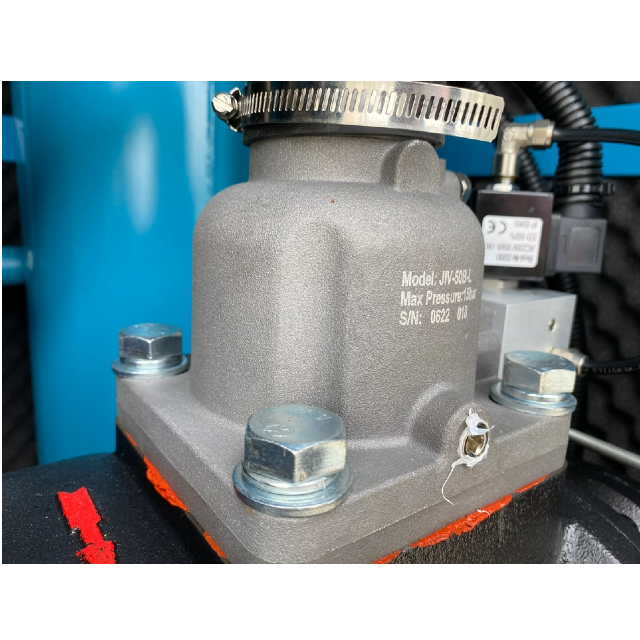
A dual-stage screw air compressor is not simply a standard compressor with an extra label. Its architecture is designed around staged compression, thermal control, and intelligent operation.
The air end is the heart of a screw compressor. In a dual-stage system, there are two compression air ends working sequentially. The first-stage air end performs initial compression, then the second-stage air end raises the pressure to the required discharge level.
This staged approach allows each air end to operate closer to its optimal efficiency zone. It reduces the risk of excessive stress on a single air end and contributes to smoother long-term performance. Advanced screw technology also helps minimize wear by maintaining stable rotor operation under controlled thermal conditions.
Luoyou’s two-stage design focuses on reliability under high-pressure duty, making it suitable for heavy-duty tasks where airflow consistency is a production requirement rather than a convenience.
Cooling is not an accessory in dual-stage compression; it is part of the performance logic. A robust cooling system helps manage the temperature rise that occurs during compression and supports intercooling between stages. Lower temperatures improve efficiency and contribute to longer component life.
The airflow path is engineered to reduce pressure drop and maintain clean delivery. In industrial environments, air quality is often a hidden factor affecting tools, automation systems, and end-product consistency. To support cleaner output, Luoyou systems can be paired with refrigerated dryers and precision filters, forming a complete compressed air treatment line that protects downstream equipment.
Modern industrial plants need more than compressed air; they need controllable compressed air. Intelligent control systems monitor operating parameters and adjust performance automatically. This includes real-time monitoring for stable operation and automatic adjustments that maintain efficiency as demand changes.
Luoyou’s dual-stage screw air compressors are equipped with advanced microprocessor control and optional IoT monitoring capabilities, helping operators track performance, detect abnormal conditions early, and avoid inefficient operating modes. This is especially valuable for plants running multiple shifts, where stable operation and predictable maintenance planning reduce operational stress.
Noise reduction features can also support installations in noise-sensitive areas, improving working conditions without sacrificing performance.
Dual-stage compression is most commonly used where higher pressure and stable output are required. While different plants define “high pressure” differently, the most common industrial operating range for dual-stage screw compressors is around 8–13 bar, where efficiency and stability advantages become meaningful.
The table below offers a practical overview of where different compressor types are typically used.
Compressor Type | Typical Pressure | Efficiency Level | Suitable Use |
Single-stage screw compressor | 7–10 bar | Moderate, declines at higher pressure | General manufacturing, moderate pressure systems |
Dual-stage screw compressor | 8–13 bar | High, optimized for high-pressure duty | Laser cutting, automation lines, heavy manufacturing |
Low-pressure screw compressor | 3–5 bar | High within low-pressure design range | Aeration, textile, low-pressure conveying |
Oil-free screw compressor | 7–10 bar | Varies by design, focused on air purity | Food, medical, pharmaceutical, sensitive processes |
For industrial users, the table is a reminder that the “best” compressor is the one matched to pressure needs, operating hours, and performance expectations. Dual-stage technology is specifically aimed at those who must deliver stable high-pressure air without paying an unnecessary energy penalty.
Understanding what dual-stage compression is becomes more useful when you can see how it is implemented in a real product line. Luoyou Compressor designs its dual-stage screw air compressors with a focus on high-pressure stability, energy optimization, and industrial installation practicality.
Thermal management is central to reliable high-pressure operation. Luoyou uses a two-stage compression process with intercooling to reduce discharge temperatures and maintain stable internal conditions. This improves reliability and helps extend equipment lifespan, especially in demanding industrial environments where long running hours are standard.
Lower operating temperatures also support consistent airflow output, which is critical for applications that depend on stable pressure to maintain process accuracy. In sectors like laser cutting and automated production, pressure fluctuations are not just inconvenient; they can reduce output quality and increase material waste.
High-pressure demand is rarely constant throughout a shift. Many plants experience demand swings as different tools and lines cycle on and off. Permanent magnet variable frequency drive technology allows the compressor to adjust speed in response to real demand, reducing wasted energy.
Luoyou integrates dual-stage compression with permanent magnet VFD technology to help users reduce operational costs. Variable speed control improves energy conservation, especially during partial load operation, and supports stable pressure delivery without frequent unload cycles that can reduce efficiency.
This integration is one reason Luoyou dual-stage systems are positioned as high-efficiency solutions for industrial environments requiring maximum reliability and energy optimization.
Industrial equipment must fit into real facilities, not just catalogs. A compact, easy-to-install design reduces installation complexity, supports flexible layout planning, and can simplify upgrades from existing systems. Luoyou provides dual-stage screw air compressor models in various capacities to match different plant sizes and production needs.
Beyond installation, system integration matters. Pairing a compressor with refrigerated dryers and precision air filters helps ensure dry, clean air, which protects pneumatic tools and improves process stability. For industries with strict air purity demands, Luoyou also offers optional oil-free configurations for pharmaceutical and food-grade requirements.
As a manufacturer operating under CE and ISO 9001 management systems, Luoyou follows rigorous production protocols to ensure each unit meets international standards. This supports consistent product quality and reliable performance for customers in global markets.
A dual-stage air compressor is a staged compression system that reaches higher pressure more efficiently by compressing air in two steps with intercooling between stages, which improves thermal stability and long-term performance. For industrial users asking what is dual stage air compressor, the most practical answer is that it is the design choice built for stable high-pressure output and better efficiency in demanding applications. Luoyou Compressor manufactures dual-stage screw air compressors in Shanghai with a focus on energy optimization, reliability, and industrial usability, and exports these systems worldwide. To explore dual-stage options for your application, contact Luoyou Compressor.
Q1: Is a dual-stage air compressor only for large factories?
Not necessarily. Dual-stage systems are selected based on pressure requirements and operating hours. Smaller plants with continuous high-pressure demand can benefit just as much as large factories.
Q2: Does intercooling really make a noticeable difference?
Yes. Intercooling lowers the temperature between stages, making the second compression step more efficient and helping protect internal components from thermal stress during long operation.
Q3: Can a dual-stage compressor handle fluctuating air demand?
When combined with permanent magnet VFD technology, a dual-stage screw compressor can adjust motor speed to match demand changes, improving energy efficiency and maintaining stable pressure.
Q4: What pressure range is dual-stage compression best suited for?
Dual-stage screw compressors are commonly optimized for industrial high-pressure needs around 8–13 bar, where efficiency and thermal stability benefits are most significant.


