
- Home
- Products
- Hot
- About Us
- Services
- Industry
- Contact
Views: 0 Author: Site Editor Publish Time: 2026-02-10 Origin: Site


Production managers and engineers rarely debate compressor types out of curiosity. The discussion usually starts when electricity bills rise, maintenance intervals shorten, or pressure stability becomes a bottleneck in production. This is why searches for dual stage air compressor vs single stage are so common in industrial settings. The difference is not simply about adding one more compression step. It directly affects energy efficiency, equipment lifespan, and long-term operating stability. Luoyou Compressor, a Shanghai-based manufacturer supplying global markets since 2015, designs both single-stage and dual-stage screw air compressors and works with customers to match technology to real operating demands rather than theoretical specifications.
At the core of the comparison between single-stage and dual-stage compressors is how air is compressed and what happens to temperature, pressure, and mechanical load during that process.
A single-stage air compressor compresses air from intake pressure to final discharge pressure in one continuous process. As pressure increases, air temperature rises rapidly. This steep pressure and temperature curve can be manageable at moderate pressure levels, but it becomes increasingly inefficient as pressure requirements grow.
A dual-stage compressor divides the compression process into two steps. The first stage raises the pressure partway, then the air is cooled before entering the second stage for final compression. This results in a smoother pressure curve and a more controlled temperature rise. Lower temperatures mean denser air, which requires less energy to compress further. Over long operating hours, this difference in temperature and pressure behavior becomes a major contributor to energy efficiency and system stability.
Mechanical stress is often overlooked when comparing compressor types. In single-stage systems operating at higher pressure, the air end, bearings, and drive components are subjected to greater load in each compression cycle. This increases wear and accelerates fatigue over time.
Dual-stage systems distribute mechanical load between two air ends. Each stage operates within a more favorable compression ratio, reducing stress on critical components. This balanced workload helps maintain alignment, reduces vibration, and slows the wear process. For industrial users running compressors continuously or near maximum pressure, this reduction in mechanical stress directly impacts service life and maintenance frequency.
Energy efficiency is one of the most decisive factors when comparing single-stage and dual-stage compressors, especially in high-pressure industrial environments.
Single-stage screw compressors are widely used and effective for many applications. However, as operating pressure increases beyond approximately 8 bar, efficiency tends to decline. The compressor must work harder to overcome higher resistance, drawing more power and generating more heat.
At higher pressure, internal leakage increases and volumetric efficiency drops. The motor operates closer to its upper load range more often, which can lead to higher electricity consumption per unit of compressed air delivered. In facilities where compressed air runs continuously, these inefficiencies accumulate into significant operating costs over time.
Dual-stage screw air compressors are specifically engineered to perform efficiently at higher pressure ranges, commonly between 8 and 13 bar. By splitting compression into two stages and incorporating intercooling, dual-stage systems reduce energy loss and maintain higher volumetric efficiency.
In continuous high-pressure operation, this design advantage becomes especially clear. Dual-stage compressors typically achieve 15–20 percent higher efficiency compared to single-stage systems under similar conditions. When paired with permanent magnet variable frequency drive technology, energy savings can increase further by matching compressor output to actual demand rather than running at constant speed.
For industrial users concerned with long-term energy costs, this efficiency difference is often the primary reason for upgrading from single-stage to dual-stage technology.
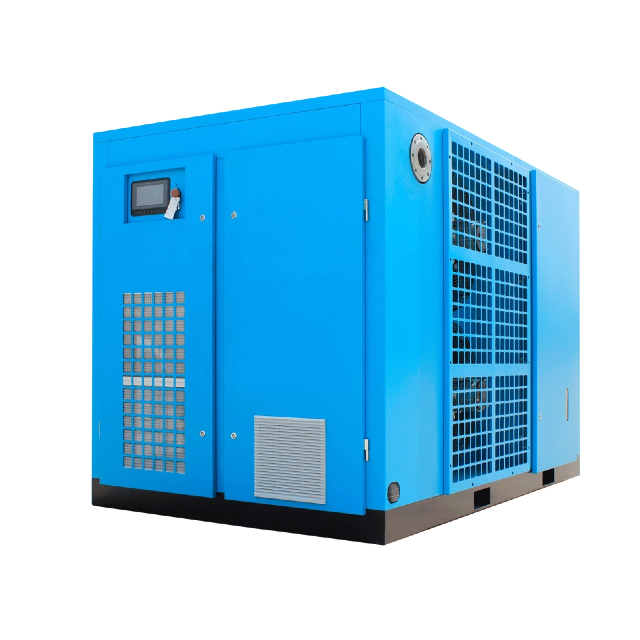
Beyond efficiency, reliability and maintenance play a critical role in determining total ownership cost and operational risk.
Heat is one of the main factors limiting compressor lifespan. High discharge temperatures accelerate oil degradation, reduce lubrication effectiveness, and place stress on seals and bearings. In single-stage compressors operating at high pressure, elevated temperatures are more difficult to control.
Dual-stage compressors manage heat more effectively through staged compression and intercooling. Lower operating temperatures protect internal components and help maintain stable operating conditions over long periods. This thermal control is especially important in industrial environments where compressors run for extended hours without interruption.
Maintenance frequency directly affects both cost and production continuity. Single-stage compressors working under high load often require more frequent service due to higher wear rates. This increases labor costs and raises the risk of unplanned downtime.
Dual-stage systems typically achieve longer maintenance intervals because components experience less thermal and mechanical stress. Luoyou dual-stage screw air compressors are designed with maintenance cycles of up to 8,000 hours, reducing service frequency and helping plants plan maintenance more predictably. Fewer interventions mean lower downtime risk and more stable production schedules.
The choice between single-stage and dual-stage compressors becomes clearer when examined through real application scenarios.
Application | Single Stage | Dual Stage |
Laser cutting | Pressure may fluctuate under load | Stable high-pressure air improves cutting precision |
Automation lines | Higher energy use during peak demand | Efficient continuous operation at required pressure |
Mining | Increased wear in harsh conditions | Better durability and thermal stability |
In laser cutting operations, stable high-pressure air is essential for consistent cutting quality. Pressure fluctuations or thermal instability can affect precision and increase material waste. Dual-stage compressors provide a more consistent air supply under continuous load.
Automation lines often run multiple tools and actuators simultaneously. When demand spikes, single-stage compressors may struggle to maintain pressure efficiently. Dual-stage systems handle these conditions more smoothly, delivering stable output with lower energy consumption.
Mining and construction environments place heavy demands on compressed air equipment. Dust, continuous operation, and high pressure increase wear. Dual-stage compressors, with improved thermal control and reduced mechanical stress, are better suited for these harsh conditions.
For many industrial users, the decision to move from single-stage to dual-stage technology comes after evaluating real operating data rather than theoretical comparisons. Luoyou Compressor designs its dual-stage screw air compressors to address the challenges that typically drive this upgrade decision.
Luoyou dual-stage compressors are engineered to deliver consistent airflow and pressure even under continuous high-load conditions. The two-stage compression process reduces pressure fluctuation and supports stable operation, which is critical for precision-driven applications such as automated manufacturing and laser cutting.
Stability under load also reduces stress on downstream equipment. Tools and systems that rely on compressed air perform more predictably when pressure remains within a narrow range, improving overall process control.
Energy efficiency is a long-term advantage rather than an immediate one. Luoyou integrates dual-stage compression with permanent magnet VFD technology to optimize energy use across varying demand levels. Variable speed control allows the compressor to slow down during partial load operation, avoiding unnecessary power consumption.
Over years of operation, this energy optimization translates into significant cost savings. In regions with high electricity prices, reduced energy consumption can shorten the return on investment period for dual-stage systems and improve overall operating economics.
Industrial equipment must function reliably in real environments, not just under ideal conditions. Luoyou dual-stage screw air compressors are designed with robust construction, advanced screw technology, and intelligent control systems to support heavy-duty industrial use.
Noise reduction features allow installation in noise-sensitive areas, while advanced filtration ensures clean, contaminant-free air output. For applications requiring higher air quality, Luoyou offers system integration with refrigerated dryers and precision air filters. Optional oil-free configurations are available for pharmaceutical and food-grade requirements, expanding the range of industries that can benefit from dual-stage technology.
Manufactured in Shanghai under CE and ISO 9001 quality management systems, Luoyou compressors meet international standards and are exported to markets across Asia, Europe, Africa, Oceania, and the Americas. This global deployment reflects the practical reliability of the design rather than theoretical performance claims.
The real difference between single-stage and dual-stage compressors lies in how they manage pressure, heat, and long-term operating stress. Single-stage systems remain suitable for moderate pressure and intermittent use, but at higher pressure and continuous operation, inefficiencies and wear become costly. Choosing the wrong compressor type can increase energy consumption and maintenance burden over time. For facilities evaluating dual-stage versus single-stage air compression, the decision should be based on pressure requirements, operating hours, and lifecycle cost rather than upfront price alone. Luoyou Compressor manufactures dual-stage screw air compressors that address these challenges through staged compression, optimized thermal management, and energy-efficient control. To discuss your specific application and explore suitable solutions, contact Luoyou Compressor.
Q1: Is a dual-stage air compressor always better than a single-stage model?
Not always. Dual-stage compressors are most beneficial in high-pressure, continuous operation. For lower pressure or intermittent use, single-stage systems can still be practical and cost-effective.
Q2: How does pressure stability differ between single-stage and dual-stage compressors?
Dual-stage compressors generally provide more stable pressure under load due to staged compression and better thermal control, which is important for precision applications.
Q3: Does a dual-stage compressor reduce maintenance frequency?
Yes. Reduced heat and mechanical stress typically result in longer maintenance intervals and lower downtime risk compared to single-stage systems operating at high pressure.
Q4: Which industries see the biggest benefit from upgrading to dual-stage technology?
Industries such as laser cutting, automotive manufacturing, mining, chemical processing, and industrial automation benefit most due to their high-pressure and continuous air demand.


