
- Home
- Products
- Hot
- About Us
- Services
- Industry
- Contact
Views: 0 Author: Site Editor Publish Time: 2026-08-05 Origin: Site


Facility and plant managers face a constant dilemma during major equipment upgrades. They frequently weigh the higher initial capital expenditure of a new system against increasingly tight operational budgets. Standard fixed-speed models often look financially attractive on paper initially. However, relying solely on this initial sticker price remains a critical procurement error. The true financial metric for this equipment is the payback period. Massive energy reductions drive this return on investment over time. Plant managers must move beyond short-term budget constraints. Treating these critical machines as long-term utility investments changes the entire financial perspective. We will provide a transparent, evidence-based framework to calculate your exact return. You will learn the specific variables impacting your payback timeline. We will clearly identify operational scenarios where upgrading makes undeniable financial sense. You will also discover the specific applications where this advanced technology simply does not fit.
Industrial facilities often misunderstand how compressor expenses accumulate over time. We must examine the standard industrial benchmark for ten-year lifecycle expenses. Equipment purchase represents only 10 to 15 percent of total spending. Routine maintenance claims another 10 percent overall. Electricity consumption devours the remaining 75 percent or more. Facility managers must focus intensely on optimizing their air compressor energy cost. Mastering this single metric yields the highest possible financial savings for any plant.
Traditional fixed-speed units hide massive inefficiencies within their daily operations. They constantly waste electricity through a process called unloading. An unloaded machine draws up to 40 percent of full-load power while idling. The motor spins aggressively during this period. However, the machine produces absolutely zero compressed air. This idle state wastes thousands of dollars annually. It acts as a silent drain on facility budgets across the globe.
A modern PM VSD compressor effectively eliminates this unloaded waste. The technology precisely matches motor speed to real-time plant demand. If your plant needs 60 percent air capacity, the motor runs at exactly 60 percent. This exact matching prevents energy from being wasted on empty idling. It establishes the foundational baseline for a rapid financial return.
Motor efficiency dictates your long-term operational expenses directly. Permanent magnet motors outperform standard induction motors across all speeds. We evaluate these motors using rigorous IE4 or IE5 international standards. Standard asynchronous induction motors rely on induced magnetic fields. They lose significant efficiency when forced to slow down. Permanent magnet designs contain internal rare earth magnets. They maintain near-perfect efficiency even at extremely low rotational speeds.
Power spikes create hidden financial penalties for industrial plants. Traditional motors draw massive inrush currents during startup sequences. Utilities penalize these sudden surges through peak-demand charges. A variable speed compressor utilizes advanced soft-starting capabilities. The drive slowly ramps up the motor speed over several seconds. This smooth acceleration entirely eliminates violent startup power spikes. You avoid peak-demand utility penalties automatically every single month.
Precision pressure control generates immediate financial benefits. Traditional systems require wide pressure bands. They often over-pressurize the network to avoid rapid motor cycling. PM VSD technology allows facilities to operate at a much lower baseline. You can maintain a remarkably tight pressure band around +/- 1.5 psi. Every 2 psi reduction in your operating pressure equates to roughly a 1 percent energy saving.
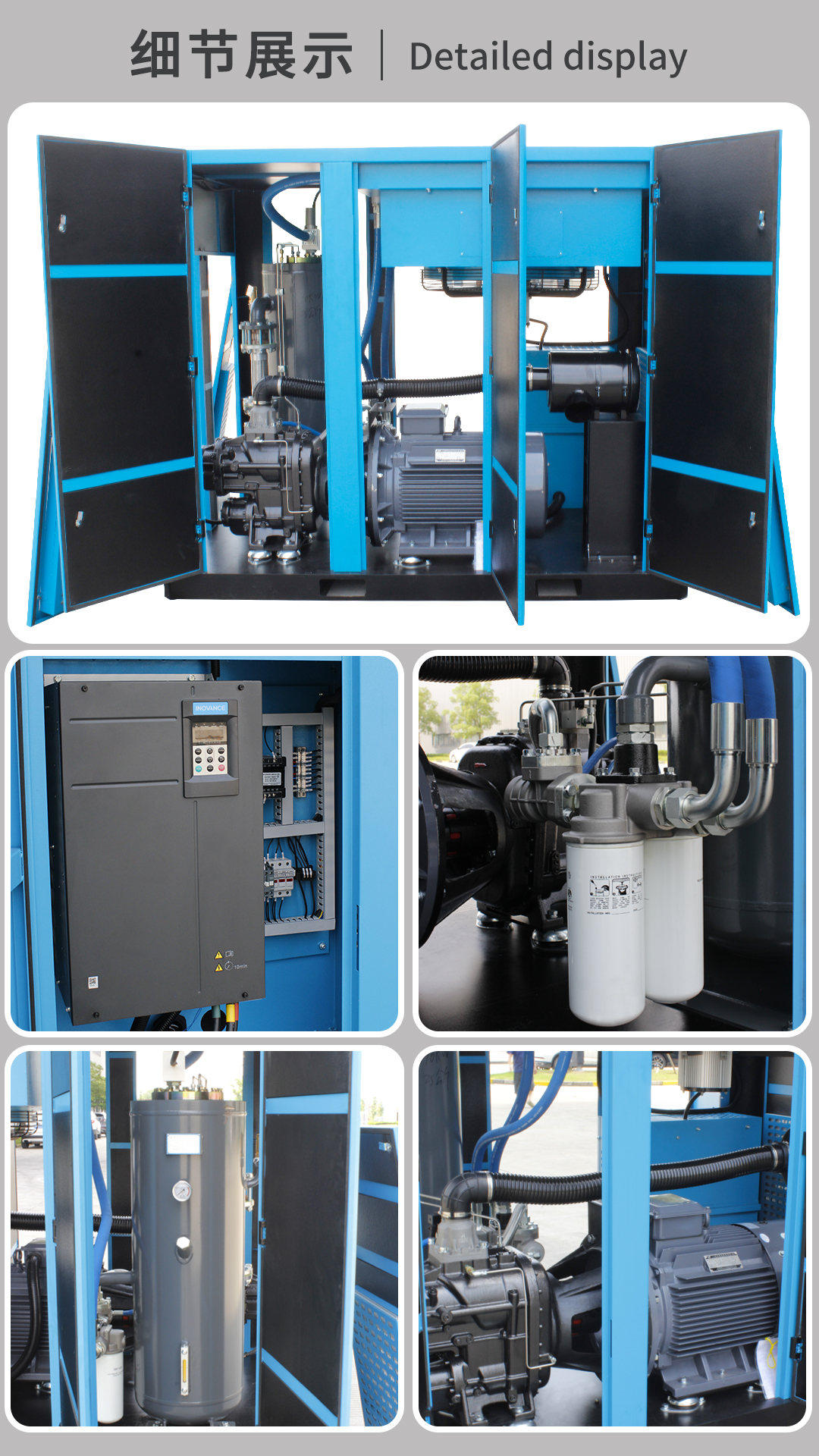
What exactly determines your compressor payback period? Four specific operational variables control this timeline. You must evaluate each variable against your unique plant conditions to project accurately.
This remains the ultimate deciding factor for any facility. Do you operate multiple distinct shifts? Does your production line experience frequent varying seasonal demands? Highly variable air demand accelerates your financial return rapidly. Constant shifting between 40 percent and 80 percent load maximizes electrical savings. A machine running steady loads cannot achieve these same dramatic reductions.
Total annual run time heavily dictates overall electricity consumption. A manufacturing plant running around the clock recoups costs exponentially faster. They operate 8,760 hours every single year. A single-shift operation runs roughly 2,000 hours annually. The 24/7 plant will see an incredibly short return window. More operating hours always equal faster payback periods.
Power costs vary wildly depending on your geographic region. Areas experiencing high kilowatt-hour costs benefit most from efficiency upgrades. Many regions also enforce strict peak-demand pricing structures. These structures heavily penalize inefficient equipment usage. Higher local utility rates naturally yield much shorter return periods. You save more money when power costs remain high.
Do not overlook lucrative local energy subsidies. Energy providers desperately want to reduce overall grid strain. Many offer substantial cash rebates for efficient operational upgrades. Installing premium-efficiency PM equipment often qualifies you for these specialized programs. These incentives directly lower your upfront capital expenditure. They immediately improve your overall financial model.
You need a reliable baseline calculation to make smart decisions. Use this straightforward formula to estimate your expected timeline accurately.
Payback Period (Years) = (Cost of PM VSD - Cost of Standard Compressor) / Annual Energy Savings ($)
Next, you must calculate those projected annual savings accurately. We recommend using a strict step-by-step math structure. Take your fixed-speed annual energy expense. Subtract your estimated PM VSD energy expense. The final difference equals your direct financial savings.
We urge buyers to practice total transparency during this calculation. Base all your assumptions on proven operational reality. You must include initial installation expenses. Account for any necessary electrical infrastructure upgrades. Add standard variable frequency drive maintenance into your capital calculations. Transparency ensures your financial model remains highly accurate and deeply trustworthy.
| Financial Metric | Standard Fixed-Speed | PM VSD Model |
|---|---|---|
| Initial Capital Expenditure | $25,000 | $38,000 |
| Annual Energy Expense | $40,000 | $26,000 |
| Annual Energy Savings | $0 | $14,000 |
| Calculated Payback Period | N/A | 10.8 Months |
Not every single facility needs this advanced technology. Some operational scenarios make the investment entirely impractical.
Does your specific application demand full capacity around the clock? Zero fluctuation means you generate zero variable savings. A standard fixed-speed unit usually proves much more cost-effective here. Fixed-speed machines run at peak mechanical efficiency when fully loaded. Upgrading makes little financial sense for constant base-load operations.
Engineering realities matter greatly in industrial settings. Permanent magnets face severe risks in extreme heat environments. High ambient temperatures can cause catastrophic magnetic demagnetization. Highly conductive ambient dust also poses severe operational threats. You will need special IP65 protective enclosures. You must also implement enhanced internal cooling methods. These necessary additions increase initial capital costs significantly.
Consider your total annual machine run time carefully. Does your equipment run less than 1,000 hours yearly? Intermittent usage generates very little overall electricity expense. The resulting savings cannot justify a significantly higher initial capital outlay. Standard machines fit intermittent tasks perfectly.
Build a data-backed business case before making any purchasing decisions. You should never guess your actual load profiles.
We strongly recommend conducting a comprehensive baseline air demand audit. You must log your operational data over 7 to 14 days. This audit captures a realistic snapshot of true air demand. Data loggers clamp directly onto incoming power cables. They record actual amp draws every few seconds. This raw data forms the foundation of your financial case.
Partner closely with a dedicated compressed air specialist. They can analyze your logged operational data accurately. They will map this raw information into a precise energy simulation. This simulation proves exactly how much money you will save. Relying on professional software eliminates human estimation errors.
Ask manufacturers specific questions before finalizing your ultimate choice. We recommend demanding clear answers to these three criteria:
You can predict the financial return of a permanent magnet air compressor remarkably well. Accurate operational data makes this projection incredibly simple. Treat your new equipment as a long-term utility investment. It should never be viewed as a disposable operational asset. While the upfront price is higher, massive electricity reductions guarantee profitability. Upgrading secures robust operational resilience for your facility. Follow these precise steps carefully to ensure success.
A: The overall maintenance costs remain quite comparable. You must maintain the electronic inverter drive properly. You should clean its cooling fans regularly. However, the soft-starting nature reduces severe mechanical wear. You save money by replacing fewer worn magnetic contactors. The motor bearings also experience much less physical stress over time.
A: Retrofitting standard induction motors rarely achieves optimal efficiency. Standard motors are not designed for low-speed thermal management. They often overheat when slowed down significantly. Purpose-built PM VSD models feature specific cooling pathways. They provide vastly superior reliability and safety compared to aftermarket retrofits.
A: These advanced motors typically last well over 10 to 15 years. They require proper thermal management to prevent rare-earth demagnetization. Regular cleaning prevents conductive dust from shorting the electrical components. Most premium manufacturers offer comprehensive industry-standard warranties spanning five to ten years on the motor itself.


