
- Home
- Products
- Hot
- About Us
- Services
- Industry
- Contact
Views: 0 Author: Site Editor Publish Time: 2026-08-06 Origin: Site


Many plant managers believe a high monthly power bill means their old equipment is failing. They rush out to buy a shiny new machine to solve the problem quickly. However, this reaction often leads directly into the trap of premature replacement. If you connect a brand-new compressor to a poorly piped system full of leaks, you simply waste capital. You just bought a more expensive, modern machine to compress air that still vanishes into thin air.
An objective baseline is absolutely crucial before making any purchasing decisions. Conducting a thorough air compressor energy audit acts as a mandatory diagnostic step. It establishes your current operating expenses. It helps you isolate systemic issues, such as artificial demand and pressure drops. It also provides the hard data needed to validate the capital required for new equipment. In this guide, we will explore exactly how to perform this assessment. You will learn the methodology behind data logging, how to interpret specific power metrics, and when to repair your system rather than replace it.
Facility leaders often view air compressors through the lens of capital expenditure (CAPEX). They negotiate hard on the initial purchase price of the machine. They often ignore the long-term operational expenditure (OPEX). This oversight leads to massive financial waste.
The lifecycle cost of a heavy-duty industrial compressor heavily skews toward energy consumption. When you look at the total money spent on a compressor over ten years, the breakdown surprises many operators.
Because energy dwarfs the initial purchase price, investing in a comprehensive factory energy audit yields incredible returns. Lowering energy consumption by just 10% often pays for the entire assessment within a few months.
When an old 100 HP compressor breaks down, the immediate instinct is to order a new 100 HP compressor. We call this the like-for-like trap. Over a ten-year span, your facility likely changed. You might have upgraded to more efficient pneumatic tools. You might have shifted some processes to electrical power. Alternatively, you might have added new production lines.
If you replace an older unit with an identically sized new unit without auditing actual system demand, you risk buying an oversized machine. Oversized compressors short-cycle constantly. They load and unload rapidly, burning energy without doing useful work. An audit measures your actual current airflow needs, preventing you from buying a mismatched machine.
A successful audit does not just produce a stack of charts. It delivers clear, actionable business intelligence. You should expect verifiable payback periods for any recommended upgrades. You should receive actionable leak tags showing exactly where air escapes. Finally, it must deliver concrete right-sizing data so your procurement team can buy the correct machine size.
You cannot improve what you do not measure. A proper evaluation follows a strict engineering methodology. It looks at the system holistically, rather than just staring at the machine in the utility room.
Engineers divide air systems into two distinct zones. The supply side includes everything inside the compressor room. This covers the compressors, dryers, filters, and primary receiver tanks. The demand side encompasses the production floor. This includes the distribution piping, point-of-use regulators, pneumatic cylinders, and blow-off nozzles. A good evaluation investigates both sides. Generating air efficiently on the supply side matters little if you waste it on the demand side.
Snapshot readings hold very little value. Watching a pressure gauge for five minutes tells you nothing about a complex manufacturing cycle. True diagnostics require continuous data logging.
Air leaks act as invisible holes in your company budget. You cannot hear most of them because factory floors are incredibly loud. Auditors use highly sensitive ultrasonic leak detectors. These tools listen for the high-frequency turbulence created by escaping air. The auditor tags each leak, measures its decibel level, and calculates the exact financial cost of that specific leak. Fixing these leaks serves as the ultimate low-hanging fruit.
Many systems lack adequate air storage. Small receiver tanks force the compressor to cycle rapidly to maintain pressure. Auditors assess your receiver tank sizing against your total system flow. They also evaluate the piping network for pressure drops. If your pipes are too narrow, the air encounters high friction. You lose valuable pressure before the air ever reaches your pneumatic tools.
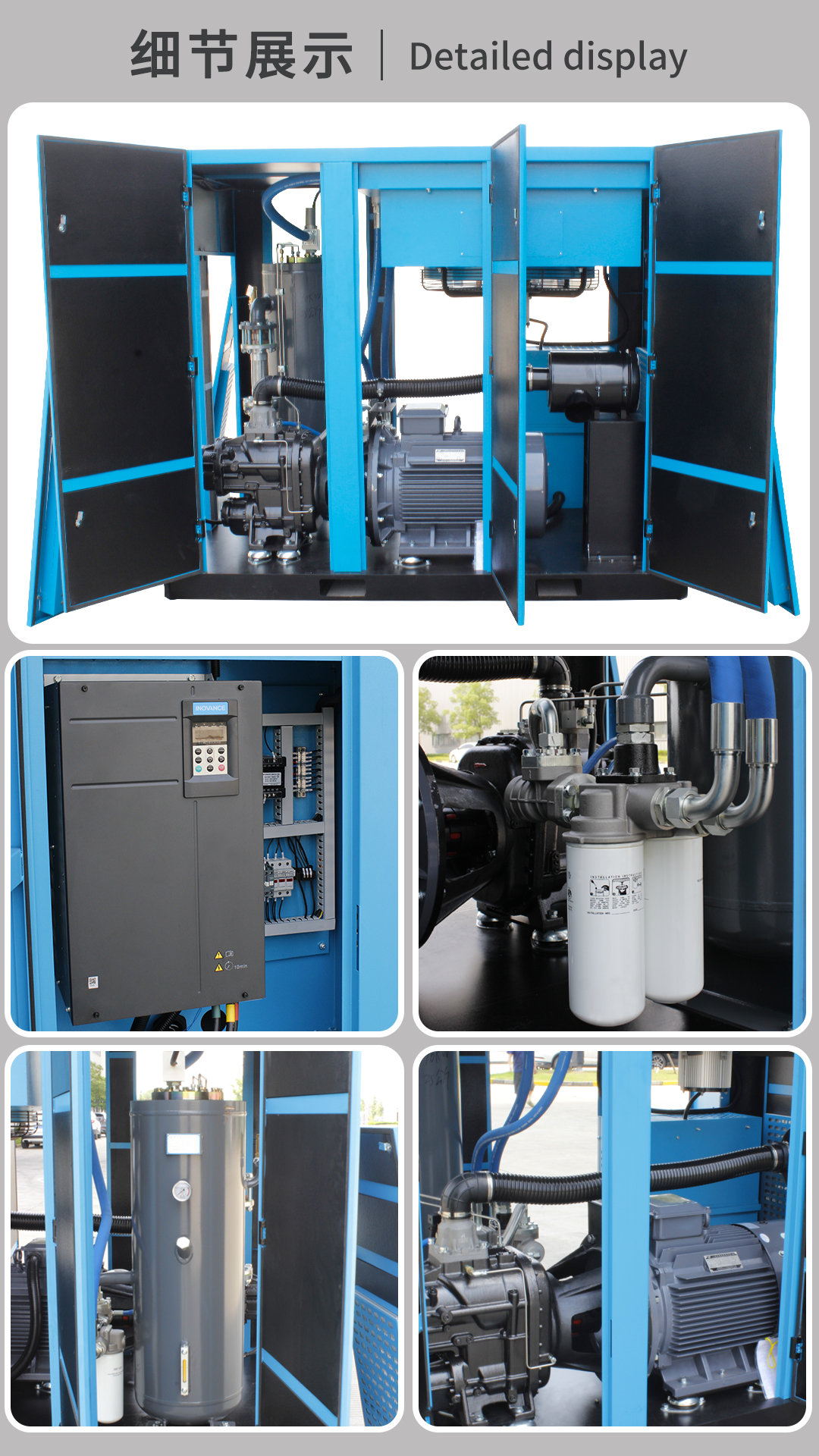
Once the data loggers come off, the real work begins. Raw numbers mean nothing without proper context and mathematical analysis.
Specific power serves as the ultimate benchmark for compressed air efficiency. Think of it as the miles-per-gallon rating for your system. It measures how much electrical power (in kilowatts) you need to generate 100 cubic feet per minute (cfm) of air.
A lower specific power number indicates a more efficient system. By establishing this baseline, you can instantly compare your current state against industry best practices. If your system runs at 25 kW/100 cfm, and the industry standard is 18 kW/100 cfm, you immediately see the optimization potential.
System Efficiency Benchmark Guide
| Specific Power (kW/100 cfm) | Efficiency Rating | Action Required |
|---|---|---|
| 15 - 18 | Excellent | Maintain current preventative maintenance schedule. |
| 19 - 22 | Average | Investigate minor leaks and evaluate filter pressure drops. |
| 23 - 28 | Poor | Conduct full system audit. High potential for rapid ROI on repairs. |
| 29+ | Critical | Immediate intervention needed. System is severely compromised. |
Artificial demand represents a hidden cost multiplier. It occurs when you run your plant header pressure higher than your tools actually require. For example, your packaging machines might only need 85 psi to operate properly. However, due to pressure drops in bad piping, you crank the compressor up to 110 psi to compensate.
Any unregulated equipment on the floor now receives 110 psi instead of 85 psi. Unregulated blow-offs and older pneumatic cylinders will consume significantly more air at this higher pressure. You pay for this extra volume, but it adds zero value to your manufacturing process. An audit identifies this artificial demand and recommends proper point-of-use regulators.
Engineers love technical data, but financial officers approve budgets. A proper audit frames the technical findings into a financial model. The Cost of Inaction (COI) metric shows plant managers exactly how much cash they burn every month they delay repairs. When a CFO sees that ignoring a piping upgrade costs the company $4,000 a month in wasted electricity, securing budget approvals becomes a streamlined process.
The audit data ultimately drives one critical question: Should you fix what you have, or buy something new? Relying on data removes emotion and guesswork from this decision.
You do not always need a new machine. Many audits reveal that the compressors function perfectly well, but the surrounding system sabotages their performance. You should focus on repairs and retrofits in the following scenarios:
Sometimes, a full compressor replacement is the only logical path forward. The data will clearly highlight indicators of terminal equipment decline.
You should consider replacement if your current machine experiences recurring high maintenance costs. If you replace the air end, the motor, and the cooler within two years, the machine has reached the end of its life. Persistent overheating issues also indicate internal failure. Finally, if the audit proves your machine type is fundamentally wrong for your base load, replacing it guarantees a strong return on investment.
Variable Speed Drive (VSD) technology often looks like a magic bullet for energy efficiency. Sales representatives heavily promote them. However, you must apply a skeptical lens. VSDs are highly efficient for trimming variable loads. They speed up and slow down perfectly to match changing factory demand.
Conversely, VSDs are highly inefficient and costly if used for constant base loads. An inverter drive inherently loses about 3% to 5% of its energy simply converting power. If you run a VSD machine at 100% capacity all day long, it actually consumes more power than a standard fixed-speed machine.
You must use the audit's flow profile data to prove or disprove the ROI of a VSD upgrade. If your flow fluctuates wildly between 200 cfm and 600 cfm, a VSD saves massive amounts of money. If your flow stays locked at 500 cfm around the clock, a fixed-speed replacement makes much more sense.
| System Symptom | Primary Audit Finding | Recommended Action |
|---|---|---|
| Low pressure at tools | High pressure drop in distribution piping | Repair: Upsize piping and install local storage tanks. |
| Compressor running hot | Failing internal coolers / bad air end | Replace: Machine is reaching terminal decline. |
| High energy bills | 30% weekend baseline leak rate | Repair: Conduct ultrasonic leak tagging and mitigation. |
| Frequent short-cycling | Oversized fixed-speed machine for current load | Replace: Install a properly sized VSD machine for trim loads. |
The quality of your data depends entirely on the integrity of the people collecting it. Not all assessments provide equal value. Facility managers must navigate several implementation risks to ensure a successful outcome.
You must remain vigilant against vendor bias. Many equipment manufacturers offer "free" system assessments. You should treat these with caution. Often, a free assessment magically concludes with a strong recommendation to buy the vendor's newest flagship machine. The auditor might ignore cheap piping fixes in favor of expensive equipment sales.
To protect your interests, suggest utilizing independent engineering firms. You can also leverage utility-sponsored audit programs. Independent engineers do not sell hardware. They sell data and solutions. Their objectivity guarantees that you only buy what you genuinely need.
A trustworthy audit follows established engineering standards. Look for alignment with the U.S. Department of Energy (DOE) Uniform Methods Project (UMP) guidelines for compressed air evaluation. These standardized frameworks dictate exactly how data should be logged, normalized, and calculated. Following these guidelines ensures your baseline metrics hold up against intense technical scrutiny.
Many plant managers fear that data collection will halt production. This is a common misconception. Modern data logging is entirely non-invasive. Certified technicians install external flow meters without cutting pipes. They place amp loggers inside electrical cabinets safely while the power remains on. Production continues without a single moment of downtime.
Once you hold the finalized report, you must translate it into action. Do not simply hand the report to a vendor. Use the exact flow profiles, pressure requirements, and specific power targets to write a precise technical specification. You then issue this as a formal Request for Proposal (RFP). This forces all vendors to bid on the exact same parameters, making it easy for you to compare their quotes accurately.
Replacing an air compressor without understanding your system dynamics is a dangerous financial gamble. An objective, data-driven audit shifts compressor procurement from a guesswork-driven expense to an evidence-backed financial investment. It exposes the hidden waste in your piping, highlights artificial demand, and proves whether you need a new machine or simply better maintenance.
Your actionable next step is clear. Do not solicit equipment quotes yet. First, assess your current baseline metrics. Document your current energy spend, map out your perceived pressure issues, and engage an independent auditor. By understanding your true operational footprint first, you guarantee that your next system upgrade will deliver maximum efficiency and a rapid return on investment.
A: Costs vary based on facility size and audit depth. A basic walk-through might cost $1,500, while a comprehensive 14-day data-logging audit for a large plant typically ranges from $4,000 to $10,000. However, the identified energy savings usually offset this cost within three to six months of implementing the recommendations.
A: A standard data collection phase takes 7 to 14 days. This duration is strictly necessary to capture true operational variance, including peak production shifts, lunch breaks, and crucial non-production weekend baseline loads.
A: Yes. Many local power companies heavily subsidize or fully cover the cost of independent energy audits. Furthermore, if the audit proves a new, high-efficiency machine will reduce your kW consumption, utilities often provide substantial cash rebates to offset the capital purchase.
A: Standard engineering benchmarks dictate that pressure drop should not exceed 10% of the compressor's discharge pressure. For example, if your machine discharges at 100 psi, the air reaching your pneumatic tools on the floor should never fall below 90 psi.


