
- Home
- Products
- Hot
- About Us
- Services
- Industry
- Contact
Views: 0 Author: Site Editor Publish Time: 2026-08-13 Origin: Site


Modern manufacturing relies heavily on fiber laser cutting technology. Today, compressed air is increasingly replacing traditional nitrogen and oxygen as the primary assist gas. Facilities make this shift because air offers incredible cutting speeds and cleaner edges on various metals. However, selecting the right equipment remains a significant challenge.
Incorrectly sizing your compressor creates severe operational problems. Undersizing leads to sudden pressure drops. These fluctuations ruin expensive workpieces and cause heavy dross buildup. Conversely, oversizing the unit wastes massive amounts of energy and drains facility resources. You need exact alignment between your laser and your air supply.
This guide provides a comprehensive technical evaluation framework. We will help you match your compressor specifications directly to your laser cutter requirements. You will learn how to evaluate flow rates, continuous pressure needs, and critical air purity standards to optimize your production line.
Air compressors serve as the lungs of your laser cutting operation. The assist gas accounts for a massive portion of daily operational demands. Compressed air plays a vital role in the cutting process. It acts as the physical force clearing molten metal from the kerf. Without a robust cutting gas air supply, the laser beam merely melts the metal. The air jet must forcefully eject this slag before it hardens.
Many operators confuse pressure with flow. Laser cutters require high pressure to blow away dense molten metal. Typical systems demand 15 to 16 bar (220 to 230 PSI). However, the continuous flow rate dictates the compressor's motor size. Flow rate is measured in cubic feet per minute (CFM) or liters per minute (L/min). A compressor might easily reach 16 bar but fail to sustain the volume required for a long cut.
This mismatch creates severe implementation risks. Pressure drops pose the biggest danger during continuous cuts. A sudden drop of just one or two bar alters the cutting dynamics completely. You will see severe dross buildup on the bottom of the metal sheet. In thicker materials, pressure drops cause complete structural failure of the cut. The laser head might even suffer blowback damage.
Common Mistake: Relying solely on static pressure readings. Always measure dynamic pressure while the laser is actively cutting. Static pressure might show 16 bar, but dynamic pressure can plummet if the flow rate is insufficient.
Industrial manufacturers heavily favor specific equipment profiles for standardized production. The 22kW laser cutting air compressor serves as the definitive baseline capability for modern job shops. A standard 22kW unit typically delivers roughly 2.0 to 2.5 cubic meters per minute at a continuous 16 bar.
This output profile matches perfectly with mid-range fiber laser equipment. A 22kW system comfortably supports 3kW to 6kW fiber laser cutters. It handles single-head or dual-head setups cutting medium-thickness carbon steel and stainless steel. The flow rate provides enough volume to clear thick slag while maintaining the crucial 16-bar pressure threshold.
Consider the benefits of matching this equipment tier:
You must also prioritize the continuous duty cycle. Production-scale laser cutting requires 100% duty cycle operations. Piston compressors fail miserably in this environment. They cannot handle continuous loads without severely overheating. Rotary screw technology is mandatory at this tier. Screw compressors run continuously, generate less friction, and maintain stable temperatures during multi-shift operations.
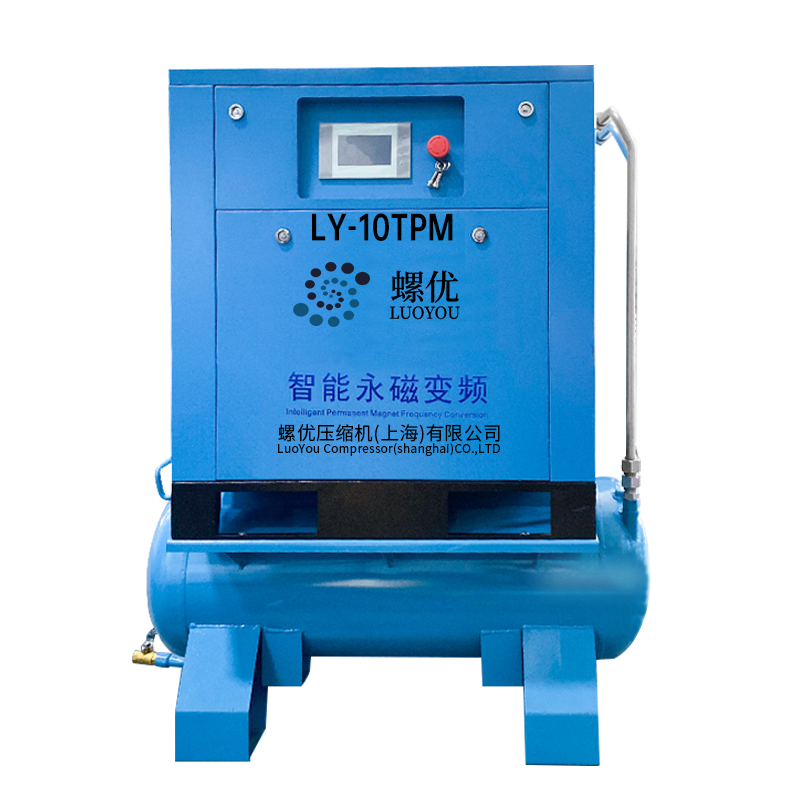
Choosing the right equipment requires a systematic approach. You cannot guess the required laser cutting compressor power. Start by evaluating the specific manual provided by your laser cutter OEM. You need to identify two critical metrics: the minimum dynamic pressure (in bar or PSI) and the peak consumption volume (in L/min).
The nozzle factor dramatically alters your air demand. Operators often overlook this variable during compressor sizing. A 2.0mm nozzle uses exponentially less air than a 3.0mm nozzle operating at the exact same pressure. As you increase the nozzle orifice to cut thicker materials, the volumetric demand spikes aggressively. You must size the compressor for the largest nozzle you plan to use.
Engineers strongly recommend applying the 20% safety buffer rule. Standardize your sizing logic to prevent future bottlenecks. If your laser requires 2.0 m³/min of air, your compressor must output at least 2.4 m³/min. This buffer accounts for several real-world variables:
Below is a standardized decision matrix to guide your evaluation process.
Table: Standard Compressor Sizing Matrix for Fiber Lasers
| Compressor Power Range | Target Laser Power | Typical Application Profile | Expected Air Delivery (at 16 Bar) |
|---|---|---|---|
| 11kW – 15kW | 1kW – 2kW | Intermittent cutting, very thin sheet metal, prototyping. | 1.0 - 1.5 m³/min |
| 22kW – 30kW | 3kW – 6kW | Production manufacturing, medium carbon/stainless steel. | 2.0 - 3.5 m³/min |
| 37kW+ | 10kW+ or Multi-machine | Heavy industrial operations, thick plate cutting, multi-head setups. | 4.0+ m³/min |
Engineers often solve the power equation but fail on air quality. Air purity acts as the hidden threat to laser heads. Even perfectly sized motor power will fail your operation if the air contains moisture or vaporized oil. Contaminated air sprays directly onto the focusing lens and protective windows inside the laser head.
When oil or water hits a laser lens, it creates a thermal lensing effect. The contamination absorbs the laser's immense heat. This rapidly cracks or completely shatters the expensive optical glass. Replacing a damaged cutting head lens stops production and creates massive repair delays.
You must implement rigorous filtration standards alongside the compressor. The industry strictly follows ISO 8573-1 Class 1.2.1 for laser cutting assist gas. This standard mandates practically zero oil and completely dry air. Meeting this standard requires dedicated auxiliary equipment:
Tank sizing also plays a crucial role in system stability. A high-pressure buffer tank stabilizes the aggressive pressure spikes during piercing operations. We recommend installing a minimum 1000L high-pressure receiver tank. The tank acts as a battery, storing ready-to-use air. It prevents the compressor motor from surging every time the laser triggers a brief burst of air.
Best Practice: Install the buffer tank directly before the laser cutter, rather than right next to the compressor. This placement absorbs pressure drops from long pipe runs.
Evaluating long-term running performance is just as critical as hitting the initial technical specifications. Laser cutting air demand fluctuates wildly during a typical shift. The system pulls massive air volumes during a pierce, followed by steady flow during a long cut. It then drops to zero while the cutting head traverses to the next start point.
Because of these fluctuations, we strongly recommend evaluating a Variable Speed Drive (VSD) 22kW screw compressor. Traditional fixed-speed units run at full RPM regardless of actual demand. They blow off excess air, wasting immense amounts of energy. VSD technology ramps the motor speed up or down to match the exact real-time demand. This eliminates idle energy waste and reduces mechanical wear on the rotary screw air end.
You must also set realistic maintenance assumptions. Sustaining a 16-bar continuous output places high stress on internal components. You must routinely replace specific consumables to maintain peak volumetric efficiency. Oil separators require strict attention. A failing separator allows oil vapor to bypass the filters and reach the laser. Regularly swap air filters and service the dryer components to preserve ISO 8573-1 standards.
Apply strict shortlisting logic when contacting manufacturers. Never buy a machine based solely on a "22kW" sticker. Motor power alone does not guarantee airflow. Different brands exhibit wildly different volumetric efficiencies. Urge your suppliers to provide actual performance curves. These charts show the exact flow rate (m³/min) delivered at your required 16-bar pressure limit.
Ensure the manufacturer tests the equipment under real-world ambient temperatures. A compressor rated at 20°C ambient might lose 15% of its flow capacity in a sweltering 40°C summer workshop. Insist on transparency regarding these performance curves before finalizing your equipment selection.
Selecting the optimal equipment is a delicate balancing act. You must align the continuous flow requirements of the laser with the rigorous demands of your facility's production hours. Keep these actionable steps in mind:
A: Typically, no. Standard shop compressors max out at 8-10 bar (115-145 PSI). Laser cutting requires a dedicated high-pressure system (usually 16 bar / 232 PSI) to effectively clear molten material from the kerf.
A: You will experience sudden pressure drops during continuous operation. This leads to incomplete cuts, heavy dross buildup on the underside of the material, and potential blowback damage to the expensive cutting head.
A: Yes. A 22kW industrial motor requires a robust three-phase power supply. Buyers must verify their facility's electrical infrastructure, including adequate breaker sizing and heavy-duty wiring, before attempting installation.


