
- Home
- Products
- Hot
- About Us
- Services
- Industry
- Contact
Views: 0 Author: Site Editor Publish Time: 2026-08-14 Origin: Site


Moisture is the undisputed enemy of printed circuit board (PCB) assembly and semiconductor fabrication. Even microscopic condensation causes severe defects across modern production lines. It triggers solder paste anomalies, pneumatic equipment failure, and invisible trace corrosion. You simply cannot afford to ignore these risks in high-stakes environments. Specifying an air dryer for electronics manufacturing goes beyond merely removing visible water droplets. You must balance strict ISO air purity requirements alongside facility energy consumption and daily maintenance realities. Getting this calculation wrong compromises product yield and inflates utility bills unnecessarily. This article provides facility managers and production engineers a clear, evidence-based framework. You will learn how to evaluate, shortlist, and select the precise air drying technology for your specific manufacturing environment. We will cover critical moisture requirements, technology comparisons, and crucial upstream filtration strategies.
Trace moisture translates directly into heavy production losses. Many manufacturing facilities significantly underestimate how a few drops of water degrade sensitive electronic components over time. When condensation enters your pneumatic network, it immediately attacks productivity and inflates scrap rates. You must frame this issue as a direct business problem rather than just a routine maintenance annoyance.
In Surface Mount Technology (SMT) applications, precision is absolutely everything. Moisture wreaks havoc on the delicate pick-and-place pneumatic nozzles used in modern lines. Microscopic water droplets cause inconsistent suction, leading directly to costly component misplacement. Furthermore, water easily emulsifies with compressor lubricants to create sticky residues inside pneumatic valves. This forces unexpected line stoppages and drives up maintenance labor hours as technicians scramble to clean the machinery.
PCB assembly and soldering face even worse threats from untreated air. Water vapor present in blow-off air introduces severe contamination before the boards even reach the oven. During wave soldering, residual moisture expands rapidly under high heat. This rapid expansion causes critical board delamination. It forces micro-cracking across delicate electrical pathways and creates dangerous voiding in solder joints. These critical defects often remain hidden until final electrical testing, or worse, until the product fails in the consumer's hands.
A successful drying system solves these issues comprehensively. It eliminates moisture-related scrap rates entirely. However, it must achieve this protection without unnecessarily inflating your facility's baseline energy consumption. The ultimate success criteria involve pairing absolute moisture control with smart, sustainable energy efficiency.
You need an objective, measurable benchmark to evaluate air purity. Relying on subjective manufacturer claims often leads to inadequate system design and incredibly costly retrofits. Industry professionals use the rigorous ISO 8573-1 standard instead. This international framework categorizes moisture levels into specific classes, allowing you to match equipment precisely to your actual process tolerances.
General electronics packaging and high-tech fabrication demand entirely different purity levels. You must separate these zones when planning your facility infrastructure. General assembly environments typically tolerate Class 4 moisture. This classification translates to a +3°C (+38°F) compressed air dew point. Standard tooling, pneumatic clamps, and basic packaging equipment operate perfectly well within this specific range.
Conversely, cleanrooms and specialized SMT lines require incredibly stringent control. These critical production zones strictly demand Class 2 or Class 1 moisture levels. They need continuous ultra-dry air ranging from -40°C to -70°C (-40°F to -100°F). Moisture simply cannot exist at these levels, guaranteeing a perfectly safe environment for microscopic electronics work and sensitive material handling.
You must navigate a fine line when specifying these exact parameters. Over-specifying your requirements creates a massive, ongoing risk factor. Demanding Class 1 air for a facility that only needs Class 4 creates exponential increases in baseline energy costs. You end up paying heavily for extreme dryness you do not actually utilize. Under-specifying, however, practically guarantees catastrophic product failure. Carefully auditing your most sensitive pneumatic machine ensures you hit the exact right purity target without wasting capital.
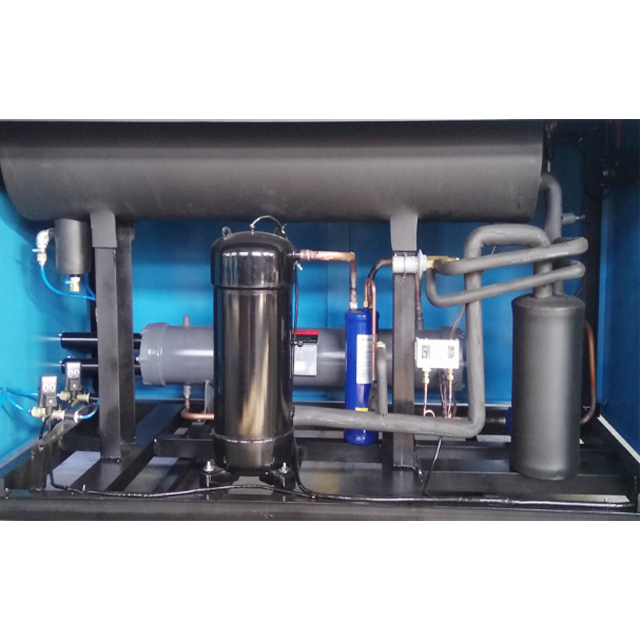
Choosing between refrigeration and adsorption dictates your entire pneumatic architecture. Each technology serves a distinct, specialized purpose in modern electronics manufacturing.
Standard cooling circuits drive the first main category. A refrigerated air dryer typically cools incoming air to approximately +3°C (+38°F). The condensed water then drains away automatically through timed or zero-loss valves. These units come in non-cycling and cycling variants. Cycling models save considerable energy by turning off the refrigerant compressor during periods of low air demand.
They remain the best fit for general facility air. You will find them ideal for basic packaging lines, rugged pneumatic tools, and non-sensitive controls. However, they carry distinct, unavoidable limitations. They cannot prevent condensation in piping exposed to freezing ambient temperatures. More importantly, they simply cannot satisfy the stringent, sub-zero moisture requirements of advanced SMT fabrication lines.
Desiccant units take a completely different scientific approach. They utilize porous adsorptive media, such as activated alumina or molecular sieves, to physically strip water vapor from the airstream. This highly efficient chemical process routinely achieves a pristine dew point of -40°C or even -70°C.
They represent the ultimate best fit for direct PCB blow-off applications. Cleanrooms and delicate semiconductor manufacturing processes rely exclusively on this technology to maintain strict yield rates.
However, implementation brings specific operational realities you must boldly acknowledge. Heatless desiccant models are incredibly reliable but consume up to 15% of your total compressed air capacity just for purging the wet media beds. Heated or blower-purge models significantly reduce this expensive air waste. However, they require large external heaters or blowers, which drastically increases your overall facility electrical load.
| Technology Type | Standard Performance | Best Electronics Application | Primary Limitation |
|---|---|---|---|
| Cycling Refrigerated | +3°C (+38°F) target | General assembly, packaging, basic tooling | Cannot meet cleanroom or SMT moisture standards |
| Heatless Desiccant | -40°C to -70°C target | Direct PCB blow-off, delicate fab processes | Consumes ~15% of total capacity for purging |
| Heated Purge Desiccant | -40°C to -70°C target | Large scale high-tech fab requiring efficiency | Requires higher initial capital and electrical load |
An industrial dryer never operates successfully in isolation. It relies heavily on comprehensive, facility-wide system synergy. Even the most advanced desiccant tower fails rapidly without proper pre-filtration and post-filtration equipment installed securely alongside it.
Compressor oil carryover poses a massive, existential threat to adsorptive beds. If liquid oil or heavy aerosols coat the tiny pores of the desiccant beads, they lose their physical ability to capture water vapor. This irreversible damage forces expensive, premature media replacement and causes immediate moisture spikes downstream. Installing high-efficiency coalescing filters upstream of the primary dryer eliminates this severe oil threat entirely.
Post-filtration requirements are equally critical for your electronics compressed air network. Desiccant beads naturally grind against each other as pressure fluctuates during tower switching phases. This constant friction creates highly abrasive fine dust. If left unchecked, this dust travels downstream directly onto your sensitive electronics and ruins tight-tolerance pneumatic cylinders. You must install 1-micron or tighter particulate filters immediately after the dryer to catch these destructive contaminants. Implementing this comprehensive clean air treatment strategy thoroughly safeguards both your machinery and your final product yield.
Piping materials also require extremely careful consideration during installation. Standard black iron or galvanized steel pipes eventually rust when exposed to any residual moisture or warm compressor condensate. This hard rust scale inevitably flakes off, travels at high velocity, and permanently blocks microscopic pneumatic nozzles. We highly recommend utilizing smooth aluminum or marine-grade stainless steel piping networks. They prevent internal corrosion entirely, reduce friction-based pressure drop, and ensure perfectly clean delivery to your most critical usage points.
Selecting your optimal system requires carefully balancing initial capital expenditure (CapEx) against five-year energy and routine maintenance operating costs (OpEx). You must always look deeply beyond the initial purchase price to understand the true financial impact of your engineering choice.
Consider system pressure drop carefully during your evaluation phase. Every single filter and dryer you add to the network creates physical flow resistance. Every 2 PSI of pressure drop through your treatment equipment forces the main air compressor to work significantly harder. This added resistance increases total compressor energy consumption by roughly 1%. Sizing your equipment properly, sometimes choosing a slightly larger filter housing intentionally, minimizes this invisible energy penalty over the equipment's entire lifespan.
We regularly see facilities make critical adoption mistakes that ruin their initial investment. A remarkably common error involves failing to account for peak summer ambient temperatures and elevated inlet temperatures. High heat severely degrades any dryer's core moisture removal capacity. A system sized perfectly for a mild winter may fail completely during a July heatwave, suddenly flooding your lines with liquid water. Additionally, operators frequently neglect to install adequate automatic moisture drains before the primary dryer. Liquid water slugging into the dryer overwhelms its capacity instantly.
Follow this proven shortlisting logic to secure the right system for your facility:
There is no universal "best" system designed for every single electronics facility. General assembly lines can safely and efficiently rely on modern cycling refrigerated dryers to maintain basic pneumatic functions. Conversely, high-density PCB, intricate semiconductor, and demanding SMT operations must confidently invest in advanced desiccant technology to rigidly protect their product yield.
To move forward effectively and protect your investment, take the following actions:
Taking these deliberate, data-driven steps ensures you build a robust, highly energy-efficient system that fully protects your sophisticated production line from costly moisture damage.
A: Most critical electronics applications strongly require Class 2 (-40°C). This includes direct air contact with delicate PCBs, cleanroom environments, and highly sensitive SMT pneumatics. However, Class 4 (+3°C) usually suffices for general plant air, basic packaging areas, and standard robust assembly tools.
A: A refrigerated unit works successfully only if your required moisture tolerance strictly remains above +3°C (38°F) and local ambient temperatures never drop below freezing. For precise electronic components and high-tech fabrication, its moisture removal capacity proves entirely insufficient to prevent trace defects.
A: Efficiency loss usually stems directly from compressor oil carryover. Lubricant aerosols coat the porous desiccant beads, completely destroying their physical adsorption capacity. This degradation also occurs if you fail to routinely replace the desiccant media within the manufacturer's recommended three-to-five-year operational lifecycle.
A: High ambient temperatures severely reduce the internal cooling capacity of refrigerated units. They also drastically increase the total water vapor load entering desiccant towers. You must often proactively oversize your chosen unit relative to the main compressor's CFM output to handle peak summer heat effectively.


