
- Home
- Products
- Hot
- About Us
- Services
- Industry
- Contact
Views: 0 Author: Site Editor Publish Time: 2026-08-25 Origin: Site


Few things frustrate facility managers more than an industrial air compressor constantly firing up and shutting down. This erratic behavior creates severe operational headaches immediately. It threatens equipment lifespans, spikes energy costs, and can eventually lead to catastrophic system failure. We define this destructive pattern as air compressor short cycling within commercial and industrial settings. Normal machinery operations require intermittent cycles to supply consistent pneumatic power safely. Pathological short cycling, however, forces heavy-duty motors to run for just seconds before abruptly halting.
This guide provides a systematic, decision-stage framework to help you eliminate these aggressive cycles. You will learn actionable start-stop troubleshooting strategies to protect your equipment. We cover everything from zero-cost controller adjustments to structural system upgrades designed to restore long-term stability.
Ignoring a compressor problem rarely ends well. When you let a unit rapidly cycle on and off, you trigger a chain reaction of financial and mechanical damage. You must quantify these impacts to understand why immediate intervention is necessary.
Energy inefficiency represents the most immediate financial drain. Every time an induction motor starts, it requires a massive power surge. This inrush current often equals five to seven times the motor's normal running current. Frequent motor starts translate directly into high peak demand charges on your monthly utility bill. You are essentially paying premium rates just to turn the machine on repeatedly.
Mechanical wear accelerates exponentially under these conditions. Starter contactors arc and degrade. Motor windings overheat from the continuous electrical surges. Drive belts stretch and snap prematurely. Industrial equipment thrives on steady, continuous operation. Constant interruptions destroy internal components long before their rated lifespan expires.
Moisture accumulation creates another hidden threat. Compressors naturally produce water condensation during operation. A healthy, extended run cycle allows the system oil to reach an optimal operating temperature. This heat boils off internal moisture. Short run times prevent the system from getting hot enough. Water then mixes into the oil. This emulsified mixture destroys bearing lubrication and causes internal rust.
We must define a healthy operational baseline to evaluate success. NEMA motor standards and manufacturer specifications usually dictate a maximum limit for safe operations. A fixed-speed industrial unit should typically experience no more than 6 to 10 starts per hour. If your unit exceeds this rate, you have a pathological cycling issue.
| Metric | Healthy Operation | Pathological Short Cycling |
|---|---|---|
| Motor Starts Per Hour | 6 to 10 starts | 15+ starts |
| Average Run Time | 5 to 15+ minutes | Under 60 seconds |
| Oil Temperature | Consistently reaches 140°F - 160°F | Fails to reach operating temperature |
| Energy Draw | Stable running current | Frequent high-amp inrush surges |
Before buying new parts, look at your existing parameters. Parameter tuning offers a zero-cost solution to many cycling problems. The pressure controller dictates exactly when your machine turns on and off.
You need to evaluate the pressure differential. We call this the gap between the cut-in pressure and the cut-out pressure. The cut-in point tells the motor to start pumping air. The cut-out point tells it to stop. A pressure band that is too narrow forces the compressor to react instantly to minor pressure drops.
Imagine setting your cut-in at 95 PSI and your cut-out at 100 PSI. This creates a tiny 5 PSI differential. The moment someone uses a small burst of air, the system drops below 95 PSI. The motor fires up. It reaches 100 PSI seconds later and shuts down. You have created a textbook short cycling loop.
You can apply an actionable fix immediately. Widen the pressure band setting to give the system breathing room. Change a 5 PSI differential to a 15 or 20 PSI differential. For example, set the cut-in at 90 PSI and the cut-out at 110 PSI. Ensure your new lowest pressure point still meets the minimum requirements for your endpoint equipment.
You must balance this adjustment against safety risks. Never raise the maximum cut-out pressure beyond the compressor's officially rated capacity. Pushing a 125 PSI machine to 140 PSI causes dangerous over-pressurization. It strains the pump, triggers mechanical relief valves, and wastes enormous amounts of electrical energy.
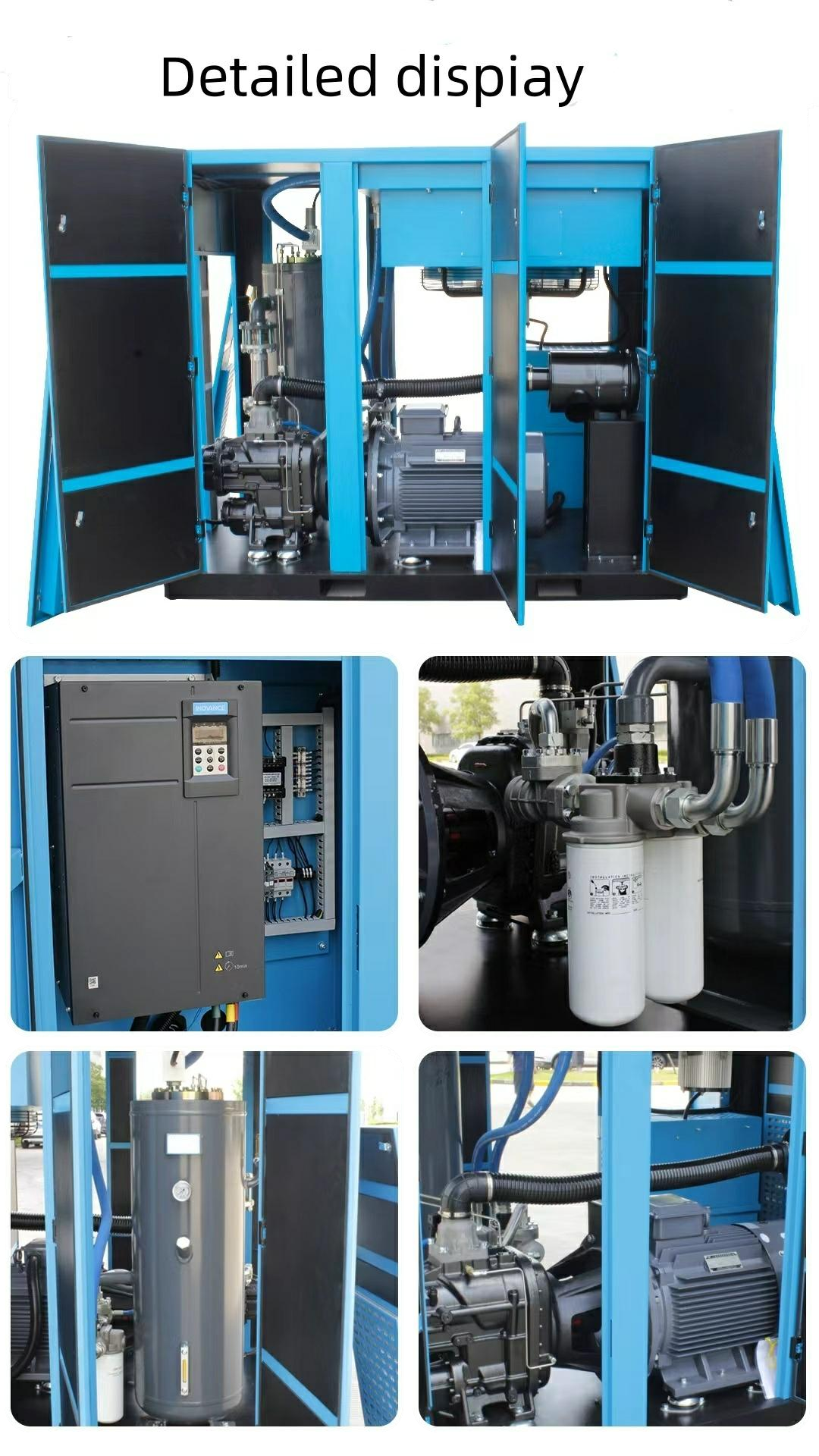
If parameter adjustments fail to resolve the problem, evaluate your infrastructure scaling. Your air storage tank might simply be too small for your pump.
We evaluate this by comparing Cubic Feet per Minute (CFM) output against tank size. A mismatched system creates chaos. If a facility features a high-CFM compressor connected to a small storage tank, physics takes over. The massive pump fills the tiny tank almost instantly. The unit shuts off. Workers use the stored air quickly, depleting the small reserve. The pump fires back up. It fills too fast and depletes too fast.
You should follow an established industry standard rule of thumb. Aim for 1 to 3 gallons of air receiver capacity per CFM of compressor output. If you operate a 50 CFM compressor, you need at least a 50-gallon tank. Facilities experiencing high demand spikes should lean closer to 3 gallons per CFM.
You can resolve sizing issues by adding a secondary receiver tank downstream. A "wet" tank sits before the air dryer, dropping out moisture and providing initial buffer volume. A "dry" tank sits after the dryer, storing clean air close to production lines. Expanding total volume stabilizes the entire cycle.
Modern industrial equipment behaves differently than basic garage compressors. When evaluating advanced systems, you must look at internal mechanical part repair and replacement.
Rotary screw units and modern reciprocating compressors use inlet valves to idle. Instead of shutting the motor down completely when pressure is met, they close an inlet valve. The motor keeps spinning, but it stops compressing air. We call this the compressor load unload cycle. This design prevents destructive electrical inrush currents.
If your compressor rapidly loads and unloads without turning off, you have a specific mechanical fault. The machine bounces wildly between making air and idling. Alternatively, it might shut down prematurely. These symptoms indicate the unloader valve or the pressure switch may be fouled, stuck, or leaking.
Your next step requires decisive action. Determine if the mechanical switch requires a simple cleaning or full replacement. Swapping out a faulty pressure switch represents a low-cost, high-impact fix. It often restores perfect operational rhythm immediately.
Sometimes the machine operates flawlessly, but the external environment fails. We categorize this under maintenance and leak mitigation.
You must diagnose false demand scenarios. The compressor cycles perfectly according to its programming. However, the system bleeds air constantly. The machine perceives this leak as legitimate production demand. It turns on to replace the lost air.
You should perform the check valve test first. A check valve sits between the compressor pump head and the receiver tank. It allows air to enter the tank but prevents it from flowing backward. A failing check valve allows highly pressurized air from the receiver to bleed back into the compressor head. This backward flow trips the pressure switch repeatedly. Listen closely near the unloader valve when the machine is off. If you hear continuous hissing, the check valve has failed.
Next, audit the facility piping network. Underground pipes, old fittings, and degraded hoses bleed massive amounts of air over time. An industrial system losing 20% of its air to leaks will force continuous short cycling during off-hours. The compressor wakes up in the middle of the night just to feed leaking hoses.
Emphasize fixing leaks before doing anything else. Fixing leaks always represents the highest return on investment activity available. You should never invest in new compressor hardware until you seal the existing distribution network. Use ultrasonic acoustic leak detectors during quiet production shifts to pinpoint and repair failing fittings.
Mechanical fixes cannot solve every problem. Sometimes, operational demands outgrow the current technology. In these cases, you must evaluate CapEx investments and system overhauls.
Evaluate your scalability requirements and potential ROI. Fixed-speed machines struggle if production demands are highly variable. If one shift uses massive amounts of air while another uses almost none, a fixed-speed unit will short cycle during the slow shift. A Variable Frequency Drive (VFD) compressor solves this natively. VFDs match the motor speed precisely to real-time air demand. They slow down during low usage and speed up during high usage. This technology eliminates aggressive start-stop cycling entirely.
Apply simple shortlisting logic to determine when to call a professional. If you optimized your pressure bands, verified proper receiver capacity, and ensured all valves function correctly, but the unit still short cycles, you need expert intervention. A professional system audit maps your exact CFM usage profiles across different shifts.
Understand the implementation risks before upgrading. Upgrading to an expensive VFD machine without fixing underlying piping leaks creates a costly paradox. The new compressor will continuously run at a low speed just to feed the leaks. You will mask the symptom while paying a premium for wasted energy.
Fixing frequent start-stop cycling protects your expensive capital equipment and significantly reduces your operating expenses. Taking control of these erratic cycles prevents premature motor burnout and lowers peak energy demand charges. You establish a foundation for reliable, long-term manufacturing operations.
You should execute a structured action plan starting today. Begin by auditing your pressure switch settings and widening the differential band safely. Next, verify your tank sizing meets the minimum industry ratios. Only move toward complex mechanical teardowns after confirming basic parameters and fixing external air leaks.
Take the next logical step to stabilize your facility. Schedule a professional compressed air audit to map your true demand profile. Request a quote for replacement components or secondary receiver tanks to buffer your system effectively.
A: This symptom points directly to a severe lack of air receiver capacity, a clogged intake filter, or a failing check valve. When tank storage is too small, the pump fills it instantly. A bad check valve causes immediate back-pressure on the switch, tricking the machine into thinking the tank is already full.
A: It is typically 6 to 10 starts per hour for standard fixed-speed electric motors. You should always refer to the manufacturer's NEMA motor data for specific limits. VFDs and advanced load/unload systems have entirely different baselines because they manage motor speed and idling differently.
A: Yes, it saves energy by drastically reducing the number of high-inrush motor starts. However, you must exercise caution. Setting the maximum cut-out pressure unnecessarily high to achieve this width will force the pump to work harder, negating those precise energy savings. Balance remains key.


