
- Home
- Products
- Hot
- About Us
- Services
- Industry
- Contact
Views: 0 Author: Site Editor Publish Time: 2026-08-28 Origin: Site


Inconsistent auxiliary gas pressure acts as a hidden enemy on the shop floor. It directly causes burrs, excessive slag, and completely ruined material batches in fiber laser cutting. Mid-to-high power laser systems demand strict operational precision. You must evaluate your pneumatic infrastructure carefully to protect your investments.
For these demanding systems, the choice between a 15 kW and a 22 kW compressor often acts as the definitive tipping point. It actively separates ongoing production bottlenecks from scalable, highly profitable efficiency. You cannot afford pressure drops mid-cut. They ruin expensive metal plates instantly.
Sizing your equipment requires more than merely hitting a static pressure target. You must align continuous flow volume directly against your specific duty cycles and exact laser wattage. We will explore how to match these parameters effectively. You will learn exactly how to size your system for maximum reliability.
Compressed air serves a vital function inside modern fabrication shops. It is not just a basic utility. It operates as a critical cutting tool. High-pressure air ejects molten metal directly out of the kerf. It also cools the immediate cutting zone. If you lack sufficient air pressure, the molten metal quickly hardens. This creates stubborn slag along the bottom edge of the sheet.
Insufficient laser compressor capacity introduces severe operational risks. It forces machine operators into terrible compromises. They must slow down the automated cutting speeds artificially. Sometimes, they pause the laser entirely between individual metal sheets. They do this to let the air receiver tank refill. These forced pauses destroy daily throughput targets. Your expensive laser cutter essentially sits idle while waiting for compressed air.
You must evaluate the right fit using a strict technical framework. First, you must calculate continuous free air delivery (FAD). FAD measures the actual volume of usable air exiting the compressor. Second, you must verify the maximum operating pressure. Modern high-power lasers typically demand at least 16 bar (232 psi) of sustained pressure. Finally, you must determine your expected duty cycle. A shop running one shift has vastly different air demands than a facility running continuously around the clock.
Choosing between these two sizes defines your facility's production ceiling. We need to examine how each system performs under heavy industrial loads. They cater to very different production environments.
A standard 15kW laser compressor typically delivers around 1.2 to 1.6 cubic meters per minute. It reaches a maximum pressure of 16 bar. This volume perfectly suits specific, lighter workloads.
You should consider this size for intermittent cutting operations. It ideally pairs alongside single-head laser setups operating under 6kW. We often see this equipment excelling when processing thinner materials. For example, it handles carbon steel up to 10mm thick exceptionally well. The air demand for thin metals remains relatively low.
However, this size possesses distinct limitations. It struggles heavily to maintain stable pressure during long runs. If you program continuous nests on thick plate metal, the air demand spikes. The 15kW motor simply cannot generate volume fast enough to keep the tank full. The pressure eventually drops. This drop immediately degrades the edge quality of your cut.
A robust 22kW laser cutting air compressor typically delivers a much larger volume. It pushes roughly 2.0 to 2.6 cubic meters per minute at 16 bar. This massive increase in airflow changes how your shop operates.
This larger machine represents the ideal application for high-power fiber lasers. Anything operating at 10kW or higher requires this capacity. It handles continuous multi-shift operations easily. You can process thick plates without fear. It blows cleanly through stainless steel and aluminum sheets over 12mm thick.
The core advantage lies in sustained volume. It guarantees a flawless, burr-free edge finish on heavy-duty production runs. The motor never struggles to keep up. It provides peace of mind. Your operators can run the laser cutter at maximum specified speeds. They never have to pause for the air tank.
Below is a clear summary chart detailing these operational differences:
| Performance Metric | 15kW (20 HP) Compressor | 22kW (30 HP) Compressor |
|---|---|---|
| Typical Flow Rate (FAD at 16 bar) | 1.2 – 1.6 m³/min | 2.0 – 2.6 m³/min |
| Ideal Laser Wattage Match | 3kW to 6kW | 10kW to 20kW+ |
| Material Suitability | Thin sheets, Carbon Steel <10mm | Thick plates, Stainless/Aluminum >12mm |
| Duty Cycle Capability | Intermittent, single-shift | Continuous, multi-shift production |
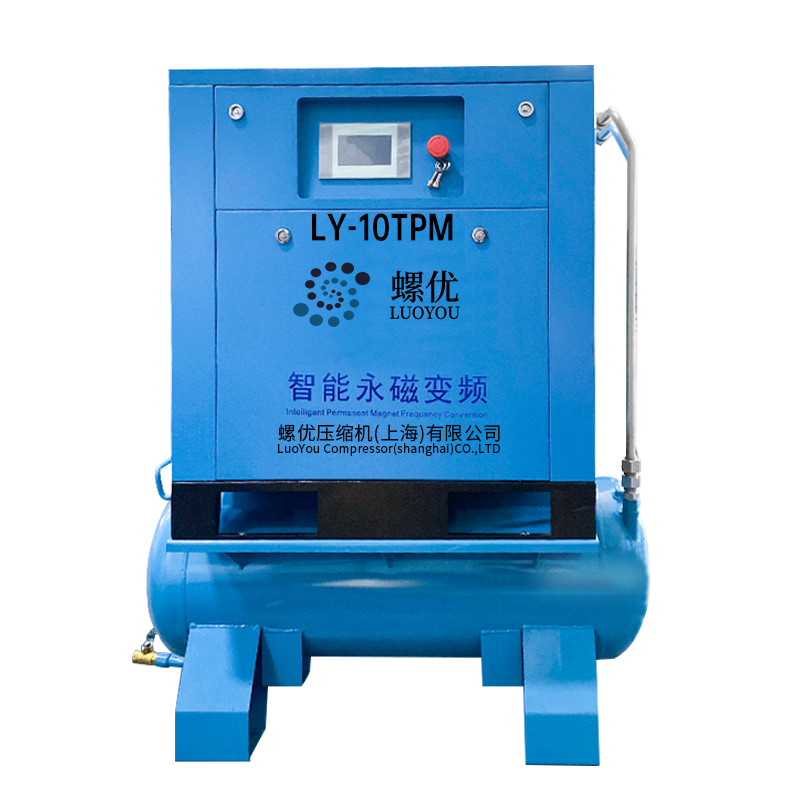
You need a reliable sizing rule to guide your equipment selection. You must align your air generation directly against your specific laser wattage. Higher wattage lasers cut faster and utilize wider nozzle apertures. A wider nozzle requires drastically more air to maintain the necessary 16 bar of dynamic pressure at the cutting surface.
Upgrading a laser from 6kW to 12kW fundamentally changes your shop's pneumatics. It inherently requires upgrading your entire laser cutting air supply. You cannot push higher nozzle flow rates through undersized generation equipment. If you attempt this, the pressure inevitably collapses.
Material thickness dictates pressure and volume demands heavily. Thicker materials require exponentially higher sustained volume. The air must blow molten material through a much deeper kerf cleanly. If you cut thick stainless steel or thick aluminum, the material resists ejection. The gas must overcome this resistance constantly. Only a larger displacement air end can supply this continuous brute force.
You must also prioritize future-proofing your shop. Buying a 15 kW unit presents a major operational risk if you plan expansion. Many facilities intend to add a second laser within 24 months. Others plan to upgrade their primary cutter to a higher-wattage model. If you purchase the smaller compressor now, it becomes completely obsolete during your next upgrade cycle. You will have to replace the entire pneumatic system prematurely. Planning ahead prevents this operational redundancy.
We must evaluate long-term equipment efficiency closely. Energy consumption represents a major operational factor. You must analyze the electrical power draw of a 22kW screw compressor. Compare its power draw under full load versus unloaded states. Efficient shops utilize Variable Frequency Drive (VFD) technology. A VFD adjusts the motor speed precisely to match the actual real-time air demand.
Running a smaller 15 kW compressor at 100% capacity continuously causes severe problems. It generates extreme internal heat. This constant thermal stress degrades the equipment significantly faster. The bearings wear out prematurely. The lubricating oil breaks down. It also uses more relative energy per cubic meter because the motor constantly strains against its maximum limit.
Conversely, a larger 22 kW machine runs much more comfortably. It often operates at just 70% of its maximum capacity for standard jobs. This reduced mechanical load extends the lifespan of the air end. It keeps operating temperatures lower. It mitigates extreme wear and tear on critical moving parts.
We openly recognize larger machines require slightly more maintenance fluid. You will buy larger oil volumes and slightly more expensive filters. However, they offer greatly extended lifespans when not overworked. They process heavy industrial demands smoothly. They protect your production schedule by avoiding catastrophic thermal shutdowns.
Upgrading your pneumatic capacity requires careful facility preparation. You cannot simply drop a larger machine onto the shop floor. Several implementation risks require your immediate attention.
First, verify your electrical infrastructure. A larger motor draws significantly more current. You must warn your electrical contractors. They need to verify the facility's electrical panel capacity. They must check the maximum amperage draw before you commit to a 22 kW motor upgrade. A tripped main breaker halts the entire factory.
Second, you must enforce strict air treatment requirements. Adherence to the ISO 8573-1 air quality standard is mandatory. Higher capacity compressors process vastly more atmospheric moisture per hour. You must pair the compressor perfectly with specialized equipment.
If you fail to treat the air properly, disaster strikes. Water and oil vapor travel down the lines. They eventually hit the laser head. This contamination quickly destroys the laser's highly sensitive protective windows. Replacing these optics costs thousands of dollars and halts production entirely.
Finally, inspect your piping size constraints. Upgrading the motor often requires upsizing your pneumatic delivery lines. Small pipes create excessive friction. Friction causes massive pressure drops between the compressor room and the laser cutter. You might generate 16 bar at the tank, but only deliver 12 bar at the machine. Smooth, appropriately sized aluminum piping solves this bottleneck.
Selecting the correct air generation system guarantees your cutting quality. It prevents frustrating daily bottlenecks. We recommend following these final guidelines to finalize your decision.
Your next step requires gathering specific data. Encourage your technical team to calculate your exact continuous CFM or LPM requirements. They should base this entirely on your laser manufacturer's official specification sheet. Once you hold these exact numbers, request a formal quote from a trusted industrial supplier.
A: It may run the machine temporarily for very thin materials. However, it will fail to maintain the required pressure for continuous thick-plate cutting. The volume demand of a 12kW laser nozzle exceeds the 15kW generation rate. This pressure drop inevitably leads to severe slag and poor edge quality.
A: Industry standards highly recommend pairing this size with a 1000L to 2000L receiver tank. This large volume acts as a critical buffer. It absorbs sudden high-demand air spikes during continuous nesting runs. It also gives the compressor motor adequate time to rest and cool down.
A: A VFD constantly adapts the motor's rotational speed to match the actual real-time air demand. If your 22kW machine is temporarily oversized for a specific production run, the VFD slows the motor down. This intelligent adjustment saves significant electricity and reduces mechanical wear on internal components.


