
- Home
- Products
- Hot
- About Us
- Services
- Industry
- Contact
Views: 0 Author: Site Editor Publish Time: 2026-08-21 Origin: Site


Electricity accounts for over 70% of an air compressor's total lifecycle cost. Facility managers often face shocking utility bills without realizing their compressed air system acts as the primary culprit. A sudden or gradual spike in energy costs usually points directly to pneumatic operations. However, the root cause rarely involves a single catastrophic failure. Instead, systemic inefficiencies compound over time. They silently drain your operational budget day after day. This article aims to help plant managers and reliability engineers move past pure guesswork. You will learn how to systematically diagnose the hidden root causes of efficiency loss. We will also evaluate mathematically sound solutions tailored to your facility. These actionable strategies range from basic maintenance adjustments to highly efficient capital equipment upgrades. Understanding these dynamics empowers you to take decisive control of your plant's energy future.
Most industrial equipment purchases emphasize the initial capital investment. Compressors require a completely different financial perspective. We must evaluate them through the lens of lifecycle costs (LCC). Over a typical ten-year operational lifespan, the initial purchase price represents only about 10% of the overall financial burden. Routine maintenance accounts for roughly 10% to 20%. The remaining 70% to 80% comes entirely from electricity consumption. A compressor running inefficiently quickly devours capital.
Engineers often treat air compressor high power consumption as the core problem. In reality, inflated utility bills serve as a lagging indicator. They only tell you a problem already exists. Leading indicators provide much better early warnings. These include sudden pressure drops at the point of use, excessive motor cycling, and abnormally high operating temperatures. Monitoring these leading indicators helps you catch inefficiencies before they appear on your monthly utility statement.
Ignoring these early warnings carries a steep financial penalty. Many facilities attempt to solve downstream pressure issues by simply increasing the master pressure at the compressor room. This creates an artificial demand. A general rule of engineering physics states every 2 PSI increase in operating pressure requires approximately 1% more energy. If you run your system just 10 PSI over the actual requirement, you waste approximately 5% in direct energy costs. This seemingly small adjustment compounds into thousands of dollars wasted annually.
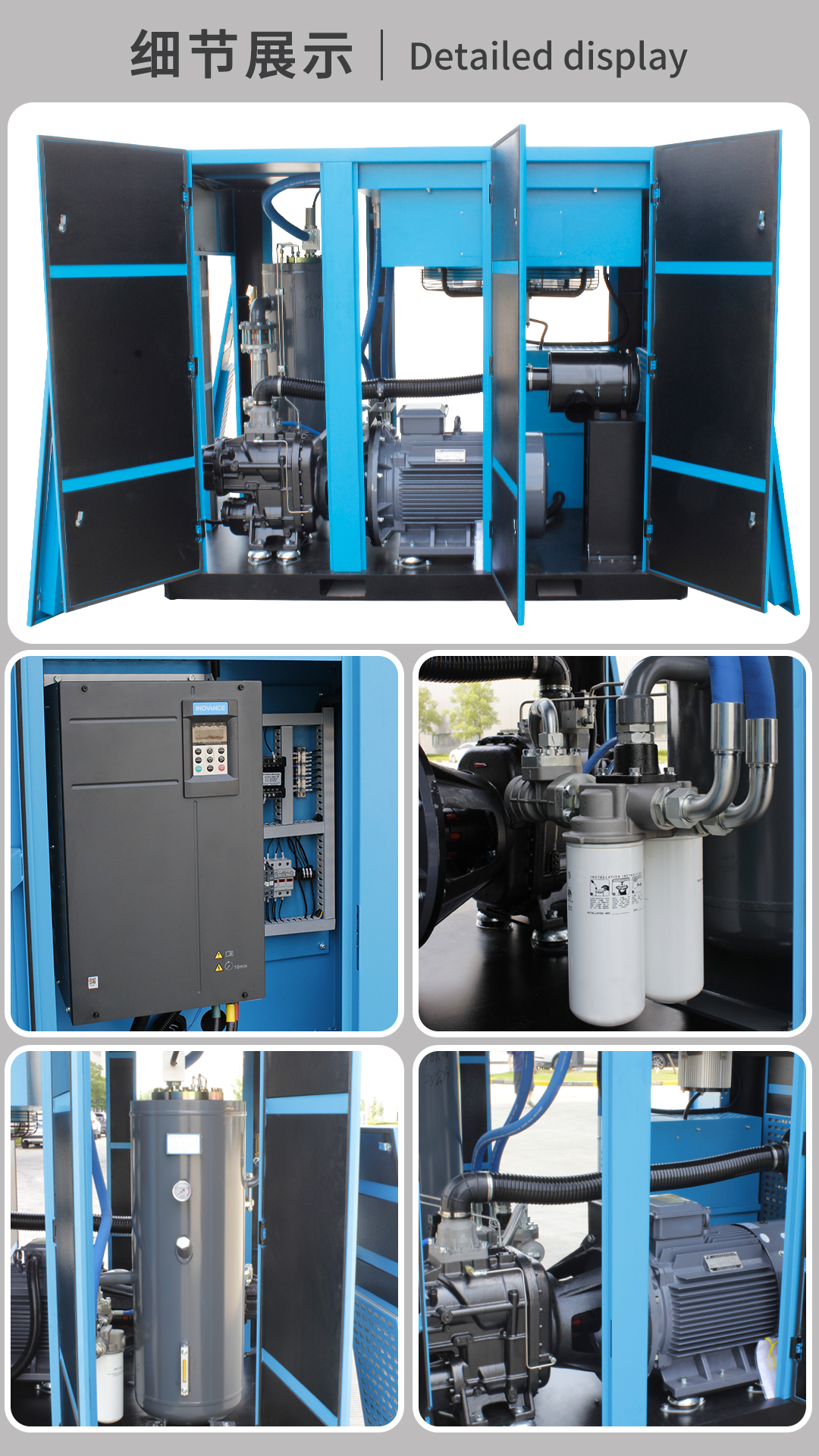
Pinpointing the exact cause of efficiency loss requires a systematic approach. Most facilities suffer from a combination of the following four systemic drivers. Addressing them individually restores balance to your pneumatic network.
Leaks are the invisible thieves of the manufacturing world. Industry benchmarks consistently show standard unoptimized plants lose 20% to 30% of their total generated compressed air to leaks. A tiny 1/4-inch hole in a pressurized line can cost a facility thousands of dollars per year. Compressed air leakage frequently occurs at threaded connection points, degraded hoses, open blow-offs, and faulty condensate drains.
Actionable intervention requires specialized equipment. Acoustic ultrasonic leak detection serves as a high-yield, low-cost starting point. Ultrasonic detectors translate the high-frequency hiss of a leak into audible sounds for the operator. This allows maintenance teams to pinpoint exact leak locations even in a remarkably noisy factory environment.
Standard fixed-speed compressors operate using a simple load/unload control scheme. They generate air at full capacity until the system reaches a set pressure limit. Then, an inlet valve closes. The motor continues spinning, but the machine stops producing air. This unloaded state wastes a tremendous amount of energy. A fixed-speed compressor running unloaded still consumes 20% to 40% of its full-load power while producing absolutely zero useful output.
Many facilities leave their compressors running during weekends or between shifts. The machine cycles on and off simply to feed existing plant leaks. This control misalignment drastically inflates energy consumption and accelerates mechanical wear.
Operators frequently complain about sluggish pneumatic tools. Maintenance teams often respond by cranking up the master system pressure. This masks the real issue. The actual problem usually stems from severe downstream pressure drops. These drops occur due to undersized distribution piping, clogged inline filters, or restrictive quick-disconnect fittings.
Elevating the generation pressure to overcome poor piping geometry creates artificial demand. Unregulated point-of-use equipment consumes more air at higher pressures than necessary. You force the compressor to work substantially harder to deliver the same functional result.
Even perfectly designed systems lose efficiency over time due to mechanical wear. Aging airends lose their tight internal clearances. Degraded lubricant reduces cooling efficiency. Blocked inlet filters choke the incoming air supply. These physical barriers force the electric motor to pull more amperage to achieve the same airflow.
This degradation directly causes a measurable specific power increase. The machine requires more kilowatts to produce the same volume of air. Monitoring this metric helps maintenance teams decide when an airend rebuild makes financial sense.
You cannot improve what you do not measure. Establishing a solid baseline prevents you from making expensive, misguided capital investments. Authorizing major repairs or purchasing new equipment without data often leads to disappointing outcomes.
A simple spot-check of your compressor's display panel provides useless data. Meaningful evaluation requires continuous data logging. You must track amperage and kilowatt consumption over a minimum 7-day cycle. A full week captures essential variations. It records peak production shifts, low-demand night shifts, and idle weekend periods. Simultaneously, you must map the actual airflow (CFM) against the system pressure (PSI). This reveals exactly how your machine responds to fluctuating demand.
The metric kW/100 cfm stands as the absolute gold standard for efficiency evaluation. It measures exactly how much electrical power your machine needs to generate 100 cubic feet of air per minute. Once you establish your current baseline, compare it against the original equipment data sheets provided by the Compressed Air and Gas Institute (CAGI). A significant deviation from the CAGI benchmark indicates severe internal wear or catastrophic control failure.
Avoid relying on "napkin math" or estimated running hours. Equipment vendors might use simplified calculations to justify a quick sale. Instead, invest in a comprehensive compressor energy audit. We highly suggest utilizing third-party, utility-certified auditors. Unbiased data guarantees your capital expenditure request rests on verified engineering facts.
Once you gather accurate data, you must choose a mitigation path. Solutions generally fall into three distinct categories based on capital expenditure (CapEx) and expected return on investment (ROI).
Table 1: Intervention Strategies and CapEx Comparison
| Solution Category | Initial CapEx | Primary Actions | Expected Payback Period |
|---|---|---|---|
| Process & Maintenance | Low | Leak tagging, filter changes, pressure reduction | Immediate to 6 months |
| System Retrofits | Medium | Master sequence controllers, piping loops | 12 to 24 months |
| VSD Technology Upgrade | High | Replacing fixed-speed units with VSD units | 18 to 36 months |
This category requires minimal capital and delivers an immediate ROI. Start by implementing an aggressive, facility-wide leak-tagging program. Fix leaks starting from the compressor room and work outward toward the production floor. Next, reduce the system header pressure dynamically. Lower it by 1 PSI increments until operators notice a performance drop, then raise it slightly. Finally, replace differential pressure filters routinely. Do not wait for a complete blockage to trigger a maintenance alarm.
Mid-level CapEx investments focus on system orchestration. Many plants operate multiple compressors. Installing master sequence controllers ensures base-load machines run highly efficiently at 100% capacity. The controller then intelligently manages a trim compressor to handle minor demand spikes.
Be extremely cautious with unauthorized modifications. Some facilities attempt to add an aftermarket Variable Frequency Drive (VFD) to a standard fixed-speed motor. This carries severe implementation risks. If the original motor lacks an inverter-duty rating, the aftermarket VFD can cause rapid overheating. It also induces stray electrical currents leading to destructive bearing fluting.
A full equipment replacement requires significant capital but offers long-term ROI. You must carefully evaluate when a new machine makes mathematical sense. A factory-engineered VSD load profile thrives in environments with fluctuating demand. If your plant utilizes between 40% and 80% of total capacity throughout the day, a Variable Speed Drive unit will dramatically reduce energy consumption. It seamlessly speeds up or slows down the motor to match exact real-time demand.
Maintain a skeptical mindset during the evaluation. VSDs are not universal silver bullets. If your facility runs a continuous 24/7 operation requiring 100% maximum air output, a VSD machine actually proves less efficient than a traditional fixed-speed machine. Inherent electrical drive losses make them slightly less efficient when running permanently at top speed.
Engineering facts rarely secure funding without a solid financial translation. You must frame your CapEx request in language upper management understands. Focus entirely on operational savings divided by the implementation cost.
First, calculate the payback period. If a comprehensive retrofit costs $30,000 but saves $15,000 annually in electricity, your payback period sits at exactly 24 months. Most financial departments gladly approve equipment upgrades targeting a 12-to-24-month payback window.
Second, investigate local utility rebates and green energy incentives. Many energy providers aggressively promote grid efficiency. They frequently offer substantial cash rebates for VSD upgrades or comprehensive leak audits. Securing a utility rebate significantly lowers the barrier to entry for expensive capital projects.
Your immediate next-step action involves data collection. Recommend initiating a preliminary week-long data logging session to your management team. Quantify the exact financial waste occurring right now. Presenting hard numbers removes emotional bias before you even begin shortlisting equipment vendors.
A: No. Operating tools above their rated pressure (usually 90 PSIG) causes premature wear and artificially inflates energy costs. Regulators at the point-of-use are the correct solution, not raising the compressor room pressure.
A: Not necessarily. If your facility's demand is constant and keeps the compressor running at 100% capacity, a Variable Speed Drive will actually introduce a slight energy loss (typically 2-3%) compared to a fixed-speed unit. VSDs yield savings exclusively on fluctuating load profiles.
A: For standard industrial environments, a basic leak detection sweep should be done quarterly, while a comprehensive data-logging energy audit is recommended every 3 to 5 years, or whenever a major production line is added/removed.


