
- Home
- Products
- Hot
- About Us
- Services
- Industry
- Contact
Views: 0 Author: Site Editor Publish Time: 2026-09-01 Origin: Site


Transitioning to water-injected systems eliminates oil contamination risks but introduces distinct mechanical and chemical maintenance requirements. Facilities rely on this technology for ultimate air purity. You must adapt your facility's upkeep strategies to match these unique environmental requirements. Standard oil-based routines will not work here.
Poorly maintained water-lubricated systems are highly susceptible to scaling, corrosion, and rotor degradation. These internal threats lead to unplanned downtime in critical environments like pharmaceutical, food and beverage, and electronics manufacturing. Neglecting baseline water chemistry creates irreversible hardware damage. It severely degrades operational efficiency over time.
This guide outlines the evidence-based maintenance frameworks required to protect equipment lifespan. We will explore how to maintain strict ISO 8573-1 Class 0 air purity across varying ambient conditions. You will also learn to evaluate long-term service models to maximize operational reliability and ensure uninterrupted production.
Removing oil from the compression process fundamentally changes how a machine operates. This shift requires a completely different approach to equipment care. Effective water-lubricated compressor maintenance prevents catastrophic mechanical failures. You must address new vulnerabilities proactively to keep your facility running.
Traditional compressors fail from oil degradation, thermal breakdown, or varnish buildup. Water-injected systems do not face these issues. Instead, they face threats from microbiological growth, mineral deposits, and rapid oxidation. Warm, stagnant water creates an ideal breeding ground for bacteria. This biological fouling clogs internal passages and fouls heat exchangers.
Mineral deposits pose an equally severe threat to internal mechanisms. Hard water causes calcium and magnesium to precipitate out of solution. These minerals stick to the rotors and the compression housing. Oxidation occurs when poorly treated water reacts with non-corrosion-resistant metals. Understanding these specific failure modes helps you prevent them through targeted daily actions.
Deferred maintenance directly accelerates air end replacement requirements. The air end is the heart of the compressor. It represents the single most expensive component of the machine. It utilizes precision engineering and extremely tight clearances. When mineral scaling builds up on the rotors, these clearances vanish.
The rotors eventually rub against each other or the housing. This friction damages the protective coatings and warps the metal. Friction dramatically increases the energy required to compress air. Eventually, the air end seizes completely. Routine maintenance prevents this scaling, preserving the rotors and extending the natural lifespan of the equipment.
Strict regulatory audits demand verifiable air purity. Facilities in sensitive sectors require ISO 8573-1 Class 0 oil-free air. Water-lubricated systems provide this purity by design. However, poor maintenance jeopardizes this standard. Contaminated internal water transfers impurities directly into your compressed air stream.
Bacterial growth or rust particles can bypass failing internal separators. This contamination travels downstream into your product batch. A single compromised batch costs significantly more than years of preventive maintenance. You must document your maintenance consistency. This documentation proves to auditors that your air supply remains pure and compliant.
Every facility operating an oil-free screw compressor must understand its core maintenance vectors. You cannot treat these machines like simple utility equipment. They are highly tuned environmental systems.
Water chemistry dictates the health of your compressor. You must monitor and adjust specific pH levels consistently. The ideal pH usually sits between 6.5 and 8.5. Water that is too acidic corrodes internal metals rapidly. Water that is too alkaline promotes heavy scale formation on moving parts.
Conductivity metrics are equally critical to water quality control. High conductivity indicates excess dissolved solids. You must monitor internal Reverse Osmosis (RO) systems continuously. These RO units filter incoming makeup water. If RO membranes fail, untreated water enters the housing. This leads to rapid calcification, which destroys rotor efficiency in mere weeks.
Water-lubricated bearings operate under vastly different conditions than oil-lubricated ones. They rely on water for hydrodynamic lubrication and cooling. You must evaluate rotor tolerances frequently. Technicians must inspect ceramic or specialized polymer bearings for abnormal wear patterns. These components lack the thick lubricating film that oil provides, making alignment crucial.
Component replacement schedules must rely on operational hours, not physical appearance. Air filters, water filters, and moisture separators may look clean visually. However, microscopic degradation occurs unseen. Pushing a water filter past its rated hours risks catastrophic particulate bypass. Adhere strictly to the manufacturer's hour-based replacement guidelines.
Ambient air quality directly impacts internal water chemistry. The compressor ingests massive volumes of surrounding air. Particulates, dust, and chemical vapors enter the compression chamber. These contaminants dissolve directly into the lubricating water loop. This contamination alters the fluid's pH and increases conductivity.
Ambient humidity also plays a massive role in filter degradation. High humidity increases the condensate load within the system. This excess water dilutes the controlled chemistry. You must adjust your maintenance frequency based on these environmental factors.
Environmental Impact Matrix| Environmental Variable | Impact on Compressor System | Required Maintenance Adjustment |
|---|---|---|
| High Ambient Dust | Accelerated air filter clogging, increased water contamination. | Halve the air filter replacement interval; increase water sampling. |
| High Humidity (>80%) | Excess condensate generation, dilution of internal water chemistry. | Monitor drain valves daily; verify RO system top-off calibration. |
| Chemical Vapors (Fumes) | Vapors dissolve in water, aggressively altering pH levels. | Implement weekly pH testing; install specialized intake filtration. |
| High Ambient Heat | Increased evaporation of internal water, higher thermal stress. | Verify heat exchanger efficiency; check fluid levels constantly. |
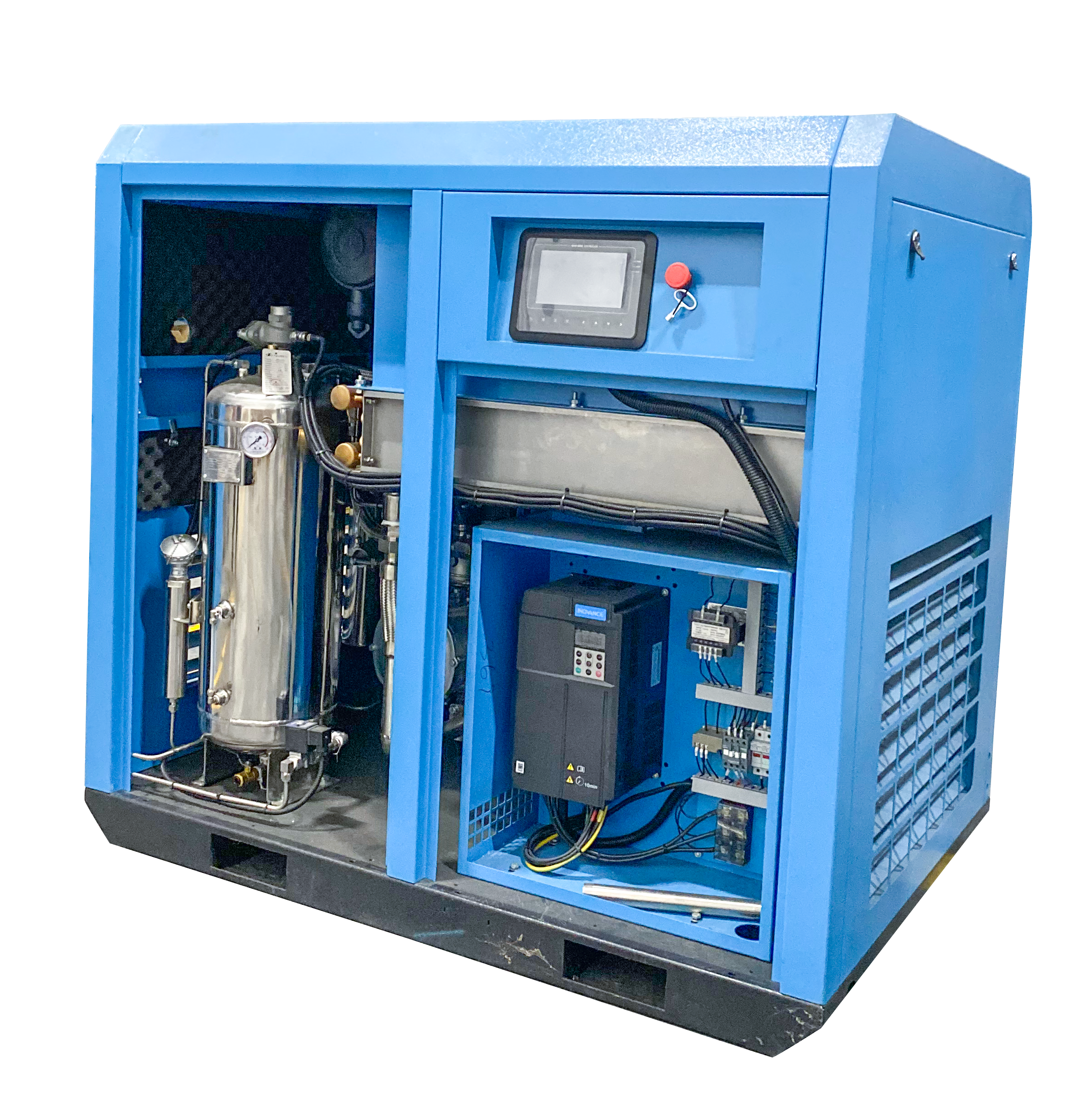
Ad hoc maintenance guarantees failure. You must establish and enforce a rigid compressor service schedule. Condition-based monitoring helps, but baseline calendar interventions remain mandatory. This layered approach catches small deviations before they escalate.
Your operators are the first line of defense. They must conduct a systematic cooling water check every single day. This process verifies proper flow rates through the system. Technicians must check temperature differentials across heat exchangers. A shrinking temperature delta indicates scale buildup inside the cooler tubes.
Visual inspections remain highly effective. Operators should listen for abnormal vibrations during startup. They must check all condensate drain blockages. A blocked drain causes water to back up into the air network. Ensure the RO system top-offs function correctly. Low water levels lead to immediate overheating and rotor damage.
Quarterly tasks dig deeper into the system's active components. You must change inline water filter cartridges during this interval. Air intake filters also require replacement, especially in dusty environments. These filters protect the RO membranes and the delicate air end tolerances.
This interval requires testing internal sensors and safety alarms. You must physically verify that high-temperature shutdown switches work. Inspect the variable speed drive (VSD) cooling fans. VSD cabinets generate significant heat. If a cabinet fan fails, the drive will overheat and shut down the entire production line.
Annual overhauls reset the system's baseline health. This requires extensive planned downtime. You must execute several critical procedures during this period:
Executing these annual steps prevents catastrophic failures during peak production months.
Deciding who performs the maintenance is just as critical as the maintenance itself. Water-injected systems demand a higher level of chemical and mechanical expertise. You must evaluate your true capabilities honestly.
Assess your internal maintenance technicians thoroughly. Do they have specialized training for water-chemistry management? Traditional mechanics often lack the nuanced understanding of pH and conductivity. They may not know how to inspect tight-tolerance rotors without causing accidental damage.
Consider the hidden costs of in-house maintenance. You must procure proprietary OEM water filters and replacement parts. Many modern compressors also lock advanced diagnostic menus behind software licenses. If your internal team cannot access these menus, they cannot troubleshoot complex sensor faults effectively. Training and software subscriptions add up quickly.
Outsourcing to certified professionals often provides superior reliability. When structuring a Service Level Agreement (SLA), demand specific performance guarantees. Look for guaranteed response times for emergency breakdowns. Ensure the contract includes routine fluid sampling and lab analysis.
Focus on risk mitigation. A comprehensive SLA shifts the liability of unplanned downtime to the provider. Some premium contracts include fixed-cost air end replacements. If the air end fails prematurely, the provider covers the hardware cost. This protects your capital budget and ensures the provider has a vested interest in proactive maintenance.
The reliability of a water-lubricated system is entirely dependent on water quality adherence and strict replacement intervals. You cannot cut corners on filtration or chemistry without suffering rapid mechanical consequences. The transition from oil to water solves contamination issues but demands rigorous operational discipline.
Take immediate action to secure your equipment. First, audit your current maintenance logs against OEM baselines to identify missed interventions. Second, initiate daily water chemistry testing if you do not already do so. Finally, evaluate whether your current service agreement aligns with your facility's strict uptime requirements. Adjust your strategies now to prevent costly downtime later.
A: Systems utilize continuous filtration and top-offs (via built-in RO systems), but complete system flushes are typically recommended annually or every 4,000 to 8,000 hours, depending on ambient conditions and OEM guidelines.
A: Poor water quality leads to mineral scaling on the rotors, which degrades efficiency, increases energy consumption, and eventually seizes the air end, resulting in catastrophic failure.
A: Not necessarily cheaper, but the costs are allocated differently. You save on oil purchasing and disposal, but must invest those savings into RO filter replacements, water treatment, and specialized bearing maintenance.
A: Yes, daily cooling water checks and basic top-offs are standard operator tasks. However, internal component replacements and water chemistry diagnostics should be handled by specialized technicians.


