
- Home
- Products
- Hot
- About Us
- Services
- Industry
- Contact
Views: 0 Author: Site Editor Publish Time: 2026-08-20 Origin: Site


When an industrial air system suddenly loses pressure, the entire production floor grinds to a halt. Plant managers know this sudden downtime destroys manufacturing schedules and wreaks havoc on energy budgets. Rotary screw compressors must maintain precise operating levels to keep pneumatic tools firing efficiently. However, a sudden drop on the gauge is just a symptom of a deeper mechanical or electrical issue. The root cause might sit squarely inside the compressor cabinet, or it could hide deep within your sprawling plant piping network. Identifying the exact failure point requires a calm, logical approach rather than guesswork. We built this comprehensive guide to give you a step-by-step diagnostic framework. You will learn how to isolate supply-side faults from hidden demand-side waste effectively. We will also help you determine if you need to execute a fast DIY repair or escalate the situation to professional service technicians.
Compensating for compressor pressure loss by artificially cranking up the set point destroys facility energy budgets. Operators frequently bump up the regulator just to keep machines running. They ignore the mechanical fault and simply force the compressor to work harder. This creates severe financial waste. Every two PSI gained increases total energy consumption by roughly one percent. You pay significantly more for electricity without actually solving the mechanical restriction causing the problem.
Operating below optimal pressure also damages your entire pneumatic network. Low pressure increases cycle times for sensitive tools. Assembly line drills take much longer to finish standard tasks. Because the tools need more time, the internal compressor components must run continuously to meet the lingering demand. They run fully loaded instead of cycling normally. This continuous operation accelerates mechanical wear, degrades lubrication faster, and shortens the lifespan of critical bearings.
Operators must define their normal pressure baseline first. You need to know your average CFM (Cubic Feet per Minute) demand during a standard shift. Follow these steps to establish a reliable baseline:
Gather this data before diagnosing a perceived drop. Sometimes, the issue does not involve equipment failure at all. An expanded plant capacity simply needs more air than your current unit can realistically provide.
Ambient air cannot enter the air-end if you have a heavily soiled or blocked intake filter. Dust, pollen, and industrial debris physically restrict the main inlet housing. The compressor cannot breathe properly. This vacuum effect chokes volumetric efficiency instantly. The internal rotors spin at full speed but compress a fraction of the necessary air mass. This directly slashes your final pressure output.
Your first diagnostic step is straightforward. Check the air filter vacuum indicator regularly. Mechanics should physically remove and inspect the filter media. Look closely for oil blowback stains. Check the pleats for heavy particulate loading. A quick filter replacement often restores normal pressure immediately.
Common Mistake: Ignoring the vacuum indicator until the filter collapses entirely into the housing. This pulls catastrophic debris directly into the precise rotor gaps.
Sometimes the motor runs perfectly but the pressure stalls completely. This points directly to an inlet valve failure. The valve fails to open properly during the load cycle. You might have a torn internal diaphragm preventing movement. A bad solenoid also causes this exact failure. Physical jamming from carbon buildup stops the internal piston from shifting. If the inlet valve stays closed, the machine essentially spins in a vacuum and cannot compress air.
To check this, verify the control voltage. Grab a reliable multimeter and check the inlet valve solenoid. Ensure it receives the correct voltage signal from the controller to open. If the voltage is correct but the valve remains shut, you need a mechanical rebuild kit.
A saturated air/oil separator creates a severe internal restriction. During normal operation, the separator pulls compressor fluid out of the airstream. Over time, the fiberglass element clogs with oxidized oil and microscopic dirt. Your internal sump pressure might read perfectly normal on the display. However, the actual line pressure leaving the package drops significantly. The saturated media blocks the natural air flow path.
You must measure the pressure differential to diagnose this fault accurately. Check the pressure readings across the separator tank. Compare the wet side pressure against the dry side pressure. A drop exceeding 10 to 15 PSI flags a major problem. You must replace the separator element immediately to restore proper flow and prevent sump tank over-pressurization.
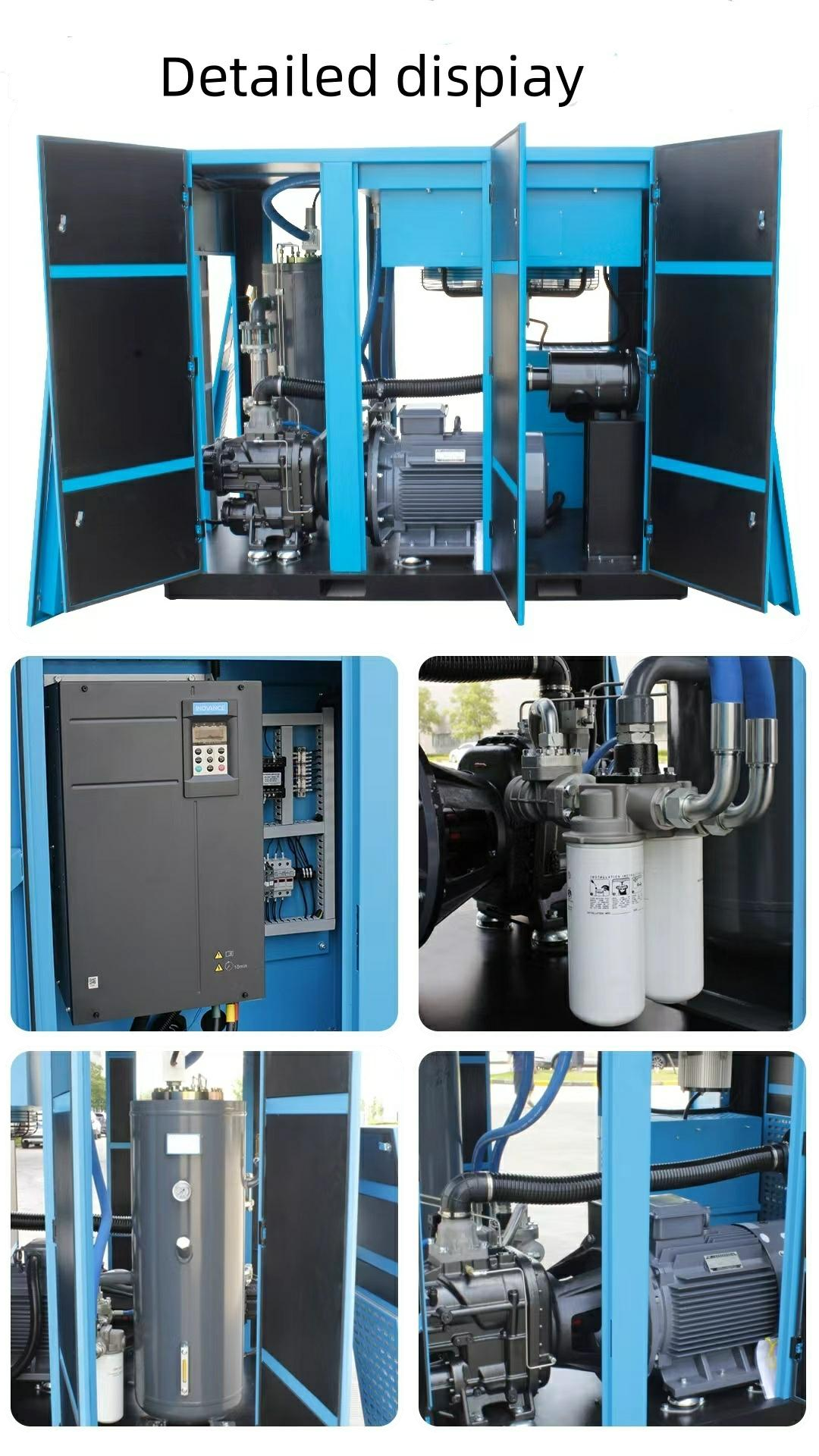
Your mechanical components might function perfectly. Yet, a faulty pressure transducer causes massive headaches across the facility. This small sensor tells the central controller when to load and unload the machine. Extreme vibration and high heat degrade these sensors over time. A failing transducer tells the controller to unload the machine prematurely. The system thinks it reached the target 100 PSI, but in reality, the pipe only holds 80 PSI.
Always verify the digital controller reading. Connect a calibrated, fluid-filled analog pressure gauge directly at the discharge port. Compare your manual analog reading against the digital screen display. Recalibrate the software or replace the transducer completely if the numbers do not match.
Power supply issues trigger dangerous voltage drops across the plant. These drops force the main drive motor to run well below its rated speed. Reduced rotational speeds directly cause low compressor output. The twin internal rotors turn too slowly to compress adequate volumes of air.
Undervoltage states pose severe safety risks. Running a motor on low voltage causes an abnormally high amperage draw. This leads to frequent thermal tripping at the breaker panel. Continuous low voltage eventually melts the internal motor windings entirely, forcing a very expensive rewinding service.
Best Practice: Always check leg-to-leg voltage balance (L1, L2, L3) before assuming the motor itself has failed.
Belt-driven rotary units suffer from hidden RPM losses constantly. Belt slippage happens frequently as heavy rubber stretches under heavy industrial use. The electric motor spins at peak speed, but the air-end lags behind due to loose belts. You must check belt tension every 500 operating hours to prevent this slippage.
Direct-drive units face entirely different mechanical challenges. You must check for coupling spider wear. A failing elastomeric drive coupling slips under heavy pneumatic loads. Replacing worn couplings early prevents catastrophic metal-on-metal drive failure between the motor and the air-end.
Aging facility piping networks waste massive amounts of expensive energy daily. Up to 30 percent of generated compressed air disappears through unmanaged leaks. Rubber drop hoses degrade over time. Threaded fittings shake loose from constant factory vibration. Drain valves frequently stick open, dumping precious air into the floor trenches.
We strongly recommend performing a comprehensive ultrasonic air leak diagnosis. Maintenance teams should execute this audit during weekend off-shift hours. The plant environment must be quiet. Use an ultrasonic acoustic detector to pinpoint high-frequency hissing sounds. Rule out all downstream waste before deciding to tear down your compressor cabinet.
Friction points cause severe pressure drops right at the point of use. The compressor generates the correct pressure, but the tools never receive it. Look out for these common bottlenecks:
Audit your main header pipe diameters. Ensure they mathematically match your peak CFM requirements. Pushing 500 CFM through a two-inch pipe creates massive friction and destroys usable pressure.
Audit your recent plant expansions carefully. Did you add new pneumatic CNC machinery or automated packaging lines recently? Many industrial facilities install new equipment without upgrading their primary air supply. The existing unit might run perfectly fine. It simply cannot keep up anymore. It is outmatched by the new, higher demand. If the demand outpaces supply, line pressure drops automatically.
Deciding between a fast internal repair and a costly external service call requires a logical framework. Plant teams can handle basic maintenance safely, but certain tasks require specialized training.
Table: Compressor Pressure Drop Diagnostics Chart
| Symptom | Probable Cause | Action Required | Service Level |
|---|---|---|---|
| High vacuum indicator reading | Soiled intake element | Replace paper/synthetic filter media | DIY / Plant Maintenance |
| High pressure differential (over 10 PSI) | Saturated air/oil separator | Drain sump, replace separator element | DIY / Plant Maintenance |
| Motor runs, no pressure builds | Stuck inlet valve / Bad solenoid | Verify voltage, rebuild valve assembly | Service Technician |
| Frequent thermal breaker trips | Low voltage / Motor degradation | Check supply voltage, test windings | Certified Electrician |
| Massive pressure drop across plant | Pipe leaks / Undersized header | Perform ultrasonic leak audit | DIY or Specialized Auditor |
DIY Maintenance Zone: Plant teams excel in this zone. You can replace intake filters easily during a shift change. Swapping out oil and air separators requires only basic hand tools and patience. Tightening belts takes just minutes. Fixing external pipe leaks by replacing quick-disconnect fittings saves money instantly.
When to Call a Technician: Some internal repairs demand professional expertise. Do not attempt to calibrate proportional valves yourself. Rebuilding stuck inlet valves requires specialized spring kits. Addressing control voltage faults involves extreme electrical danger. Diagnosing air-end rotor wear requires measuring bearing clearances precisely with specialized dial indicators. Call an expert for these complex tasks.
Replacement Triggers: Sometimes extending the life of old equipment makes zero financial sense. A technician might confirm severe air-end degradation or deep rotor scoring. Older units often suffer burned-out main motors. Calculate the raw repair cost carefully. Compare it against the massive energy savings and efficiency ROI of a modern Variable Speed Drive (VSD) compressor. Upgrading an aging, inefficient machine often pays for itself rapidly through slashed utility bills.
Compliance & Safety: Never ignore safety protocols during diagnostics. Reinforce OSHA compliance consistently across your maintenance team. Implement strict lockout and tagout (LOTO) procedures. Depressurize the entire system fully. Bleed every ounce of stored air before attempting any internal cabinet diagnostics. High-pressure air causes fatal injuries instantly.
Resolving screw air compressor low pressure is a strict process of elimination. Start with external demand checks before blaming the machine. Inspect all external air filters next. Evaluate the mechanical unloader valves for sticking. Finally, verify the electronic sensors and transducers for proper calibration. Taking these methodical steps saves thousands of dollars in unnecessary parts swapping.
For your immediate next steps, perform a baseline deadhead pressure test. Close the main isolation valve securely. This action totally isolates the compressor from the plant piping network. If the unit builds pressure rapidly and holds it, your problem lives downstream in the pipes. If it still struggles to build pressure, you have confirmed an internal mechanical failure.
Stop wasting money on lost air and inefficient operation. Contact our service team today. We provide professional compressed air audits and advanced ultrasonic leak detection services. You can also contact us to order genuine OEM replacement filters, separators, and valve rebuild kits to keep your factory running smoothly.
A: This typically points to a closed inlet valve, a blown minimum pressure valve, or a massive downstream leak preventing system pressurization. The motor spins the rotors, but air either cannot enter the compression chamber or escapes immediately downstream.
A: A new separator usually sees a 2–3 PSI drop. If it exceeds 10–12 PSI, it is clogged and causing system low pressure, requiring immediate replacement. Ignoring this differential leads to extreme sump pressure and safety valve blow-offs.
A: Yes. A blocked intake filter creates a vacuum effect, preventing the air-end rotors from drawing in enough ambient air to compress, directly reducing CFM and pressure output. It is the easiest problem to diagnose and fix.
A: Close the isolation valve separating the compressor from the plant. If the compressor builds and holds normal pressure rapidly, the fault is a downstream leak or demand issue. If it still struggles, the fault is internal.


