
- Home
- Products
- Hot
- About Us
- Services
- Industry
- Contact
Views: 0 Author: Site Editor Publish Time: 2026-09-04 Origin: Site


Achieving extreme air pressure often requires sacrificing volumetric flow. This fundamental engineering reality matters deeply. Facility managers constantly operate under strict electrical power ceilings. Capping your motor capacity at 37 kW naturally limits maximum airflow. Pushing that same system to 16 bar restricts your output volume even further. Misunderstanding this delicate balance creates disastrous outcomes. You might easily under-size equipment for critical manufacturing tasks. Conversely, you could over-spend on unnecessarily large air systems. Accurate sizing prevents these costly mistakes.
We will explore the exact airflow expectations for these specialized units. You will learn how to evaluate their application suitability. We focus specifically on heavy-duty fiber laser cutting operations. We also outline core evaluation criteria for technical buyers. This guidance prevents premature equipment failure. It helps safeguard your expensive downstream machinery. You will ultimately optimize your entire production line.
Understanding compression dynamics begins with basic physics. Air molecules resist compression fiercely. Forcing ambient air into a smaller volume requires massive energy. Doubling your target pressure roughly halves your available output volume. A standard electric motor provides limited rotational force. It cannot overcome the physical limits of thermodynamics. Therefore, a higher pressure setting inherently chokes the delivery rate. Most factory engineers understand standard 8-bar systems well. Those units push out large volumes effortlessly. They easily achieve six cubic meters per minute. However, the scenario changes completely at 16 bar. The internal compression ratio climbs significantly. The airend works much harder per revolution. Consequently, output volume drops heavily.
Confirming verifiable output becomes your next critical step. Buyers must demand precise specifications. You should expect a reliable 3.7 m3 min compressor rating at maximum load. This specific flow rate represents the standard capability of a 37kW motor. Manufacturers design airends to hit this exact metric intentionally. It balances energy consumption against physical output perfectly. Accept nothing less during your procurement process.
We must check our baseline assumptions here. Engineers measure Free Air Delivery (FAD) directly at the discharge valve. This measurement represents the absolute maximum output. Your actual usable flow will decrease slightly downstream. Pipes introduce friction loss. High-efficiency filters restrict airflow subtly. Dryers consume a tiny fraction of pressure. You must account for these minor pressure drops. Always calculate your point-of-use delivery conservatively. A 3.7 m³/min rating at the valve might yield 3.5 m³/min at the machine nozzle. Plan your application requirements around this reality.
Table: Airflow vs. Pressure Trade-off (37kW Motor Baseline)
| Target Pressure (Bar) | Expected Free Air Delivery (m³/min) | Primary Application |
|---|---|---|
| 8 Bar | ~6.0 - 6.2 | General Manufacturing & Pneumatics |
| 10 Bar | ~5.2 - 5.5 | Heavy-duty Pneumatic Tools |
| 16 Bar | ~3.5 - 3.7 | Fiber Laser Cutting Assist Gas |
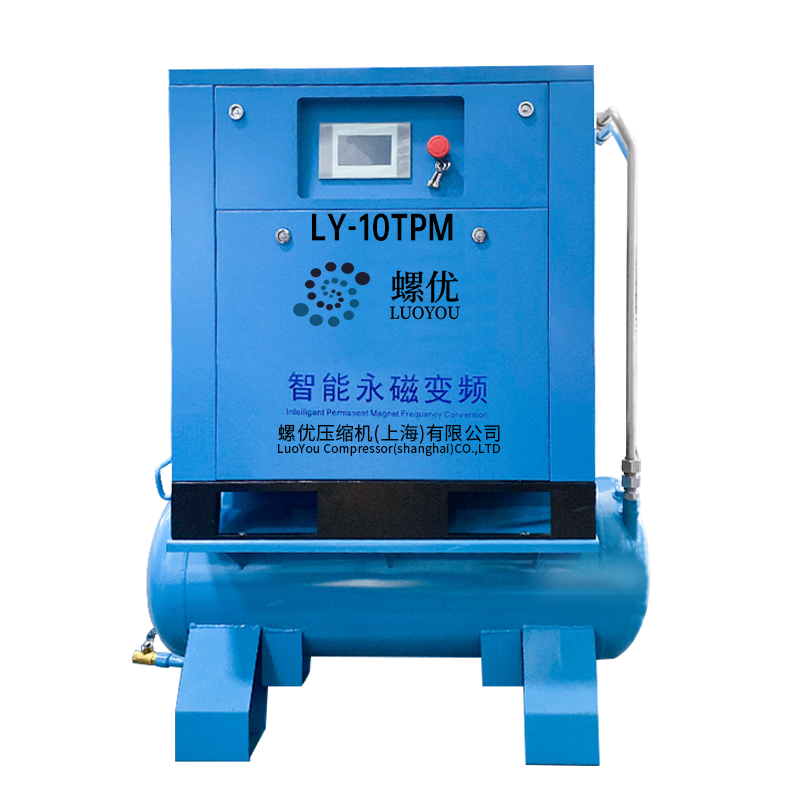
Modern manufacturing relies heavily on precise fabrication tools. Fiber lasers represent the pinnacle of metal cutting technology. These lasers melt carbon steel rapidly. They slice through stainless steel easily. They cut aluminum with incredible precision. However, melting metal only solves half the problem. You must remove the molten material instantly. Otherwise, it solidifies and ruins the cut edge. This removal process requires a powerful assist gas. The 16 bar pressure level provides perfect kinetic force. It blows away heavy dross cleanly. It ensures a mirror-like finish on thick metal plates. It works flawlessly for modern 10kW to 20kW lasers.
Flow consistency matters just as much as raw pressure. Continuous cutting demands an uninterrupted air stream. A 3.7 m³/min delivery rate provides the optimal buffer. It sustains long cutting cycles effortlessly. You can cut thick steel plates without triggering pressure drop alarms. Undersized compressors cause these alarms constantly. They force the laser to pause midway. Pauses destroy the material finish. A properly sized unit prevents these costly interruptions completely.
We must compare the cost-to-outcome ratio carefully. Many facilities still rely on expensive bulk gases. They buy liquid nitrogen deliveries weekly. They rent oxygen cylinders constantly. These traditional methods drain operational budgets quickly. Implementing a dedicated 16 bar air supply changes this dynamic entirely. Compressed air utilizes free ambient air. It eliminates recurring gas delivery charges. The initial equipment investment pays off rapidly. You achieve identical cutting speeds. You maintain excellent edge quality. The operational cost per cut drops significantly.
Evaluating a 37kW 16 bar screw air compressor requires deep technical scrutiny. You cannot simply look at the external cabinet. You must analyze the internal engineering choices thoroughly.
Engineers face a tough decision regarding airend design. Single-stage compression forces one rotor pair to do all the work. It takes ambient air straight to 16 bar. This creates massive mechanical stress. Two-stage compression divides the workload intelligently. The first stage compresses air to a medium pressure. The system cools this air slightly. The second stage then boosts it to 16 bar. This two-step process minimizes the compression ratio per stage. It reduces internal heat generation drastically. You must evaluate the higher upfront cost of a two-stage airend. Balance it against the long-term energy savings. Consider the reduced thermal wear on internal bearings. Two-stage models typically outlast single-stage counterparts significantly.
You must maximize your available 37kW motor power efficiently. Traditional fixed-speed motors run at maximum capacity constantly. They waste massive amounts of electricity during idle periods. Permanent Magnet Variable Frequency Drive (PM VFD) models excel here. Frame the return on investment around your operational habits. Most facilities face fluctuating cutting schedules. Load profiles vary wildly throughout the day. Operators load new materials frequently. VFDs adjust motor speed automatically during these pauses. They match air demand perfectly. This intelligent integration prevents energy waste completely.
Compressing air to 16 bar generates intense heat naturally. The physical friction inside the airend is substantial. You must assess the thermal management system rigorously. Examine the sizing of the internal oil coolers. Inspect the cooling fan dimensions. This becomes critically important for hot environments. Many factory ambient temperatures exceed 35°C (95°F) during summer months. Undersized coolers fail under these conditions. They trigger thermal shutdowns routinely. These shutdowns halt your production instantly. Robust cooling capacity ensures continuous operation during peak summer heat.
Installing high-pressure equipment demands strict safety and engineering protocols. Ignoring these implementation realities leads to catastrophic damage.
Navigating technical brochures requires a systematic approach. Use this checklist to evaluate competing models objectively.
Let us review the final verdict on this equipment. This specialized machinery replaces bulk assist gases in modern laser applications effectively. It represents a significant upgrade over traditional cylinder dependencies. The system provides massive kinetic force for cutting thick metals. It ensures clean edges and continuous production.
However, you must approach the procurement process methodically. We advise all buyers to conduct a formal flow-meter test on their current equipment first. Gather hard data on your existing usage. Next, consult your laser manufacturer directly. Ask them for exact CFM and pressure requirements for your specific cutting head. Complete these verification steps before issuing any purchase order.
A: No. You must never attempt this adjustment. We emphasize mechanical safety above all else. Standard airend geometry cannot handle double the pressure. The motor service factor will max out instantly. Internal piping is not engineered for 16 bar stress. Attempting this modification will cause immediate motor failure. It also risks a catastrophic mechanical rupture.
A: Understanding metric to imperial conversions helps buyers compare global spec sheets accurately. A rating of 3.7 m³/min translates to approximately 130 CFM (Cubic Feet per Minute). You multiply the cubic meter value by 35.315 to find the exact CFM. This airflow easily supports most heavy-duty laser cutting operations.
A: We highly recommend installing a Variable Frequency Drive. Laser cutting creates highly variable air demand. The system requires massive flow during active cutting. It needs zero flow while loading or unloading materials. A VFD prevents the motor from wasting electricity during these frequent unload cycles. It matches power consumption to your actual demand perfectly.


