
- Home
- Products
- Hot
- About Us
- Services
- Industry
- Contact
Views: 0 Author: Site Editor Publish Time: 2026-08-17 Origin: Site


Unplanned downtime in continuous manufacturing always carries cascading financial penalties. Sudden pressure drops halt production lines instantly. They waste valuable raw materials and idle expensive labor hours. We must transition from a reactive single-point-of-failure setup to a properly optimized, risk-mitigated architecture. You want to achieve this reliability without over-capitalizing on unnecessary equipment. Relying on a fragile infrastructure jeopardizes your entire operation. A resilient approach isolates vulnerabilities before they manifest.
This guide covers evaluating your true operational risk and selecting precise backup architectures. We will explore how to integrate modern controls seamlessly. You will learn actionable strategies to manage lifecycle costs for enterprise-scale operations. Properly designed fail-safes keep production running under any condition. Your facility deserves an infrastructure designed for ultimate stability.
You cannot design an effective safety net without understanding the specific dangers your plant faces. Most facilities misunderstand their actual vulnerabilities. They simply buy another compressor and assume their problems are solved. This narrow approach leaves massive gaps in operational security. We must map out the financial realities and mechanical bottlenecks across your entire pneumatic network.
Calculating the true cost of air loss forms your financial baseline. You must quantify per-hour downtime expenses accurately. Consider direct labor costs during idle periods. Add the value of scrapped materials on the line. Factor in costly startup delays. Compare these cumulative figures against the annualized price of a standby air compressor. Plant managers often underestimate restart times drastically. A ten-minute pressure drop might require a two-hour machine reset. Quantifying these exact numbers justifies your capital investment. Once you know your hourly downtime penalty, budget approvals become straightforward.
Duplicating the main compressor is rarely sufficient. System vulnerability extends far past the air generation stage. You must identify every single point of failure (SPOF) in the mechanical room. If downstream components bottleneck the airflow, your secondary compressor remains useless during a crisis. Pay close attention to these critical areas:
You must define strict engineering criteria for your fail-safe systems. Establish minimum acceptable pressure thresholds for your facility. Determine the absolute lowest PSI required to keep critical pneumatic machinery online. Next, define maximum allowable recovery times. When the primary unit trips, how fast must the secondary unit engage? A continuous air supply requires rapid, automated detection. If your pressure drops below the critical threshold before the backup spins up, you still experience a shutdown. Map these threshold parameters before purchasing new machinery.
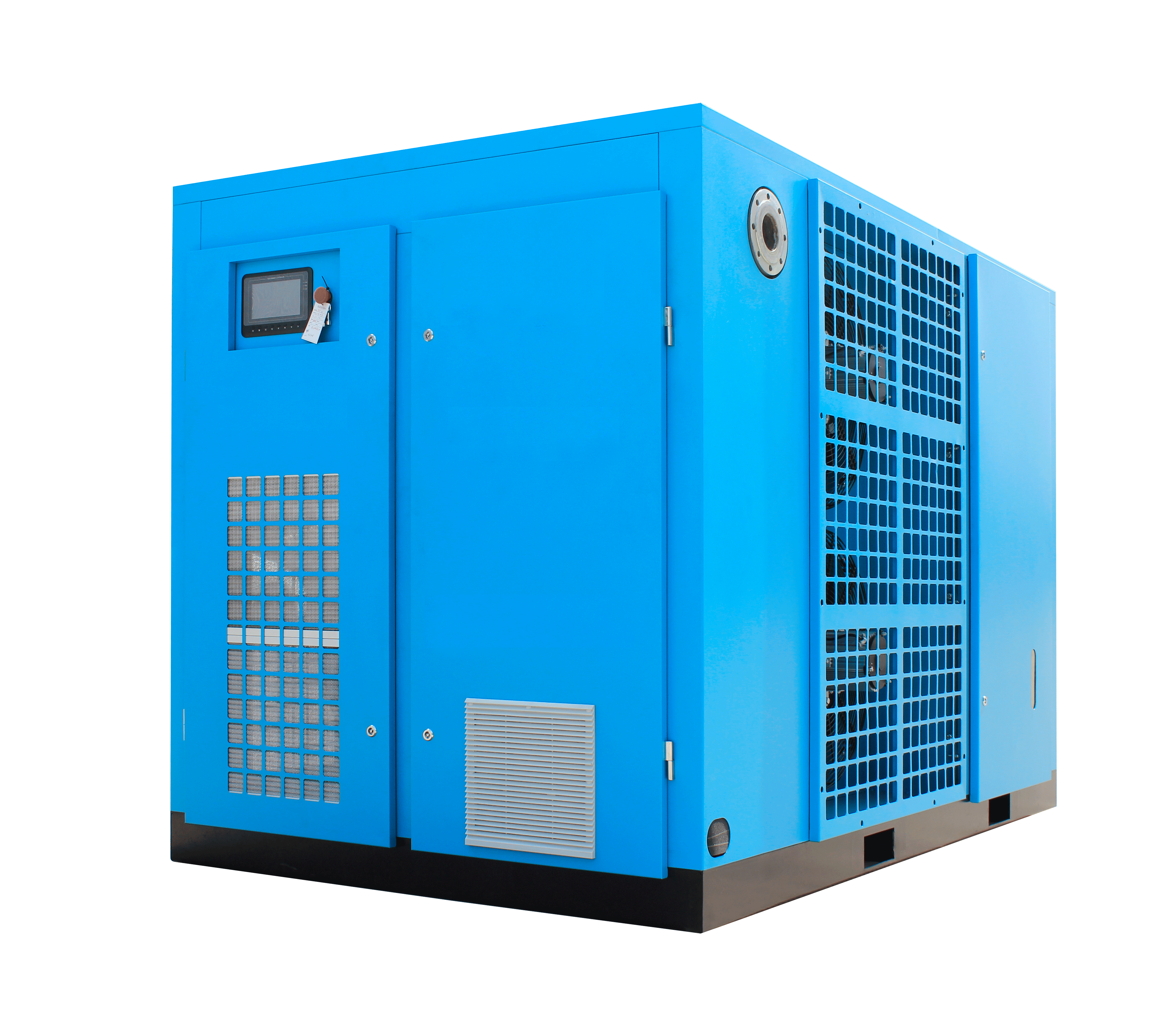
Selecting the right backup layout dictates your system reliability and capital efficiency. Facilities operate under different load profiles and budgetary constraints. You must match the architecture to your specific production demands. We classify these strategies into three distinct tiers.
Redundancy Architecture Comparison Chart
| Architecture Type | Primary Concept | Best Suited For | Upfront CAPEX |
|---|---|---|---|
| 100% Redundancy | Two identically sized, full-capacity systems. | High-stakes continuous manufacturing (pharma, glass). | Highest |
| N+1 (Load Sharing) | Multiple smaller units + one spare of equal size. | Variable load profiles, capital-efficient facilities. | Moderate |
| Critical-Load | Backup sized only for mission-critical zones. | Budget-constrained facilities with segmented lines. | Lowest |
The 100% redundancy model is the most straightforward approach. You install two equally sized systems. Each system handles 100% of your peak plant demand independently. This setup works best for high-stakes continuous manufacturing. Industries like pharmaceuticals, semiconductor fabrication, and glass manufacturing demand this level of protection. In these sectors, zero pressure drop is mandatory. A single failure ruins millions of dollars in product.
However, this strategy carries notable caveats. It requires the highest upfront capital expenditure. You are essentially buying double your required capacity. It also presents a high potential for underutilization. If you do not rotate the backup regularly, it degrades while sitting idle. You must enforce strict rotation protocols to protect this investment.
N+1 redundancy offers a balanced, highly efficient alternative. Instead of one massive backup, you split the total demand across multiple smaller units. You then add one additional unit of equal size. For example, if you need 100 HP of air, you install three 50 HP compressors. Two units carry the main load, while the third serves as the backup.
This approach shines for highly variable load profiles. Facilities looking to balance capital efficiency with reliability prefer this method. Implementing proper compressor redundancy this way saves substantial money. However, N+1 requires more floor space in the mechanical room. It also demands sophisticated piping manifolds compared to a single large unit.
Partial redundancy focuses entirely on triage. You size the backup system to support only mission-critical operations. During an emergency, non-essential lines safely shut down. The remaining air directs strictly to priority machinery. This strategy fits facilities with strict budget constraints. It works well if you have easily segmented production zones.
This setup does introduce engineering complexities. You need automated isolation valves installed throughout the plant. Precise factory air system design becomes critical here. The piping must quickly shunt air to priority zones during a primary failure. Without automated valving, the non-essential zones will steal air from the critical ones.
Having a backup compressor sitting in the corner is not redundancy. True redundancy requires automated intelligence. When your primary air source fails, human operators cannot react fast enough. Pressure drops happen in seconds. You need integrated control systems to manage the transition flawlessly.
Modern sequencing controls eliminate manual intervention entirely. Master controllers monitor line pressure constantly using sensitive transducers. They automatically recognize pressure decay the millisecond it begins. Once a fault is detected, the controller engages the backup unit immediately. This rapid response prevents production lines from starving for air. Without a master controller, operators must physically run to the compressor room, flip switches, and open valves. By the time they succeed, the production line has already crashed.
You cannot let backup equipment sit dormant. We call these "stale" backups, and they represent a massive operational risk. You must establish strict lead/lag rotation schedules. The master controller handles this by swapping the primary and standby roles automatically. Ensuring the standby machine accumulates run hours is non-negotiable. Regular operation prevents internal seal degradation. It evaporates moisture build-up inside the airend. It also keeps motor bearings lubricated and functional. If a machine sits for six months, it will likely fail the moment you actually need it.
Integrating Variable Speed Drives (VSD) enhances any redundant setup significantly. Strategic placement of VSDs optimizes energy consumption. We recommend using a VSD unit as your primary trim machine. The VSD ramps up and down to match fluctuating demand perfectly. You can then use fixed-speed units for your base load and your backup. This hybrid approach delivers excellent power savings. The master controller coordinates the VSD and fixed-speed units, ensuring smooth handoffs during load spikes or equipment failures.
Protecting your facility does not require blank checks. You can build a highly resilient industrial compressed air system responsibly. The key lies in precise measurement and strategic purchasing. Over-engineering wastes capital, while under-engineering invites disaster. We focus on data-driven sizing and intelligent maintenance schedules.
Relying on old nameplate data is extremely dangerous. Just because your old compressor says 150 HP does not mean you actually use 150 HP. You must map actual CFM (Cubic Feet per Minute) profiles before specifying new equipment. We highly recommend a structured compressed air audit.
Follow these steps for an accurate data logging audit:
This process prevents you from buying oversized, unnecessarily expensive machinery.
You must balance your initial capital expenditure (CAPEX) against your operational expenditure (OPEX). The purchase price of backup equipment is only one part of the equation. You need to consider the long-term energy savings of a well-orchestrated, multi-compressor system. Buying cheaper, inefficient backup machines might seem smart initially. However, if they run frequently during rotations, their high energy draw drains your budget quickly. Investing slightly more upfront in efficient N+1 modules yields better operational efficiency over the equipment's lifespan.
Smart maintenance scheduling saves thousands of dollars annually. You must structure your service intervals strategically. Primary and backup systems must never go down for preventive maintenance simultaneously. A master controller helps track run hours for each unit accurately. Coordinate with your service technicians to stagger oil changes, filter replacements, and bearing greasing. When unit A is offline for an oil change, unit B carries the plant safely. This alignment ensures you maintain 100% production uptime even during major overhauls.
Taking your redundancy plan from paper to reality requires careful project management. You have defined your risks and chosen your architecture. Now, you must evaluate physical constraints and select the right service partners. Execution is just as important as the initial design.
Adding more machinery stresses your existing infrastructure. You must evaluate your electrical load capacity first. Can your main breaker panel handle the startup amp draw of an additional compressor? Next, calculate your ventilation requirements. Compressors generate massive amounts of heat. If your mechanical room lacks adequate exhaust fans, the new equipment will overheat and shut down. Finally, measure your physical footprint. Ensure you have enough clearance around all machines for maintenance access. Squeezing equipment into tight corners violates safety codes and frustrates technicians.
A backup system is only as reliable as the service network maintaining it. You must scrutinize your vendor's Service Level Agreements (SLAs) closely. Ask tough questions during the procurement phase. What are their guaranteed emergency response times? Do they hold critical replacement parts at a local branch, or do they ship them from overseas? You should also negotiate loaner-equipment clauses. If your primary unit suffers a catastrophic failure, will the vendor provide a temporary diesel compressor? Demand written guarantees for these service metrics.
Start by initiating a formal air demand assessment today. Do not guess your airflow requirements. Hire an independent auditor if necessary. Once you possess accurate flow data, begin drafting your technical specifications. Create a detailed Request for Proposal (RFP). Include your required pressure thresholds, maximum recovery times, and specific redundancy architecture (like N+1). Distribute this RFP to multiple qualified vendors. Force them to compete based on your strict engineering standards, not just purchase price.
Compressor redundancy is a rigorous engineering discipline, not just a simple equipment purchase. Throwing money at extra machinery without a cohesive strategy leaves dangerous gaps in your production line. You must treat your pneumatic network as an integrated, mission-critical utility. Carefully mapping single points of failure ensures your backup actually works when needed.
Aligning your redundancy architecture with your actual production risk protects your bottom line. It ensures continuous uptime while preserving capital for other factory upgrades. Do not wait for a catastrophic mechanical failure to test your current setup. We highly recommend scheduling an independent system audit immediately. Baseline your current vulnerabilities, log your true flow data, and establish your risk thresholds before requesting a single vendor quote. Proactive design is the only way to guarantee a truly fail-safe operation.
A: Yes. An untreated backup compressor will contaminate a clean production line instantly. Moisture and particulates bypass your primary filters during a failover. You must install redundant air treatment components. Duplicate your dryers and inline filtration. This ensures you maintain strict ISO quality standards. Without these matching treatment components, emergency air ruins sensitive pneumatic equipment. Do not let your fail-safe become a source of contamination.
A: It depends strictly on your chosen strategy. A 100% full backup system requires an identically sized machine. However, an N+1 architecture uses multiple smaller units. Here, the standby unit only needs to match the size of one modular compressor. Evaluate your minimum plant demand during critical operations. If non-essential lines shut down during emergencies, a smaller backup suffices. Size standby equipment for your worst-case required airflow.
A: You must rotate your backup equipment regularly. We recommend alternating lead and lag roles weekly or bi-weekly. Standard engineering guidance mandates this automated rotation. Running the standby machine equalizes mechanical wear across your fleet. It evaporates internal moisture inside the compressor block. Frequent operation prevents seals from drying out and degrading. Modern master controllers handle this rotation schedule automatically. Never leave a backup sitting idle for months.


