
- Home
- Products
- Hot
- About Us
- Services
- Industry
- Contact
Views: 0 Author: Site Editor Publish Time: 2026-08-29 Origin: Site


Water carrying over into air lines poses an immediate operational threat to modern facilities. It goes far beyond a simple nuisance. Liquid water causes rapid pneumatic component failure, ruins critical end-products like paint finishes or processed food, and introduces aggressive corrosion throughout your piping network. Resolving this challenge requires a strategic, analytical approach. You must isolate whether the root cause is a minor component failure, a capacity mismatch, or a fundamental system design flaw. Many operators rush into buying expensive replacement equipment before understanding the true problem.
We wrote this guide to provide a systematic, evidence-based diagnostic framework. You will learn how to identify the exact source of the moisture carryover. We will also help you evaluate the most cost-effective and compliant solutions to restore your system's integrity without unnecessary capital expenditure.
Understanding the financial and operational impact of moisture helps you prioritize your diagnostic efforts. We often see facilities ignore minor moisture issues until a catastrophic failure forces a plant shutdown. Assessing the business impact means contrasting hidden operational losses against localized repair costs.
Ignoring moisture introduces severe, compounding costs over time. Liquid water washes away critical lubricants inside pneumatic cylinders. This causes immediate seal degradation and metal-on-metal friction. Once cylinder seals fail, your system develops massive air leaks. These leaks force your air compressors to run longer, drastically inflating your monthly energy bills. Furthermore, moisture ruins sensitive production batches. If water sprays onto a freshly painted automotive part or enters a food packaging line, you lose the entire product batch. Contrast these massive downtime and scrap expenses against the cost of localized maintenance. Rebuilding a stuck drain valve or servicing an existing air dryer requires a fraction of the budget.
Modern manufacturing relies heavily on ISO 8573-1 air quality standards. Moisture invalidates these standards instantly. This poses a massive risk for food, beverage, pharmaceutical, and high-end electronics manufacturing. These industries often require Class 1, Class 2, or Class 3 dew points. If your system pushes liquid water downstream, you fail compliance audits. Failed audits can lead to halted production lines, recalled products, and damaged brand reputation. Managing air quality requires proactive monitoring, not reactive fixes.
Before turning wrenches, you must establish the criteria for evaluating the problem. Is this a localized issue occurring at a single drop, or a system-wide contamination event? If only one CNC machine receives wet air, the central dryer likely works fine. The issue probably stems from a poorly piped drop or a missing drip leg. If water pours out of every tool in the plant, you face a central drying or separation failure. Defining this scope prevents you from replacing a perfectly good main dryer when a simple piping adjustment would solve the problem.
Scope of Moisture Problems: Localized vs. System-Wide
| Diagnostic Factor | Localized Issue (End-of-Line) | System-Wide Issue (Plant-Wide) |
|---|---|---|
| Symptom Location | One specific machine or building wing | Every drop, tool, and pneumatic exhaust |
| Likely Root Cause | Improper pipe sloping, missing drip leg | Failed central dryer, bypassed aftercooler |
| Recommended First Step | Inspect header connection and pipe routing | Check main dryer bypass valves and drains |
| Expected Repair Effort | Low (Repiping a single drop) | High (System audit or equipment overhaul) |
Most operators mistakenly blame the air dryer the moment they see water. However, the dryer handles only a fraction of the total moisture load. Troubleshooting compressed air moisture begins with the condensate management system upstream.
Air compressors generate intense heat. When ambient air compresses, it becomes saturated with water vapor. Your compressor's aftercooler cools this hot air, forcing up to 70% of the moisture to drop out as liquid. A moisture separator then catches this liquid. If the separator fails to drain, the liquid accumulates. A single separator drain fault cascades gallons of liquid water directly into the downstream dryer. Air dryers remove water vapor, not liquid floods. A liquid slug instantly overwhelms any dryer, blowing water directly into your facility.
Condensate drains represent the weakest link in any compressed air system. They fail frequently and cause massive disruptions.
A "wet" air receiver tank placed before the dryer acts as a crucial secondary cooler. As air expands inside the large tank, it cools further and drops more liquid. You must assess if this wet tank properly drops and discharges air dryer condensate before the air reaches the actual dryer. A flooded wet tank guarantees water carryover issues downstream.
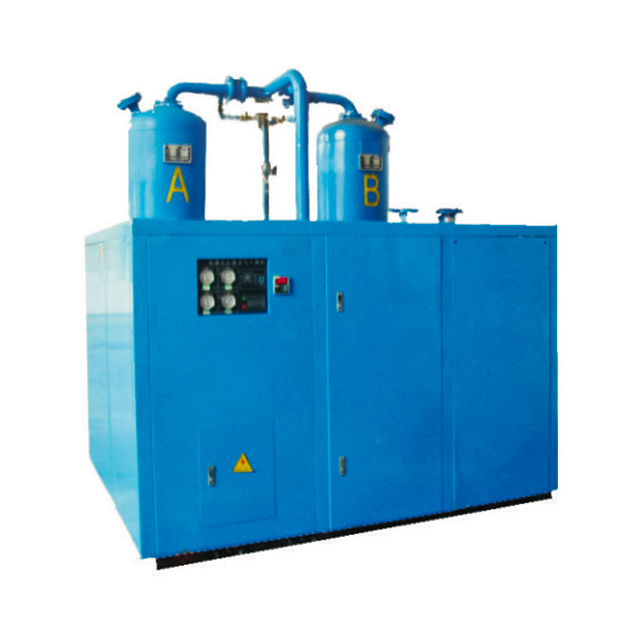
Once you verify that drains function correctly, shift your focus to the air dryer. Both refrigerated and desiccant dryers have distinct failure modes. You must systematically rule out basic operational errors before assuming internal component failure.
Refrigerated dryers cool the air to roughly 38°F (3°C). This forces remaining vapor into liquid form. First, verify the refrigerant compressor runs. Listen for its distinct hum. Next, check the condenser fan. If the fan fails, the refrigerant cannot shed heat, causing the dryer to stall.
Always check for the "Bypass Blunder". Maintenance teams often install three-valve bypass loops around dryers. This allows them to service the dryer without shutting down the plant. Unfortunately, they frequently forget to close the bypass valve after completing the service. An open bypass valve feeds wet, untreated air directly into your factory.
Finally, evaluate ambient conditions. High summer temperatures dramatically shrink a dryer's capacity. A dryer rated for 100 CFM at 80°F might only handle 60 CFM at 105°F. Hot ambient air forces the refrigeration circuit to work harder, eventually causing moisture to blow past.
Desiccant dryers push air through porous beads to achieve extremely low dew points. They require rigorous maintenance.
Sometimes all equipment works perfectly, yet water still floods the lines. This indicates a fundamental system design flaw. You must analyze environmental factors, flow rates, and piping architecture to find the true root cause.
Do not assume a dryer is broken when the actual issue involves inlet air exceeding maximum rated limits. Every 20°F increase in inlet air temperature roughly doubles the moisture load. If you purchase a dryer rated for a 100°F inlet, but feed it 120°F air from a struggling compressor, you immediately overload it. The dryer simply cannot handle the 200% increase in water vapor. Always measure the temperature of the air immediately entering the dryer before diagnosing a mechanical failure.
Plants expand. Facilities add new CNC machines, packaging lines, and pneumatic tools. As demand grows, system flow (CFM) increases. If flow outgrows the dryer or separator capacity, air velocity spikes. High-velocity air drags liquid water droplets right through coalescing filters. The air moves too fast for the water to drop out. If you recently expanded your plant but kept the old air dryer, velocity is likely your main culprit.
Improper piping manifests as water carryover at the tool, regardless of your air dryer's health. Hot compressed air cools as it travels through factory pipes. If your dryer misses even a small amount of vapor, it will condense in the pipe.
Good piping practices prevent this liquid from reaching tools. Pipes must slope directionally (dropping 1 inch per 10 feet of run) toward a designated drain point. You must install drip legs at low points to catch condensation. Most importantly, always feed tool drops from the top of the main header (using a "swan neck" or "gooseneck" fitting). Feeding drops from the bottom of the header turns your tool lines into gravity drains, funneling water directly into your expensive machinery.
After pinpointing the root cause, you must decide how to fix it. We categorize solutions into operational maintenance (OpEx) and capital equipment upgrades (CapEx). Choose the path that aligns with your diagnostic findings.
Evaluation Matrix: Maintenance vs. Capital Upgrades
| Solution Type | Examples of Action | Expected ROI Timeline | Primary Benefit |
|---|---|---|---|
| Maintenance (OpEx) | Rebuild drain valves, clean condenser coils, replace desiccant beads | Immediate (Days) | Restores baseline performance cheaply |
| System Upgrades (CapEx) | Upsize air dryer, install zero-loss drains, add wet receiver tank | Long-term (Months/Years) | Expands capacity for plant growth |
Start with maintenance. Rebuild or replace stuck drain valves. Clean heavily fouled condenser coils on refrigerated dryers to restore heat transfer. Replace oil-saturated desiccant beads and change pre-filter elements. We evaluate these fixes through the lens of immediate return on investment. In-house maintenance teams execute them easily, and they solve 80% of typical moisture carryover problems without requiring management approval for massive budgets.
When maintenance fails to resolve the issue, you must consider system upgrades. This might involve upsizing the air dryer to match increased plant CFM. You could also install dedicated point-of-use drying for highly sensitive equipment, like a laboratory testing room. Upgrading all timer drains to zero-loss pneumatic drains system-wide prevents future blow-by.
We evaluate CapEx through feature-to-outcome mapping. Do not simply buy a larger dryer if your flow is erratic. If your plant experiences massive, short-term demand spikes, the real fix involves adding a large wet storage tank. The tank smooths out peak demands, allowing your existing dryer to process the air steadily. Always match the equipment upgrade to the precise mechanical deficit.
Fixing compressed air systems involves navigating poor advice and complex installations. You must protect your facility from ineffective solutions and plan your rollouts carefully.
Many vendors aggressively push cheap, oversized inline water traps. They claim these traps solve all moisture problems at the tool level. We warn strongly against them. While they might catch some water, they create massive pressure drops. A poorly designed trap can cost you 5 to 10 PSI. To compensate for this drop, you must turn up your compressor's discharge pressure. This wastes immense amounts of electrical energy. Avoid these band-aid solutions. Always fix the root cause at the compressor room or the header piping.
If your diagnosis proves you need a new air dryer, plan the installation thoroughly. Do not just pipe the new dryer directly in line. Plan for bypass piping installation. A proper three-valve bypass allows you to isolate the dryer in the future without shutting down the entire factory. A little extra plumbing today saves thousands of dollars in downtime tomorrow.
When calling a compressed air auditor or equipment vendor, demand objective evidence. They must log data over a full 7-day period. This captures all shifts, peak loads, and weekend shutdowns. They should measure inlet temperatures, flow profiles, and pressure dew points. Never accept a quote for a replacement dryer based solely on your compressor's horsepower. Horsepower tells you nothing about ambient temperature spikes or piping pressure drops. Demand a solution built on verifiable data.
Troubleshooting water carryover requires a rigorous, systematic process of elimination. You must start your investigation at the compressor aftercooler and follow the air path all the way to the point-of-use drops. Guesswork leads to wasted money.
We advise addressing basic condensate drain faults and verifying capacity mismatches first. A stuck drain or a hot inlet temperature causes the vast majority of moisture issues. Resolve these operational hurdles before you ever authorize expensive equipment replacements.
If you remain unsure of your system's dynamics, take action now. Schedule a professional air system audit. Implement a dew point logging session to gather verifiable data. Data-driven decisions guarantee dry air, protected tools, and optimized energy bills.
A: A running dryer does not guarantee dry air. Physical bypass valves might be left open, routing wet air around the equipment. High inlet temperatures can overload the dryer's capacity. Additionally, downstream pipe condensation occurs if the pipe runs through a cold area, dropping the temperature below the achieved dew point.
A: Check drains weekly to ensure they discharge properly. For timer drains, adjust intervals seasonally to match humidity. Rebuild or replace standard drain valves annually. Zero-loss drains require sensor cleaning every six months to prevent oil sludge buildup from jamming the discharge mechanism.
A: Yes. Liquid water violently washes away the factory-applied lubricants inside pneumatic cylinders. Without lubrication, internal seals face direct friction and degrade rapidly. Water also introduces rust to the metal housings. This combination causes severe air leaks, jerky cylinder movements, and premature component failure.
A: General manufacturing typically targets a pressure dew point of 38°F (3°C), achievable with standard refrigerated dryers. This prevents liquid water in indoor environments. Critical applications, like pharmaceuticals or electronics, require desiccant dryers to achieve a -40°F to -100°F dew point, completely eliminating water vapor.


