
- Home
- Products
- Hot
- About Us
- Services
- Industry
- Contact
Views: 0 Author: Site Editor Publish Time: 2026-08-17 Origin: Site


Buyers face a persistent dilemma in modern manufacturing and laboratory settings. You must balance the need for an uncontaminated process environment against the physical limitations of dry technology. Clean operations remain vital for product integrity. However, dry equipment possesses inherent design restrictions.
Industry professionals frequently voice strong skepticism regarding these systems. This skepticism thrives especially in HVAC and heavy manufacturing sectors. They question whether dry equipment can achieve sufficient depth without oil. Fluid traditionally acts as a vital sealant to close microscopic gaps. Stripping it away causes valid performance concerns. Selecting inappropriate equipment leads to inefficient cycles or ruined batches.
This article serves as your comprehensive guide through these technical challenges. We aim to provide an objective, evidence-based framework for your facility. You will discover how to evaluate the realistic performance boundaries of modern dry technology. We will also outline strict integration requirements to ensure your operational success.
To understand what a vacuum level is possible, we must first look at the underlying physics. Traditional rotary vane systems rely heavily on fluid dynamics. The fluid serves three critical functions inside the compression chamber. It provides constant lubrication between moving metal parts. It cools the internal mechanisms by absorbing friction heat. Most importantly, it seals microscopic clearances between rotating rotors and stationary stators. This sealing action allows traditional units to reach extremely deep pressures rapidly.
An oil-free industrial vacuum pump must compensate for this missing fluid barrier. Engineers solve this complex challenge using extremely tight machining tolerances. They mill the internal rotors to microscopic specifications. They also deploy advanced PTFE tip seals and dynamic sealing mechanisms. These design choices prevent back-flowing air from ruining the pressure equilibrium. However, these mechanical compensations inherently limit the absolute ultimate base pressure you can achieve.
Different structural designs yield vastly different performance baselines. We break down the standard capabilities below.
Baseline Performance by Dry Technology
| Pump Technology | Typical Ultimate Pressure | Best Use Cases |
|---|---|---|
| Diaphragm Pumps | Down to ~1 mbar | Basic lab backing, liquid filtration, rough processes. |
| Claw Pumps | Rough vacuum range | Continuous industrial manufacturing, bulk material handling. |
| Scroll Pumps | ~$10^{-2}$ to $10^{-3}$ mbar | Cleanrooms, R&D environments, analytical instruments. |
| Dry Screw Pumps | Deepest dry levels ($10^{-3}$ mbar) | Harsh industrial environments, heavy vapor loading. |
Diaphragm models excel in rough applications. They move gas by flexing a membrane, isolating the gas path entirely from the motor. Claw models serve as the workhorses of continuous manufacturing. Their interlocking claws create a dry, non-contact pumping chamber ideal for handling slight particulate loads. Scroll models act as the bridge to medium depth ranges. They use two spiral scrolls to compress gas, making them exceptionally quiet and perfect for research labs. Dry screw models handle harsh industrial environments. They utilize twin rotating screws to push heavy vapor loads toward the exhaust.
Skepticism from field technicians remains completely valid. They worry about vapor handling and deep micron sealing. Dry equipment struggles more with these issues compared to traditional fluid-sealed units. Vapor easily condenses inside a cold dry chamber. Micro-leaks bypass mechanical seals much easier than fluid seals. Over-specifying your internal components is critical if deep micron levels are absolutely mandatory for your daily workflow.
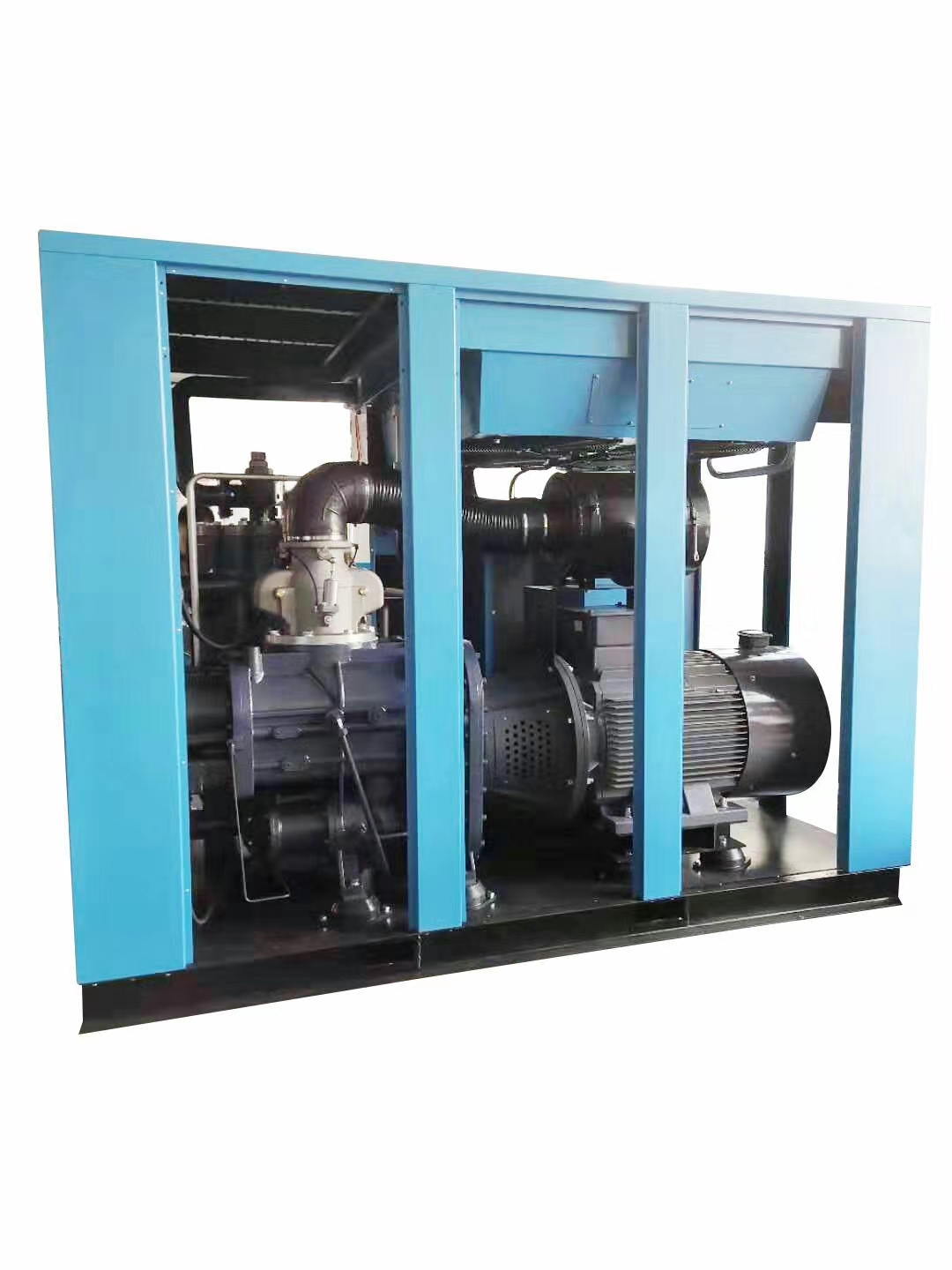
Many facility managers make a critical error during the sizing phase. They look exclusively at the ultimate base pressure printed on the specification sheet. Manufacturers test and measure this ultimate number at zero flow. Engineers refer to this state as a "deadhead" condition. A pump operating at deadhead does no actual work.
You must instead evaluate the actual operational curve. Observe exactly how the oil-free pump airflow behaves as the system approaches its limit. A unit might advertise an ultimate pressure of 10 microns. However, its effective pumping speed might plummet to near zero once it hits 50 microns. This drastic drop extends your processing time exponentially. You need strong volumetric flow at your specific working pressure, not just a low deadhead number.
The absence of fluid also significantly alters thermal dynamics during the pump-down cycle. Traditional units use fluid to carry away immense compression heat. Dry units retain more thermal energy during the final evacuation stages. This retained heat alters internal gas expansion rates. Hotter gas molecules move faster and become harder to compress. This phenomenon reduces your effective volumetric flow. You must account for longer time-to-vacuum metrics in your production schedule when transitioning to dry technology.
System leaks and unexpected outgassing present another massive hurdle. Dry equipment is highly sensitive to system micro-leaks. Fluid cannot mask these tiny pipework imperfections. A completely clean and tight pipe network remains a strict prerequisite. You will never reach advertised performance metrics if your pipework allows atmospheric air to seep back inside.
Here are the most common culprits of unexpected outgassing and micro-leaks:
Choosing dry technology requires accepting specific mechanical trade-offs. You must define clear, measurable success criteria for your facility. Focus primarily on applications where the cost of process contamination is disastrous. If cross-contamination ruins your end product, dry technology becomes mandatory.
Semiconductor manufacturing offers a perfect illustration of this necessity. A single microscopic drop of fluid backstreaming into a cleanroom ruins millions of dollars of silicon wafers. The industry demands absolute purity at all times. Sensitive R&D laboratories also require this level of purity. Mass spectrometers lose calibration accuracy if rogue hydrocarbons enter the testing chamber. Pharmaceutical freeze-drying also demands zero hydrocarbon exposure to meet strict FDA safety standards. In these specific scenarios, the purity benefits far outweigh the slower pump-down speeds.
However, traditional fluid-sealed units still dominate certain operational scenarios. Objectively, they win in high moisture environments lacking proper secondary cold trapping. Fluid handles aggressive water vapor loads much better because it resists immediate internal condensation. They also win heavily in budget-constrained field HVAC service. HVAC technicians routinely need to reach 100 microns rapidly to boil off trapped system moisture. Portable dry units often struggle to hit these rapid speeds reliably in variable outdoor conditions. Legacy dirty processes also favor fluid-sealed units. Heavy fluid traps incoming dust and abrasive particulate matter effectively, protecting the internal rotors from scoring.
You must weigh these operational realities carefully. Match the mechanical technology to the specific environmental demands of your factory floor. Do not force dry equipment into a dirty, moisture-heavy application without designing extensive secondary filtration and trapping networks. Doing so will only lead to premature mechanical failure.
Facility integration requires careful, detailed planning. You cannot simply drop a new dry unit into an old pipeline and expect perfect results. Power and electrical setup demand your immediate attention. Large manufacturing floors often utilize a centralized industrial vacuum system. These massive networks require heavy-duty 3-phase power to handle massive startup torque. They demand dedicated electrical panels, robust wiring infrastructure, and proper grounding protocols to run continuously without tripping breakers.
Conversely, localized setups offer much more flexibility for smaller teams. Many laboratories rely on a portable 120V vacuum pump for benchtop R&D tasks. These smaller units provide immense plug-and-play convenience. You can move them between fume hoods or specialized extraction stations easily. Always match your facility's electrical capacity to your equipment needs before finalizing any purchase order.
Thermal management presents another significant implementation constraint. Dry units run inherently hotter than traditional models. There is no fluid bulk circulating to act as a liquid heat sink. The mechanical friction generates substantial thermal energy directly transferred to the outer casing. You must outline necessary ventilation protocols for the pump room. Ambient temperature controls are required to maintain targeted extraction levels. A hot room will degrade the pumping efficiency rapidly. Ensure adequate airflow around the motor housing to prevent thermal overload shutdowns.
Maintenance realities often shock new buyers who expect zero upkeep. Replace the marketing myth of "maintenance-free" operation with accurate engineering expectations. Dry units successfully eliminate messy fluid changes and hazardous waste disposal. However, they possess several critical wearable internal components.
Consider these predictable maintenance tasks for your annual budget:
Selecting the correct model demands a strict feature-to-outcome evaluation framework. You must learn to read manufacturer specification sheets skeptically. Do not fixate on the lowest ultimate number printed boldly at the top of the brochure.
Always request the comprehensive pumping speed curve diagram. Analyze exactly how the volumetric flow behaves at your specific target pressure. A robust curve stays relatively flat longer before dropping off steeply near the ultimate limit. This flat curve indicates strong, reliable performance under real-world process gas loads. A curve that drops sharply early in the cycle will struggle to handle any unexpected outgassing.
Pilot testing serves as your absolute best risk mitigation strategy. Never rely solely on clean-air laboratory condition data provided by the manufacturer. Real-world applications introduce moisture, variable temperatures, and chemical vapors. We highly recommend requesting trial units from vendors. Consult extensively with dedicated application engineers about your specific pipeline setup. Verify the performance against your actual process gas loads. Test how the unit handles your specific chemical vapors or particulate dust over a 48-hour continuous run.
Specifying a dry unit is an exercise in precise application matching. It is never just about chasing the lowest possible pressure number on a data sheet. You must balance strict purity needs against realistic physical and mechanical constraints.
Your next steps are crucial for ensuring a successful installation and long-term reliability. Implement these action-oriented directives before initiating any formal vendor conversations:
A: Yes, but it presents technical and financial challenges. Multi-stage scroll pumps can technically reach 100 microns. However, they may not be cost-effective for everyday field service. They also tend to be less robust when subjected to the rough handling common in field HVAC work. Traditional fluid-sealed units remain the practical choice for rapid, deep evacuations in the field.
A: Absolutely. Normal wear on internal components degrades performance. Scroll pumps rely on tip seals. Diaphragm pumps rely on flexible membranes. As these parts undergo thousands of hours of friction and flexing, microscopic gaps form. These gaps allow gas to slip backward. This gradual loss of ultimate pressure signals that your maintenance interval has arrived.
A: They are highly suitable for preventing contamination in food and pharmaceutical freeze-drying. However, freeze-drying generates massive amounts of water vapor. The pump must be specifically designed to handle this moisture. You must install a cold trap between the chamber and the pump. This trap captures the vapor before it enters the pumping mechanism and ruins efficiency.


