
- Home
- Products
- Hot
- About Us
- Services
- Industry
- Contact
Views: 0 Author: Site Editor Publish Time: 2026-08-22 Origin: Site


Electricity accounts for over 70% of an industrial air compressor's total lifecycle cost. This staggering figure makes energy efficiency a critical operational priority. Plant managers constantly face a difficult choice. They must weigh the high initial capital expenditure of variable speed technology against standard models. Many assume standard models carry higher long-term operational costs. This financial balancing act often feels overwhelming. However, neither technology is universally superior. The correct choice depends entirely on your specific compressed air demand profile. Your operational environment also plays a massive role. You must understand your precise airflow requirements. This insight acts as the first step toward long-term profitability. In this guide, we will explore how demand profiles impact efficiency. We will evaluate lifecycle expenditures side-by-side. You will learn a proven framework for selecting the optimal setup. We want you to maximize savings and protect your bottom line.
Evaluating compressor economics requires a long-term perspective. A typical industrial machine operates for at least ten years. Over this decade, the initial purchase price shrinks in significance. Maintenance costs remain relatively stable. Energy consumption dominates the financial model completely. You must look beyond the sticker price.
Industry standards break down lifecycle OPEX into three distinct categories. You can see this typical distribution below.
| Expense Category | Percentage of Lifecycle Cost | Impact Description |
|---|---|---|
| Equipment Purchase (CAPEX) | 10% | Initial capital outlay for the machine and installation. |
| Routine Maintenance | 10% | Consumable parts, oil changes, and service labor. |
| Electrical Energy (OPEX) | 80% | Daily utility costs to run the electric motor. |
A VSD air compressor carries an upfront premium. It typically costs 20% to 30% more than a standard unit. This higher CAPEX often deters budget-conscious buyers. However, this premium buys advanced motor control technology. You must evaluate this premium against the 80% energy slice.
ROI calculations heavily favor variable speed models in fluctuating environments. They can slash monthly energy bills drastically. Localized utility rates accelerate this payback period. High electricity prices shorten the ROI window significantly. Furthermore, many utility companies offer substantial cash rebates for installing energy-efficient equipment. These localized rebates can cover the entire CAPEX premium. They often result in an ROI of 12 to 24 months.
We see common mistakes when facilities only look at the purchase order. They ignore the daily utility drain. Always map out a 10-year financial projection. Calculate your local cost per kilowatt-hour. Include potential utility incentives in your budget planning.
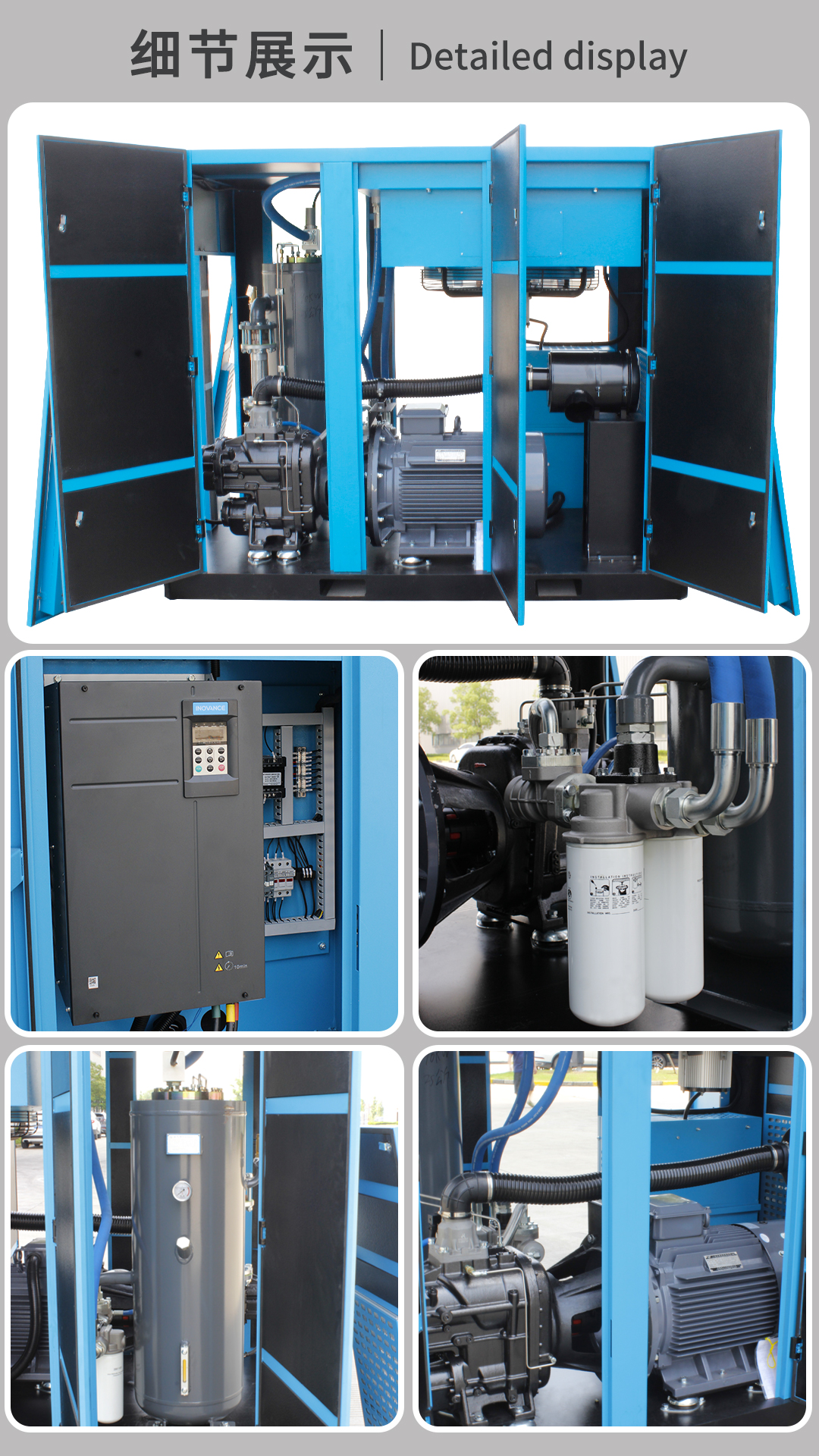
Understanding partial load efficiency remains critical for smart equipment selection. In practical terms, this defines how well a machine performs below maximum capacity. Standard units operate using a simple load/unload mechanism. The motor runs at a constant speed regardless of demand. When the plant needs less air, the intake valve closes. The motor continues spinning at full RPM. This idling state wastes massive amounts of energy.
Variable speed technology solves this exact problem. It scales motor speed down to match exact CFM (Cubic Feet per Minute) requirements. If your plant needs 50% air, the motor runs at 50% speed. This direct correlation creates massive compressor energy savings.
You need to identify the "VSD Sweet Spot." Variable speed units thrive in specific operational profiles. They deliver maximum value under the following conditions:
However, you must avoid the "Base-Load Fallacy." Many buyers assume variable speed technology always wins. This is factually incorrect. Consider a factory running 24/7 at maximum capacity. The compressor runs constantly at 100% load. In this specific scenario, a standard fixed speed air compressor operates marginally more efficiently. Variable frequency drive (VFD) inverters inherently lose 2% to 3% of their power during AC/DC conversion. Running a variable speed unit permanently at 100% capacity wastes energy.
Variable speed technology fundamentally changes mechanical wear patterns. These units utilize a soft starting mechanism. They ramp up motor speed gradually. This controlled acceleration eliminates the massive current spikes associated with standard motor startups. Soft starting drastically reduces mechanical stress. It protects drive belts, motor bearings, and internal couplings.
This gentle operation can extend component life considerably. However, you must contrast this benefit with standard maintenance realities. Standard systems possess simpler internal architectures. Their routine maintenance often costs less. Technicians find standard contactors and motors easier to troubleshoot. Inverter drives require specialized diagnostic knowledge. You must weigh longer component life against higher specialized labor rates.
Implementation risks rise significantly in harsh environments. Inverters contain sensitive microprocessors and circuit boards. They are highly susceptible to extreme ambient temperatures. Heavy industrial dust acts as an insulator. It coats electrical components and prevents heat dissipation. Moisture and airborne chemicals corrode internal contacts quickly.
Standard systems prove incredibly robust in these dirty manufacturing environments. They survive extreme heat and heavy particulate contamination easily. If you install a variable speed unit in a foundry or a dusty sawmill, you must take precautions. You must ensure the electrical cabinet holds a proper environmental rating. Look for NEMA 4 or IP55 enclosures. These sealed cabinets require dedicated cooling fans or internal air conditioning to survive.
You cannot ignore your plant's electrical grid. Inverters actively manipulate electrical sine waves to control motor speed. This manipulation introduces harmonic distortion back into your facility's power grid. These harmonics act like electrical pollution.
Severe harmonic distortion causes strange plant behaviors. It makes computer screens flicker. It trips sensitive circuit breakers randomly. It overheats nearby transformers. Best practices dictate a thorough power quality review before installation. You may need to install line reactors or active harmonic filters. These external devices clean the electrical supply. They protect both the inverter and your surrounding plant equipment.
Larger manufacturing facilities rarely rely on a single machine. They utilize a system-level approach. Connecting multiple machines creates a highly resilient compressed air network. It also unlocks the most efficient operational strategy available today. Industry experts call this the "Base + Trim" configuration.
This strategy blends both technologies perfectly. You size a standard unit to handle your constant base load. This machine runs at 100% capacity all day. It operates at its absolute peak efficiency. You then install a smaller variable speed unit alongside it. This secondary machine acts as the trim compressor. It speeds up and slows down to handle the fluctuating peaks and valleys of your demand.
This hybrid configuration delivers the highest possible system reliability. It maximizes efficiency without over-investing in unnecessary technology. You avoid buying massive inverter drives for base-load air.
The chart below summarizes how these operational roles differ within a hybrid system.
| Operational Role | Recommended Technology | Typical Operational State | Primary System Benefit |
|---|---|---|---|
| Base Load | Fixed-Speed Unit | 100% Capacity | Provides maximum efficiency during constant, heavy demand. |
| Trim Load | Variable Speed Unit | Variable (20% - 90%) | Adapts seamlessly to fluctuating demand without idling. |
Guessing your airflow requirements leads to expensive mistakes. Oversizing equipment wastes massive amounts of electricity. Undersizing equipment causes production shutdowns due to low pressure. You need a data-driven approach to select your next machine safely.
Follow this structured decision framework to guarantee optimal results:
By following these steps, you force vendors to compete on factual performance. You remove emotion and guesswork from the procurement process. You ensure your capital serves your exact production needs.
Lowering plant energy costs is not about buying the most expensive or advanced technology available. It is about buying the most appropriate technology for your specific production profile. Standard machines still dominate steady, base-load applications. Variable speed units provide unmatched savings in fluctuating environments. A hybrid approach often yields the best results for large facilities.
Your action plan moving forward should be data-driven. We recommend scheduling a professional compressed air system audit immediately. Do this before soliciting any equipment bids. Gather your baseline data. Understand your load profiles clearly. This due diligence ensures your capital gets deployed effectively. It protects your bottom line and guarantees a reliable air supply for years to come.
A: You can technically retrofit a VFD. However, industry experts rarely recommend it. Standard motors lack the thermal management required for low-speed operation. They overheat quickly when running below design speeds. Furthermore, standard airends do not operate optimally at variable RPMs. This mismatch leads to poor lubrication and premature mechanical failure. You will likely spend more on repairs than you save on energy. We advise purchasing a purpose-built variable speed unit instead.
A: An idling standard unit consumes massive amounts of power. It often draws between 20% and 40% of its full-load electrical capacity. During this unloaded state, the machine produces absolutely zero compressed air. If your production line frequently pauses, this idling period destroys your energy efficiency metrics. You pay for electricity without receiving any usable output. Addressing this unloaded runtime represents the fastest way to lower utility bills.
A: Most variable speed drives operate efficiently down to 20% or 30% of their maximum rated capacity. Dropping below this specific threshold creates severe internal problems. Low speeds cause significant oil carryover into the air stream. The machine also struggles with internal temperature regulation. If your air demand consistently falls below this 20% mark, your system is likely oversized. You should consider adding a smaller secondary unit to handle these extreme low-demand periods safely.


