
- Home
- Products
- Hot
- About Us
- Services
- Industry
- Contact
Views: 0 Author: Site Editor Publish Time: 2026-08-08 Origin: Site


Accepting industrial equipment blindly carries immense business risk. Moving heavy machinery across international borders exposes it to unseen manufacturing flaws. Transit damage remains a constant threat. Skipping formal checks shifts liability directly onto buyers. You might face mismatched specifications upon arrival. Mechanical failures and voided warranties often follow poor receiving procedures. This guide provides a standardized framework. We help you verify purchase orders against the physical unit. You will learn to navigate mechanical baseline testing smoothly. We also cover structural assessments and logistics readiness. These steps align strictly with industrial standards like ISO 1217. Readers will gain clear protocols. You can secure your capital investments effectively. Vendor accountability remains the ultimate goal.
Success requires strict criteria. A standard visual check differs vastly from a rigorous technical inspection. True success means zero undocumented variances. The physical unit must match your quoted specifications perfectly. We view compressor quality control as a comprehensive audit. It eliminates assumptions before the equipment leaves the factory.
Consider the cost of failure. Receiving a non-compliant unit disrupts your entire operation. Imagine plugging in a machine to find mismatched voltages. For example, a facility wired for 480V cannot run a 380V motor. Inadequate cooling sizing causes instant thermal shutdowns. Undocumented transit damage creates finger-pointing between vendors and freight companies. These operational realities lead to massive production delays.
You must choose between third-party and in-house inspectors. Independent inspection agencies offer unbiased, certified reports. They bring specialized diagnostic tools to the factory floor. In-house procurement engineers understand your specific plant requirements better. They know exactly how the machine fits into your existing air network. High-value purchases often benefit from a hybrid approach. You can hire an agency to measure technical baselines. Your internal team then reviews the final data.
Performance validation acts as your primary mechanical baseline. We verify actual Free Air Delivery (FAD) and working pressure. The factory must run the unit under simulated load conditions. We expect strict compliance. Standard ISO 1217 governs testing for displacement compressors. It dictates acceptable tolerances for flow and pressure. You must demand the raw data logs from this test.
Vibration and acoustic baselines require careful measurement. Technicians measure airend and motor vibration levels. This identifies potential bearing issues early. It also spots rotor imbalances before they leave the manufacturing floor. You must confirm noise levels (dB) match the quoted guarantees. Excessive noise often indicates internal mechanical friction. It also violates occupational safety standards.
Thermal and leak diagnostics complete the testing phase. We run the unit until it reaches standard operating temperature. Inspectors check for localized overheating in the airend. They also scan the cooling matrix for hot spots. Pressure retention tests follow the thermal check. They identify microscopic oil or air leaks. Technicians inspect all hoses and fittings closely. These precise steps form the core of reliable industrial compressor testing. A successful compressor factory acceptance test guarantees mechanical readiness.
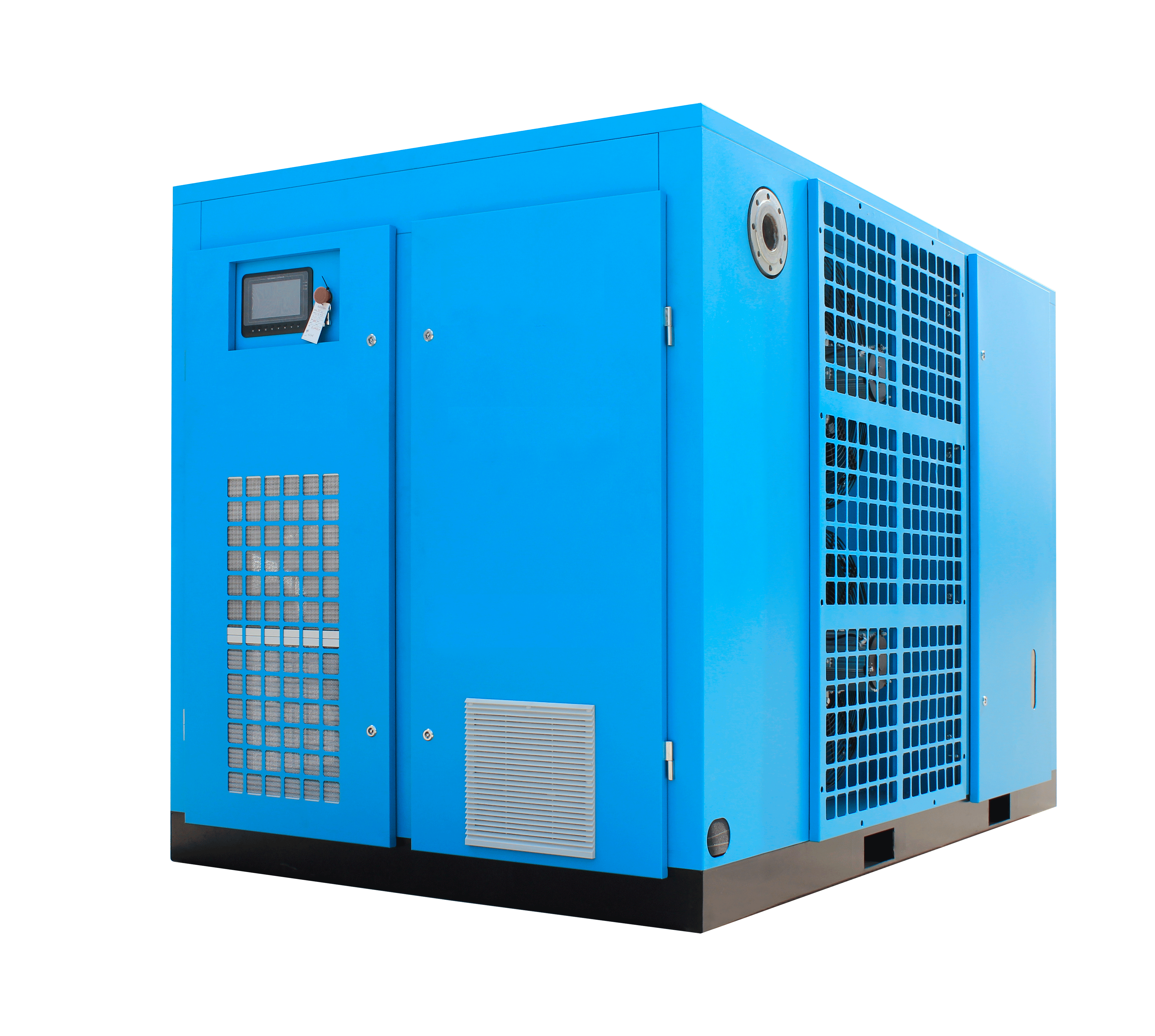
Airend and powertrain integrity demand intense scrutiny. You must inspect the coupling or belt alignment physically. Check all mounting bolts for proper torque marks. Examine the airend casing carefully. It should show no signs of porous casting. You must also rule out any impact damage from factory handling. Even minor exterior dents suggest poor internal handling procedures.
Electrical and control panel verification prevents site commissioning failures. Inspectors must check the PLC programming. They verify the HMI screen functionality fully. Ensure default language settings match your operators' needs. You must verify compliance against regional electrical standards. Look for UL, CE, or CSA markings on the main panel. Inspect internal wire routing closely. Proper zip-tying prevents dangerous chafing risks during transit.
Fluid levels and filtration checks protect internal components. Ensure initial oil fills sit at appropriate levels. Some shipping regulations require factories to drain the oil completely. If drained, they must seal the ports securely. You must verify OEM filters are installed properly. They must remain uncompromised and perfectly clean. A thorough pre-shipment inspection catches these details.
Moisture and corrosion protection saves equipment during long transits. Ocean freight shipments face extreme humidity variations. You must confirm the inclusion of industrial desiccants. Factories should use Volatile Corrosion Inhibitor (VCI) bags. Vacuum sealing the entire unit offers maximum protection. Salty sea air destroys unprotected control panels rapidly.
Structural crating standards dictate transit survival. You must evaluate the skid or crate design carefully. Ensure the crate accounts for the machine's exact center of gravity. Asymmetrical weight distribution causes tipping during forklift handling. Adequate shock absorption must protect the base. Rubber isolation pads prevent transit vibrations from damaging sensitive electronics.
Shipping documentation must align perfectly. Verify the packing list against the commercial invoice. The FAT report serial numbers must match the physical nameplate data exactly. Customs officials look for discrepancies here. A single mismatched digit causes severe customs delays. Proper screw air compressor inspection ends safely at the loading dock.
Shipping Documentation Verification Matrix
| Document Type | Verification Target | Critical Checkpoint |
|---|---|---|
| Commercial Invoice | Purchase Order | Pricing, Incoterms, and specific model numbers match. |
| Packing List | Physical Crate | Dimensions, gross weight, and actual crate count align. |
| FAT Report | Machine Nameplate | Serial numbers and rated FAD metrics are identical. |
| Certificates (CE/UL) | Control Panel | Physical compliance stickers exist on the electrical box. |
Evaluating discrepancies requires a calm, objective approach. You must categorize findings accurately. We separate critical defects from minor deviations. A failed vibration test represents a critical defect. It indicates severe internal mechanical flaws. Conversely, a cosmetic paint scratch is a minor deviation. It does not affect machine performance. You should never delay shipments for purely cosmetic reasons.
The shortlisting and approval logic guides your final verdict. We use a three-tier system. Full acceptance means the unit is ready for immediate release. Conditional acceptance involves issuing a strict punch list. The vendor must correct minor issues quickly. They must prove these corrections photographically before final sign-off. Rejection halts the shipment entirely. We hold the release until the factory replaces major components. Sometimes a complete rebuild becomes necessary.
Triggering freight forwarding follows final approval. You transition custody cleanly from the manufacturer to the logistics provider. Maintain active marine insurance coverage during this handoff. Ensure the freight forwarder signs a clean bill of lading. This protects your legal rights if damage occurs later.
Inspection Decision Framework Chart
| Inspection Result | Action Required | Vendor Obligation |
|---|---|---|
| Zero Defects | Full Acceptance | Release cargo to freight forwarder immediately. |
| Minor Deviations | Conditional Acceptance | Fix issues and send photographic proof within 48 hours. |
| Failed FAT Baselines | Rejection | Diagnose, repair, and conduct a completely new FAT. |
| Damaged Packaging | Rejection / Hold | Re-crate the machine and add extra shock absorption. |
Diligent inspections transition a capital purchase into a site-ready asset. They transform theoretical orders into verified machines. You eliminate the mystery of cross-border equipment procurement. Strict testing protects your production timelines and operational budgets.
Never waive factory testing on engineered-to-order units. High-capacity screw compressors demand rigorous mechanical baselines. Lead-time pressures should never compromise your quality standards. A rushed, untested machine always costs more in the long run.
Take control of your next equipment purchase today. Download a standardized acceptance checklist for your team. Consult with a qualified application engineer. They will help you define specific criteria tailored to your facility.
A: A FAT involves active operational testing. It measures mechanical performance like air delivery, vibration, and temperature. A pre-shipment inspection focuses on physical aspects. It verifies packaging, visual completeness, structural integrity, and proper shipping documentation before transit.
A: Yes, remote inspections are common. However, live streams have limitations. Video resolution often hides minor leaks or vibration nuances. You must always demand unedited, raw data logs from the factory. Never rely solely on video footage.
A: The manufacturer usually covers standard testing costs. This basic testing sits inside the original purchase price. However, hiring an independent third-party agency requires a separate budget. You must allocate funds for extended or highly customized testing scenarios.
A: The vendor must halt the shipment immediately. They hold full obligation to diagnose and repair the mechanical fault. They might need to replace major components. Following repairs, they must conduct a complete re-test to prove compliance.


