
- Home
- Products
- Hot
- About Us
- Services
- Industry
- Contact
Views: 0 Author: Site Editor Publish Time: 2026-10-25 Origin: Site


Incorrect compressed air filtration hides massive financial penalties within industrial plants. Plant managers constantly struggle to balance downstream equipment protection against skyrocketing energy bills. Unseen pressure drops drive these utility costs higher every month. Misunderstanding your actual purity needs usually leads to operational disaster. Underestimating oil carryover causes sudden product spoilage. Choosing the incorrect filtration grade triggers frequent pneumatic tool failures. In heavily regulated sectors, these errors cause severe compliance breaches and costly production downtime.
This article provides a grounded, evidence-based framework for evaluating industrial filtration grades. You will discover practical strategies for diagnosing system inefficiencies and managing liquid aerosol risks. We outline clear methods to map your exact pneumatic requirements. Ultimately, we help you determine the most cost-effective path to achieving your required air purity without wasting electrical power.
Many operators confuse particulate filtration and liquid aerosol removal. You must clearly define what a filter actually measures. A micron rating measures the physical size of particles the element catches. It dictates how effectively the media blocks solid dust, rust, and pipe scale. It does not measure liquid aerosol removal efficiency. Understanding this fundamental distinction prevents costly purchasing mistakes. Solid particulates behave differently than liquid droplets inside an air stream.
We anchor all industrial filtration discussions in the ISO 8573-1 framework. This global standard classifies compressed air purity into distinct, measurable levels. Classes range from 1 down to 6 for various contaminants. Class 1 demands extremely stringent filtration for highly sensitive processes. Class 6 allows much larger particles for basic shop tools. You must consult this framework before buying any new pneumatic equipment. The ISO standards prevent subjective marketing claims from dictating your engineering choices.
Facilities utilize pre-filters and micro-filters differently across the plant. General-purpose pre-filters capture heavy, bulk contaminants. They usually operate between 1 and 5 microns. They effectively protect sensitive downstream components from large debris. High-efficiency micro-filters capture incredibly small particles down to 0.01 microns. However, these fine micro-filters clog rapidly. You must never install them without proper pre-filtration upstream. Staging your filters guarantees reliable performance.
Many plant managers fall into a costly decision trap. They insist on over-filtering their entire air supply. Specifying a tight 0.01-micron element for a basic pneumatic cylinder is dangerous. The cylinder only requires a standard 1-micron filter. The tighter element unnecessarily bottlenecks your air supply. It drastically inflates your daily operational electrical expenditures. Always evaluate your actual compressed air filter micron rating requirements locally.
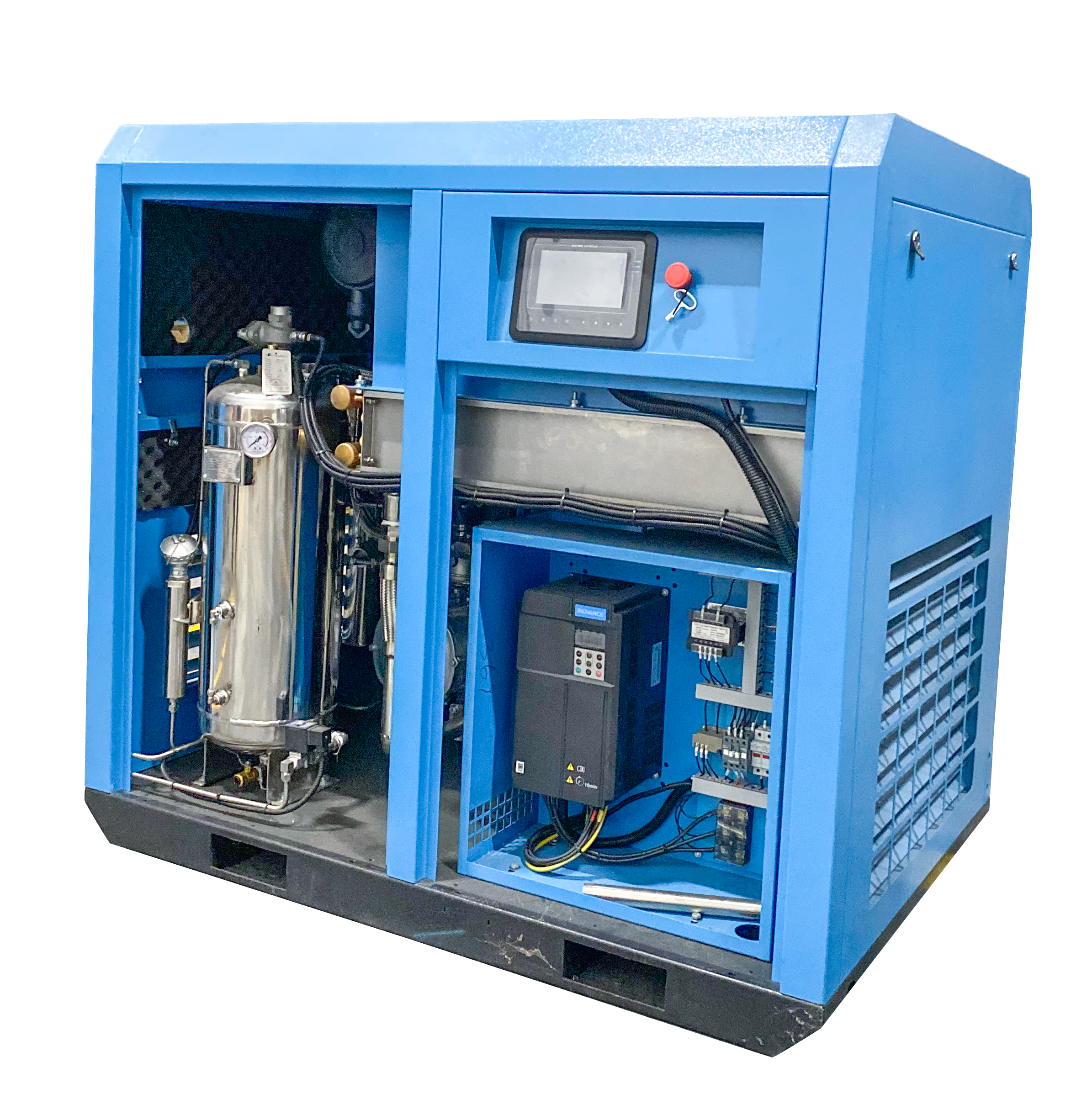
Oil carryover presents a massive threat to industrial manufacturing systems. Carryover occurs when compressor lubricants escape the internal air/oil separator. The hot oil travels downstream as liquid aerosols or vaporized gases. Standard particulate filters fail to capture this threat entirely. They only stop solid dirt. Oil aerosols simply push through the dry mesh fibers. They re-enter the airstream and contaminate your final product.
You must implement specific coalescing filtration to manage liquid threats. A precision air filter utilizes specialized borosilicate glass microfibers. These dense fibers force tiny oil aerosols to collide. The microscopic aerosols merge into much larger, heavier droplets. Gravity pulls these large droplets down into a collection bowl. Auto-drains then expel the accumulated liquid. This coalescing mechanism acts as the primary defense for your downstream network.
Why does carryover happen even after installing brand new filters? You must perform immediate root cause analysis. Several mechanical failures trigger excessive oil bypass. Watch out for these common issues:
Testing and verification keep your production processes safe. Pragmatic detection methods validate your filtration performance continuously. Maintenance teams should use simple visual indicators at point-of-use drops. You can also install specialized air quality test kits. These kits measure specific oil aerosol concentrations in real-time. Regular sampling verifies your coalescing elements still function correctly. Catching carryover early prevents catastrophic contamination events.
Filtration purity directly fights against compressor energy efficiency. Plant engineers face a constant pressure drop dilemma. Tighter micron ratings naturally restrict air flow through the pipe network. The dense filter media creates a physical barrier. This barrier causes a pressure drop, often called delta-P. Your main air compressor must work significantly harder to overcome this resistance. Higher pressure generation requires more electrical power.
Financial impacts accumulate rapidly across large manufacturing facilities. The industry relies on a standard heuristic for calculation. Every two psi of pressure drop increases compressor energy consumption by roughly one percent. A heavily restricted 0.01-micron element might drop system pressure by six psi. Your facility now pays three percent more in daily electricity costs. This invisible penalty destroys your utility budget over twelve months.
You must evaluate filter costs beyond the initial purchase price. Annualized energy consumption dictates the true financial burden. Element degradation accelerates over time. As the filter captures more dirt, the internal pathways shrink. The pressure drop increases exponentially during the final months of operation. Buying cheap replacement elements often costs more long-term. Cheap elements typically exhibit higher initial pressure drops than premium alternatives.
Establish strict operational thresholds for element replacement. Do not wait for complete component failure. Compare the cost of a new filter element against your wasted electricity. Pushing compressed air through a completely saturated element costs a fortune. Replace coalescing elements when the differential pressure gauge hits the manufacturer's red zone. Proactive maintenance always costs significantly less than wasted electrical power.
Engineers often debate the boundaries of clean air generation. We must contrast Class 1 air with Class 0 air clearly. You achieve Class 1 air via extreme, multi-stage filtration. The industry calls this "technically oil-free" air. You achieve Class 0 air through the actual generation method. The compressor introduces absolutely zero oil into the compression chamber. The air leaves the machine inherently pure.
Relying on series-stacked filters introduces massive operational vulnerabilities. Facilities stack water separators, coalescing elements, and activated carbon towers together. This chain aims to achieve oil-free status artificially. However, one failed element destroys the entire process immediately. If a coalescing filter tears, raw oil floods the carbon tower. The carbon saturates instantly. Downstream contamination happens before alarms even trigger.
You must evaluate the capital expenditure against ongoing operational costs. Purchasing a true oil-free compressor requires a higher initial investment. However, maintaining technically oil-free filtration banks drains your maintenance budget constantly. You face continuous element replacements. You absorb massive energy penalties from severe pressure drops. You also carry a much higher contamination risk profile every single day.
Different industries require different baseline risk strategies. General manufacturing safely utilizes high-grade precision filtration. Automotive paint lines manage risk well using staged coalescing setups. Direct-contact food processing cannot accept any contamination risk. Cleanrooms and pharmaceutical plants mandate Class 0 generation exclusively. Stacking filters proves far too dangerous for strict compliance sectors.
Table 1: Filtration Risk Profiles by Industry Sector
| Industry Sector | Recommended ISO Standard | Preferred Equipment Strategy | Contamination Risk Tolerance |
|---|---|---|---|
| General Manufacturing | ISO Class 3 or 4 | Standard Particulate Filters | High |
| Automotive Painting | ISO Class 1 | Staged Coalescing & Carbon | Moderate |
| Food & Beverage Processing | ISO Class 0 | Class 0 Generation Equipment | Zero |
| Pharmaceuticals & Labs | ISO Class 0 | Class 0 Generation Equipment | Zero |
Follow a logical sequence to specify your filtration equipment correctly. Do not guess dimensions based on pipe diameter alone. Over-sizing wastes money, while under-sizing destroys your system pressure.
Evaluate your prospective filter vendors rigorously. Demand third-party ISO 12500 testing validation before purchasing. Review documented pressure drop curves for every proposed element. Ensure the manufacturer guarantees performance under your specific operating conditions. Reliable vendors gladly provide transparent technical data. Avoid suppliers hiding behind vague efficiency percentages.
Optimal compressed air management requires constant technical vigilance. It remains an ongoing exercise in risk management and strict energy efficiency. Chasing the absolute smallest micron number often harms your system performance. You must balance equipment protection against the rising costs of electrical power. Installing excessively tight elements guarantees unnecessary pressure drops.
Addressing oil carryover demands a holistic system viewpoint. You must monitor core compressor health while sequencing filters correctly. Single components cannot solve complex aerosol problems alone. Regular maintenance keeps your coalescing elements functioning at peak efficiency.
Take action immediately to protect your facility operations. Conduct a localized air purity audit across your plant this week. Consult your OEM system manual for specific equipment guidelines. Contact a certified technical specialist to right-size your filtration strategy today. Proper planning prevents catastrophic contamination and saves massive amounts of energy.
A: General manufacturing typically targets ISO Class 3 or 4. You usually install filters rated between 1 and 5 microns. This level efficiently removes bulk dirt and pipe scale. It protects standard pneumatic cylinders and valves without creating excessive pressure drops.
A: No. A standard precision element utilizes a physical coalescing mechanism. It only captures liquid aerosols. Vapors pass straight through the glass microfibers. You must install a specialized activated carbon tower to remove gaseous oil vapors and associated odors.
A: Industry standards recommend replacement every 8,000 operating hours. You should replace them every 12 months if running part-time. Always rely on a differential pressure indicator. Change the element when pressure drops enter the red zone to prevent structural tearing.
A: Absolutely not. A 0.01-micron element provides "technically oil-free" air under perfect operating conditions. Saturated elements will eventually bypass oil downstream. Only a true Class 0 generation unit guarantees truly oil-free air. Relying solely on fine filtration leaves applications vulnerable.


