
- Home
- Products
- Hot
- About Us
- Services
- Industry
- Contact
Views: 0 Author: Site Editor Publish Time: 2026-10-01 Origin: Site


Up to 80% of an air compressor’s lifetime expenses over a 10-year period comes directly from electricity, not the initial purchase price. Plant managers often overlook this massive operational expense. They routinely default to higher pressure equipment "just to be safe." This arbitrary buffer unknowingly inflates monthly energy bills year after year. Pushing industrial equipment harder than necessary wastes massive amounts of power and accelerates mechanical wear.
Deciding between an 8 bar vs 10 bar air compressor requires balancing actual end-use pressure demands against the severe energy penalties of over-pressurization. Every manufacturing facility operates differently, but the underlying laws of thermodynamics remain constant. You will learn the exact energy penalties tied to over-pressurization.
We will explore how to identify your true pressure requirements directly on the factory floor. Finally, you will discover clear, actionable frameworks to determine which compressor pressure rating makes the most financial sense for your specific application.
Understanding the fundamental relationship between pressure and power reveals why careful compressor selection matters. The engineering industry recognizes a universal standard known as the energy penalty rule. Increasing your system pressure by 1 bar (roughly 14.5 psi) requires approximately 7% more electrical power. Compressing air into a tighter volume generates significantly more heat. Your motor must work harder to force that air into the receiver tank. This extra work translates directly into higher utility bills.
Consider a standard manufacturing plant running a 50kW compressor for 6,000 hours every year. The difference in electrical draw between an 8 bar machine and a 10 bar machine operating at full load is striking. We can model these assumptions to project annual financial impacts.
Energy Penalty Chart: Annual Cost Projection (50kW Motor at Full Load)
| Pressure Rating | Estimated Power Requirement | Annual Energy Consumption (6,000 hrs) | Estimated Annual Cost ($0.12/kWh) |
|---|---|---|---|
| 8 Bar | 50 kW (Baseline) | 300,000 kWh | $36,000 |
| 10 Bar | 57 kW (+14% for 2 extra bar) | 342,000 kWh | $41,040 |
This $5,040 annual difference only accounts for the direct energy penalty of generation. It ignores a more insidious problem called artificial demand. Artificial demand occurs when unregulated equipment consumes more air simply because the system pressure runs higher. An air blow-off gun operating at 10 bar wastes roughly 30% more air than the same gun at 8 bar. It performs the exact same job but drains your compressed air reserves much faster.
Higher pressure also accelerates mechanical wear and tear. Generating 10 bar creates higher internal operating temperatures inside the airend. This extra heat breaks down synthetic compressor oil faster. It puts additional mechanical stress on bearings, seals, and internal valves. You will likely face shorter maintenance intervals and higher replacement part costs over the machine's lifespan.
Plant managers often specify a 10 bar compressor because their factory floor tools struggle to maintain 7 bar. This reveals a fundamental misunderstanding of pneumatic systems. If you need a 10 bar compressor to deliver 7 bar to a tool, your facility suffers from a 3-bar pressure drop. Fixing the symptom by buying a higher-pressure compressor acts as an expensive band-aid.
The root cause of pressure drops usually traces back to poor system design. You must audit your current infrastructure before sizing a new machine. Follow this basic evaluation sequence:
Never size the entire plant's compressor for one isolated machine. If 95% of your factory runs perfectly on 7 bar, do not elevate the entire system to 10 bar just to satisfy one legacy press.
System leaks present another critical vulnerability. Every factory has leaks, but higher pressure amplifies them exponentially. Think of a leak as an unregulated nozzle. A 10 bar system pushes compressed air through tiny pipe holes significantly faster than an 8 bar system. This leak amplification compounds your energy waste every single minute the compressor runs.
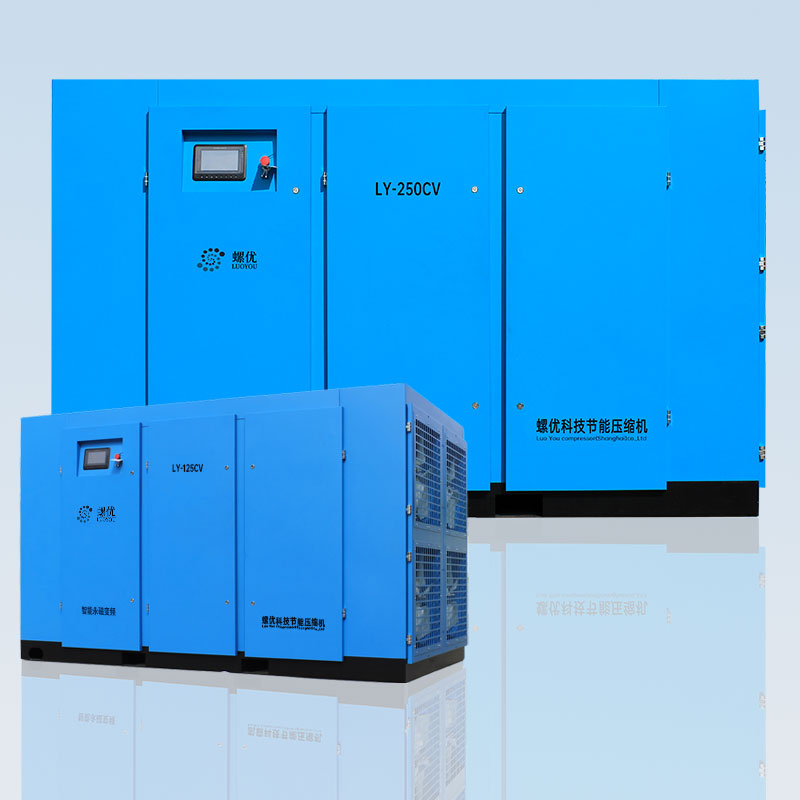
An 8 bar compressor serves as the optimal choice for the vast majority of industrial applications. General manufacturing, packaging facilities, automotive assembly lines, and standard machine shops rarely need elevated pressures. Most commercial pneumatic tools are specifically engineered to operate efficiently at 6 to 7 bar (90 to 100 psi).
To successfully implement an 8 bar system, your facility must meet specific infrastructure prerequisites. You need well-sized, modern piping. Extruded aluminum or smooth copper piping networks work best. They resist internal corrosion, keeping airflow smooth over decades. Black iron pipes eventually rust internally, creating friction that destroys line pressure. Industry best practices recommend maintaining a pressure drop of less than 0.5 bar from the compressor discharge valve to the furthest pneumatic tool.
The business outcomes of selecting an 8 bar machine are highly favorable. You optimize your overall operational expenses immediately. Lower energy consumption directly reduces your facility's carbon footprint. This approach perfectly aligns with lean energy management principles, ensuring you only produce the exact utility grade your processes demand.
Despite the inherent energy penalties, specific operational scenarios completely justify a 10 bar compressor. Some specialized heavy-duty manufacturing equipment strictly dictates high inlet pressures to function correctly.
Legacy facilities also present unique challenges. You might inherit a plant featuring hundreds of meters of long, undersized piping. Ripping out and replacing a massive factory piping network requires significant capital and downtime. A complete piping overhaul might be financially unviable in the short term. In this specific scenario, installing a 10 bar compressor overcomes the aggressive piping pressure drops, keeping production moving.
You must practice smart risk mitigation. If a 10 bar supply is necessary for only one specific process, do not elevate the entire plant network. Evaluate the return on investment of buying a dedicated point-of-use booster compressor. A booster takes standard 7 bar plant air and amplifies it to 10 bar right at the machine's inlet. This lets you run the main plant efficiently at 8 bar while satisfying the outlier machine.
Modern factories rarely consume compressed air at a constant, flat rate. Demand fluctuates wildly as different shifts start, machines cycle, and workers use blow-off tools. Bridging the efficiency gap between these peaks and valleys requires advanced motor technology. This is where a permanent magnet screw air compressor provides immense value.
Traditional fixed-speed compressors handle fluctuating demand poorly. They run fully loaded until they hit a pressure setpoint, then idle (unload) while still consuming up to 40% of their full-load electricity. This load/unload cycle wastes massive amounts of power and creates wide pressure swings across the factory.
Permanent magnet motors offer incredible synergy with Variable Speed Drive (VSD) technology. A VSD controller speeds up or slows down the compressor motor to perfectly match real-time plant demand. It maintains a remarkably tight pressure band. You can set the machine to exactly 7.8 bar, and it will hold that target regardless of how many tools turn on or off. You eliminate the wasteful over-pressurization required by traditional fixed-speed models.
Investing in high-efficiency motor technology acts as a strategic hedge against rising energy costs. Permanent magnet motors maintain ultra-high efficiency even at partial loads. This future-proofs your utility bills, ensuring optimal performance regardless of the specific pressure rating you choose.
Making the final choice requires stepping away from guesswork and relying on hard data. You must evaluate the long-term financial implications of your pressure rating. Use this three-step framework when selecting an 8 bar vs 10 bar air compressor for your next equipment upgrade.
Step 1: Measure, Don't Guess
Never base a six-figure equipment decision on the nameplate of your old compressor. Conduct a baseline system assessment. Hire a professional to perform data logging. They will attach pressure transducers and amp meters to your current system for a full production week. This data reveals your actual minimum acceptable pressure and highlights hidden artificial demand.
Step 2: Calculate Lifecycle Costs
Look past the initial purchase order. Calculate your projected five-year energy expenses based on your local kilowatt-hour rates. Factor in the predicted maintenance costs. An 8 bar machine will almost always show a dramatically lower five-year operating cost compared to a 10 bar machine of the same kW size.
Step 3: Evaluate Alternatives
Weigh the upfront capital cost of fixing your piping against the continuous five-year energy penalty of running a 10 bar machine. Replacing an undersized pipe header might cost $10,000 today, but it could save you $30,000 in electricity over the next five years by allowing you to step down to an 8 bar compressor.
Actionable Next Step: Do not sign a purchase order immediately. Request a comprehensive air audit or a trial data-logging session from a certified compressed air vendor. Let the data dictate your pressure requirements.
The choice between an 8 bar and 10 bar compressor fundamentally represents a choice between operational efficiency and systemic waste. Generating higher pressure requires more energy, accelerates wear, and amplifies expensive air leaks. You should never use elevated compressor pressure to compensate for poor system design or undersized piping.
Default to the lowest possible pressure that guarantees reliable production across your factory floor. When you match the correct pressure rating with modern variable speed technologies, you secure a massive competitive advantage in operational costs.
Stop guessing your pressure requirements. Schedule a professional compressed air system assessment today to pinpoint your exact factory needs, eliminate artificial demand, and calculate your true potential savings.
A: Yes, lowering the internal pressure setpoint on a 10 bar machine saves electrical energy. However, a compressor physically optimized and geared from the factory for 8 bar will always operate more efficiently at that pressure. An 8 bar specific machine outperforms a stepped-down 10 bar unit in overall energy delivery.
A: No. For the exact same motor horsepower or kW rating, increasing the pressure (bar) actually decreases the volume of air delivered (CFM or cubic meters per minute). Compressing air to a higher pressure requires more work, sacrificing total volume output.
A: Industry best practice dictates that the total pressure drop from the compressor discharge valve to the furthest point of use should never exceed 10% of the compressor's total discharge pressure. Ideally, well-designed systems maintain pressure drops under 0.5 bar across the entire network.


