
- Home
- Products
- Hot
- About Us
- Services
- Industry
- Contact
Views: 0 Author: Site Editor Publish Time: 2026-08-19 Origin: Site


Transitioning from oil-sealed to dry vacuum technology is no longer just an environmental initiative. It serves as a critical risk-mitigation strategy. You must prevent product contamination and avoid unplanned downtime. Traditional lubricated units introduce severe risks in high-purity environments. Eliminating oil disposal and vapor backstreaming solves immediate compliance issues. However, specifying the wrong dry equipment introduces serious thermal liabilities. Mechanical wear-part failures also become a major concern. Facility managers often underestimate these new operational dynamics.
This guide provides an engineering-driven framework for your facility. We will help you evaluate different dry mechanisms. You will learn how to match equipment specifications to exact facility requirements. By understanding these technical nuances, you can avoid costly misapplications. You will ensure reliable, long-term operation for your critical processes.
Oil backstreaming occurs naturally in traditional lubricated equipment. Vaporized hydrocarbons travel backward against the gas flow. They enter the process chamber. This contamination ruins sensitive materials instantly. In semiconductor manufacturing, microscopic oil droplets destroy silicon wafer yields. Food packaging lines also suffer heavily. Vacuum-sealed food absorbs trapped vapor. This compromises taste and drastically reduces shelf life. Pharmaceutical freeze-drying relies on absolute purity. Any hydrocarbon presence during lyophilization destroys entire drug batches. These contamination events cost facilities hundreds of thousands of dollars. Upgrading equipment eliminates this specific risk entirely.
Modern industry operates under strict quality standards. ISO 8573-1 Class 0 dictates zero oil vapor tolerance. You cannot achieve this reliably with traditional lubricated units. Exhaust filters capture most droplets. However, they degrade over time. Vapor inevitably escapes into the ambient air. FDA and cGMP guidelines mandate strict environmental controls. Medical device manufacturing and biotechnology sectors require absolute isolation. Implementing a clean vacuum system becomes non-negotiable here. It guarantees audit compliance. It protects both the product and the cleanroom environment from unseen degradation.
Traditional lubricated units hide massive ongoing labor requirements. Maintenance teams spend hours checking fluid levels. They manage hazardous waste disposal. They replace saturated exhaust filters constantly. Moving to dry technology changes this dynamic. You face a higher upfront capital expenditure initially. However, the budget shifts entirely. You stop paying for daily consumable monitoring. You redirect resources toward scheduled mechanical rebuilds. You eliminate hazardous waste handling completely. This operational shift provides highly predictable maintenance timelines. It removes the messy, labor-intensive upkeep associated with fluid-sealed systems.
Engineers categorize dry technologies based on their internal mechanisms. Each design offers a specific performance envelope. You must understand these boundaries. Selecting the wrong mechanism drastically accelerates wear.
| Technology Type | Primary Strengths | Maintenance Focus | Best Application Environments |
|---|---|---|---|
| Scroll | Low noise, zero vibration, highly clean | Tip seal replacement (1-2 years) | Cleanrooms, mass spectrometry, analytical labs |
| Claw | High volume throughput, durable build | Gear lubrication, filter swaps | CNC routing, material handling, packaging |
| Diaphragm | Chemical resistance, easy workbench repair | Membrane and valve replacement | Rotary evaporators, localized lab benches |
Many engineers size equipment based solely on "ultimate vacuum" ratings. This is a common mistake. Ultimate pressure represents a closed-off system test. It shows the lowest pressure achievable under perfect conditions. It rarely reflects real-world performance. You must sustain a specific flow rate at your actual working pressure. A unit might pull down to 0.1 mbar. However, it might lose 80% of its flow capacity at 10 mbar. You must map the flow curve. Ensure the equipment maintains sufficient volume at your target operational level.
Pumping speed dictates how fast you evacuate a chamber. We measure this in Cubic Feet per Minute (CFM) or cubic meters per hour. You must analyze your duty cycle carefully. Continuous loads differ vastly from cyclical loads. Pumping down rapidly every ten seconds stresses the motor. Continuous deep-level operation reduces gas flow. Gas flow helps carry away internal heat. Extended deep-level operation requires robust motor cooling. You must match the speed rating to the precise cycle time of your machinery.
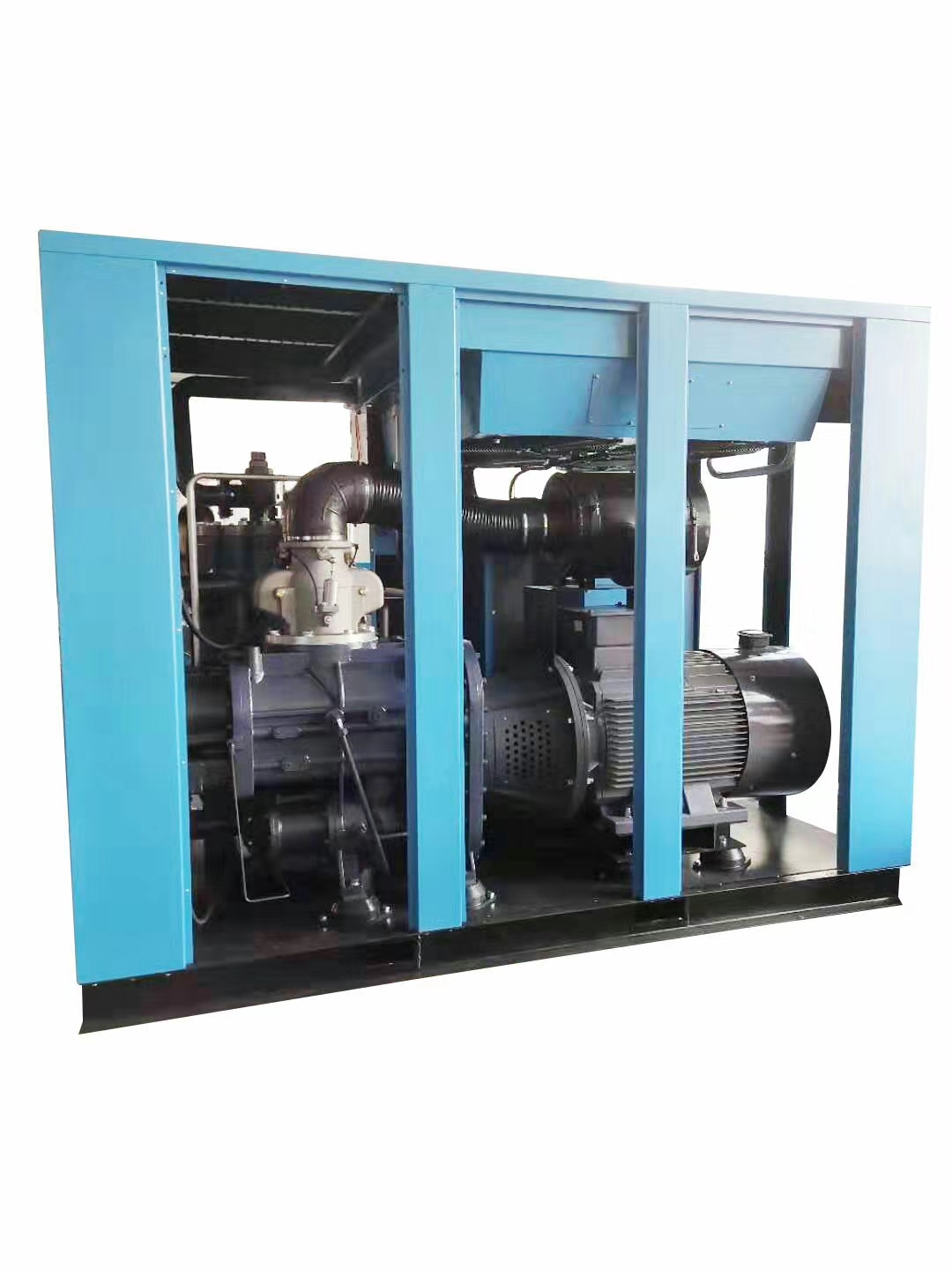
Electrical infrastructure limits your hardware choices. You must audit your facility before purchasing. A localized 120V vacuum pump handles smaller tasks perfectly. We use them frequently in lab-scale integration. They power automated QA stations effortlessly. They plug into standard wall outlets. However, heavy manufacturing demands much more. Operating an industrial vacuum pump requires serious infrastructure. These high-capacity units demand 3-phase electrical power. Running them on inadequate power supplies causes overheating. It trips breakers and damages internal motor windings.
Dry mechanisms generate intense heat. They lack circulating fluids to absorb friction. They compress gas directly, which creates thermal energy. You must manage this heat proactively. Small units require adequate ambient ventilation. You cannot place them inside enclosed, unventilated cabinets. Larger industrial units produce massive thermal loads. They often require dedicated water-cooling loops. Facility managers must route chilled water to the installation site. Failing to manage heat destroys internal bearings quickly.
Vendors often market dry equipment as "maintenance-free." This label is highly misleading. "Oil-free" simply means the process chamber lacks fluid. It does not mean the machine runs forever without attention. You shift your focus from fluid top-offs to mechanical wear parts. Bearings degrade. Tip seals wear down. Internal coatings erode over time. You must plan for these mechanical realities. Ignoring them leads to sudden, catastrophic lock-ups. A proactive maintenance schedule prevents these expensive failures entirely.
The actual pumping chamber remains completely dry. However, the external mechanisms still require lubrication. Industrial claw and screw units use precision timing gears. These gears synchronize the fast-moving rotors. They prevent the metal lobes from colliding. These gears sit in an isolated gearbox. This gearbox utilizes specialized, high-temperature lubricants. Process gas never touches this gear grease. You must drain and replace this specific gear lubricant annually. Failing to maintain gear synchronization destroys the entire pumping mechanism.
Fluid-sealed units act as natural air scrubbers. Incoming dust hits the fluid pool and becomes trapped. The fluid flushes the debris away from tight metal clearances. Dry units lack this natural flushing mechanism. They compress air directly between bare metal surfaces. Ingesting dust causes severe abrasive wear. Highly rated particulate filters become absolutely mandatory. You must install coalescing filters to block moisture. Protecting dry internal tolerances requires strict inlet defense. Skipping inlet filtration is the fastest way to destroy dry equipment.
Proper vacuum pump selection requires a methodical approach. Do not guess your parameters. Follow this engineering framework to ensure optimal integration.
You must understand what you are pumping. Is the gas highly corrosive? Is it laden with sticky particulates? Does it contain heavy water vapor? Cleanroom air allows for standard scroll equipment. Corrosive chemical vapors destroy standard metal quickly. They require PTFE-coated diaphragms or specialized protective plating. Wet applications require built-in gas ballast valves. The gas composition dictates the core technology type immediately.
Calculate your required volume accurately. Determine the precise pump-down time your cycle demands. Identify the target continuous vacuum level. Plot these three metrics on a performance curve graph. Do not size based on peak ultimate pressure. Size based on the flow available at your specific operating pressure. Over-sizing wastes massive amounts of electricity. Under-sizing bottlenecks your entire production line.
Cross-check your physical environment. Measure the available footprint in the mechanical room. Check the ambient temperature limits of the space. Dry units shut down if ambient heat exceeds safety thresholds. Review local noise restrictions in decibels (dB(A)). Ensure your electrical utility matches the motor requirements. Confirm you have chilled water access if specifying a large industrial unit.
Model the equipment lifespan over a strict five-year period. Look beyond the initial purchase price. Calculate the continuous energy consumption required for daily operation. Map out the predictable rebuild kits. Factor in the labor downtime for tip seal replacements. Compare these operational requirements against the lifespan of the equipment. A cheaper initial unit often consumes more electricity and requires faster rebuilds.
An optimized oil free vacuum pump deployment requires careful technical balance. You secure clean operation and regulatory compliance. However, you must respect the harsh realities of industrial mechanical wear. You must manage thermal loads proactively. You must protect tight internal clearances with rigorous inlet filtration. Transitioning away from fluids removes hazardous waste but introduces strict mechanical rebuilding schedules.
Take proactive control of your next installation. Bring your specific flow rates, target pressures, and exact gas compositions to an application engineer. Request a customized performance curve analysis. Matching the right mechanical technology to your specific facility constraints ensures years of reliable, contamination-free production.
A: Direct drop-in replacements are rarely simple. Dry units usually feature a larger physical footprint. They generate different noise profiles and produce significantly higher localized heat. You must evaluate ambient ventilation. You must also adjust your inlet plumbing, as dry units require robust upstream particulate filtration to survive.
A: Servicing intervals depend entirely on process aggressiveness. In clean laboratory environments, tip seals generally last 8,000 to 10,000 operating hours. This equates to roughly one to two years of standard use. Harsher environments degrade seals faster. You must monitor ultimate pressure drops to schedule rebuilds accurately.
A: Dry mechanisms experience higher internal friction since they lack lubricating fluids. However, modern units often use premium high-efficiency motors. They frequently integrate Variable Frequency Drives (VFDs). VFDs match motor speeds exactly to the required flow. This offsets the friction profile, often making them more energy-efficient overall.


