
- Home
- Products
- Hot
- About Us
- Services
- Industry
- Contact
Views: 0 Author: Site Editor Publish Time: 2026-08-15 Origin: Site


Many facility managers invest heavily in top-tier pneumatic machinery expecting flawless performance. They assume these premium machines solve all contamination issues instantly. This belief represents a common, dangerous operational blind spot. Purchasing an advanced machine rarely prevents downstream pneumatic failures on its own. Untreated ambient air continues to cause severe product spoilage in these facilities. The term "oil-free" strictly refers to the compression chamber itself. It does not mean your facility's intake air is pure. Ambient moisture, dust, and environmental aerosols constantly enter the manufacturing process. You must design a downstream treatment setup to handle this daily influx. This configuration needs to meet strict ISO 8573-1 compliance rules for sensitive applications. You should achieve this high standard without over-engineering your plant layout. We will show you how to avoid wasting valuable energy on unnecessary filtration components. Readers will learn the exact steps to match pneumatic components efficiently. You will discover how to evaluate various moisture removal technologies properly. We also cover compliance standards to ensure a highly reliable layout.
Many facility engineers face a frustrating business problem. They buy a premium oil free air compressor to ensure total product safety. They wrongly assume this machine eliminates all downstream equipment needs. This misconception leads directly to disastrous operational failures. A high-end compressor acts purely as a highly efficient air pump. It does not magically purify the atmosphere around it.
The contamination reality goes far beyond lubricating fluids. Ambient air contains high levels of natural water vapor. It also holds microscopic atmospheric dirt. Microorganisms float continuously through the intake valves of the machinery. Compression forces these airborne elements into a dense, destructive mixture. The machine concentrates ambient humidity aggressively during its cycle. The air cools down as it travels downstream. Liquid water drops out of the airstream rapidly. A standard industrial compressor can generate dozens of gallons of water daily.
This excess moisture creates massive financial impacts. Unplanned downtime skyrockets across the factory floor. Carbon steel pipes develop heavy rust internally due to constant water exposure. Rust flakes travel directly into sensitive pneumatic valves. The abrasive grit washes out factory-applied lubricants inside your cylinders. Food and pharmaceutical plants face even worse consequences. Moisture and airborne bacteria cause entire production batches to fail strict quality checks. You lose raw materials and valuable production time.
You must establish strict success criteria for your facility. Achieving a verifiable ISO 8573-1 purity class is non-negotiable. You must target all three major contaminant categories. These include atmospheric dirt, liquid water, and hydrocarbon aerosols. Focusing solely on the absence of compressor lubricant is never enough. You need comprehensive downstream purification to protect your investment.
Evaluating and specifying the right compressed air dryer determines your system's overall reliability. You must compare primary moisture removal technologies based on specific target outcomes. The compressor type does not dictate your choice. Your end-product requirements dictate this vital decision. You must understand the specific capabilities of each technology.
Refrigerated dryers offer excellent baseline protection for most plants. They work best for general manufacturing environments. They use advanced cooling circuits to drop out liquid water. These units typically achieve a pressure dew point (PDP) of +3°C (+38°F). This effectively prevents liquid water formation indoors. They remain highly cost-effective and relatively simple to maintain year-round.
Desiccant dryers provide absolute dry environments. Certain industrial applications mandate these robust systems. You must use them for outdoor piping in freezing climates. Electronics manufacturing and pharmaceutical processing also require them absolutely. Desiccant beds adsorb moisture chemically using porous beads. They achieve extremely low PDP levels between -40°C and -70°C. This extreme dryness prevents any possibility of condensation.
Heat of Compression (HOC) dryers offer a highly efficient alternative. These specialized units suit rotary screw and centrifugal machines perfectly. Mechanical compression generates intense heat naturally. Traditional systems waste this thermal energy through cooling fans. HOC designs utilize this waste heat for desiccant bed regeneration. This brilliant recycling process eliminates costly electrical heating entirely.
You must weigh multiple evaluation dimensions during your selection. Capital expenditure (CAPEX) matters significantly upfront. However, lifetime electrical consumption matters far more. Standard desiccant models waste purge air continually during regeneration cycles. Zero-purge HOC systems eliminate this costly air loss entirely. They represent the ultimate upgrade for large-scale operations.
| Technology Type | Typical Pressure Dew Point (PDP) | Primary Benefit | Best Application Environment |
|---|---|---|---|
| Refrigerated | +3°C / +38°F | Low initial cost, simple maintenance | General manufacturing, indoor facilities |
| Desiccant (Standard) | -40°C to -70°C | Absolute moisture removal | Outdoor piping, electronics, pharmaceuticals |
| Heat of Compression (HOC) | -40°C or better | Zero energy waste for regeneration | Large centrifugal/rotary screw installations |
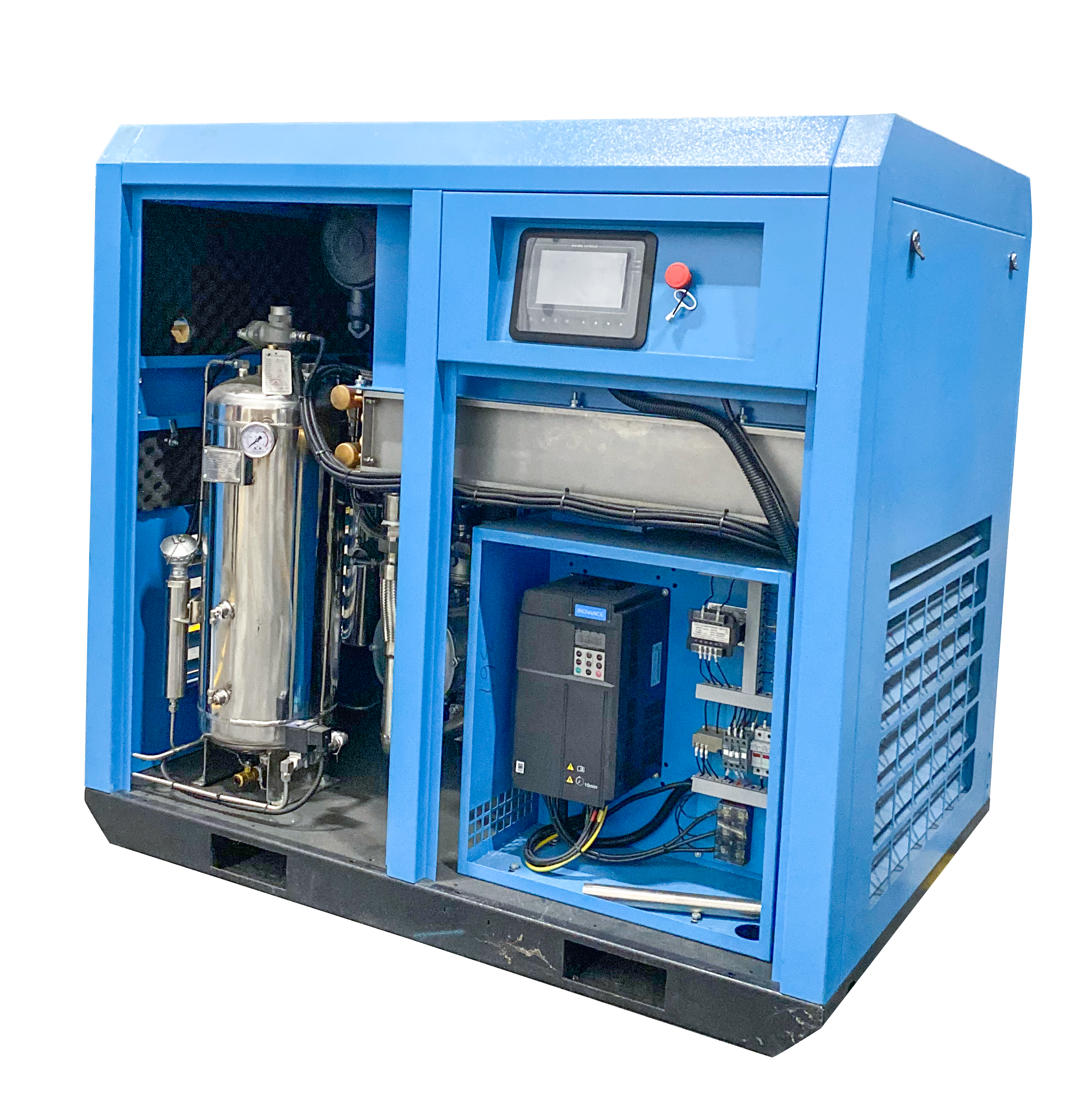
You must adapt industrial filtration specifically for these pure manufacturing environments. Understanding exactly what to eliminate is crucial. Standard oil-coalescing models dominate lubricated systems worldwide. They remove aerosolized lubricants effectively in those legacy setups. However, they are completely redundant here. You must remove them from your current layout. Removing these unnecessary vessels saves up to 3 psi in pressure drops. This reduction lowers your electrical consumption drastically over the operational lifespan.
Understanding what to keep is equally important for plant safety. You often need to upgrade certain vessels for better performance. Particulate filters remain strictly required in all modern layouts. You must install them downstream of any desiccant towers. They catch fine desiccant dust effectively. They prevent this abrasive ceramic dust from entering clean production areas. This step protects expensive robotic valves from premature wear.
Sterile and biological filters serve a critical role. Food processing, beverage bottling, and medical packaging demand them constantly. These delicate elements capture dangerous airborne bacteria reliably. They require strict maintenance schedules to remain effective. Factory personnel must sterilize them regularly using steam. Neglecting these schedules ruins product integrity rapidly.
We must embrace an evidence-oriented truth regarding purification. Filter micron ratings must match exact operational needs precisely. Find the most sensitive pneumatic node in your facility. Identify its specific ISO class requirement. Match your micron ratings to this specific requirement closely. Avoid applying a blanket standard across the entire plant. Overspecifying these vessels creates needless energy waste through restricted flow.
Navigating modern industry standards requires clear definitions. Extensive confusion surrounds the term "Class 0" continuously. ISO 8573-1 Class 0 means zero added liquid oil or vapor from the machine. It guarantees a highly clean internal compression process. It does not guarantee clean delivery to the factory floor. Facility owners often mistake this equipment rating for a holistic plant rating.
We must clarify another confusing phrase common in the industry. "Technically Oil-Free" usually refers to standard lubricated machines. Facilities add heavy purification layers to these older machines. They attempt to simulate Class 1 purity levels artificially. This approach carries constant contamination risks. If a single vessel fails, fluid floods the entire piping network.
Even genuine Class 0 machines require complete clean air treatment. Ambient intake air causes this strict necessity. Atmospheric air contains heavy hydrocarbon vapors continuously. Industrial zones generate significant exhaust fumes from trucks and nearby factories. Your equipment ingests these invisible vapors constantly. You may still require an active carbon tower. Site location determines this specific requirement. A facility located near a major highway faces higher risks than a rural plant.
Compliance realities demand rigorous proof. Quality auditors rarely accept equipment brochures as proof of purity. You must discuss the necessity of regular system audits. Install continuous dew point monitoring sensors across your network. These digital sensors prove continuous compliance to auditors easily. They alert your maintenance team instantly if moisture levels rise unexpectedly. Proactive monitoring prevents catastrophic batch rejections.
Designing a high-purity setup involves significant implementation risks. Piping degradation remains a massive threat to new installations. Running dry, untreated air through old pipes is highly dangerous. Galvanized or carbon steel pipes hold oxidized layers internally. The hyper-dry airflow strips these existing rust layers quickly. The pressure pushes this destructive rust directly downstream. It destroys pneumatic tooling rapidly. You must evaluate existing infrastructure before upgrading.
Oversizing components introduces another major operational risk. Many engineers size their moisture removal systems based on compressor horsepower. This represents a common, costly mistake. You must size them based on actual peak CFM flow. Oversized units lead to poor operational efficiency. They consume excess power unnecessarily. Undersized units fail to handle peak humidity loads during summer months.
Use a clear shortlisting logic to build your final oil free compressed air system. Follow these actionable next steps to ensure success.
This logical sequence protects your investment permanently. You ensure maximum flow efficiency throughout the facility. You also eliminate the guesswork from industrial procurement.
Let us review the core strategies for successful layout design. The compressor serves only as the foundational engine. The downstream components serve as the actual delivery mechanism for quality. Both sides must function in perfect harmony to succeed. Neglecting the delivery mechanism guarantees operational failure.
Strategic selection of moisture and particulate removal technology drives massive energy efficiency. It delivers tremendous energy savings daily. This precise matching process ensures robust compliance protection. You eliminate regulatory failures completely.
You should request a comprehensive system audit immediately. Consult an engineering specialist to map your exact dew point requirements. Let them help you finalize your purification strategy today. Proper planning guarantees decades of reliable performance.
A: Generally, no. Standard installations only require dry particulate filtration. Removing coalescing models eliminates unnecessary pressure drops across your network. You only need one if your ambient intake is heavily polluted with external industrial hydrocarbons. Always test your ambient air quality first.
A: Yes, you can use your existing unit safely. The CFM capacity must match the new machine perfectly. The dew point requirement must also remain unchanged. However, you must evaluate all legacy piping. You must ensure no old lubricant residue remains inside the distribution network.
A: High-purity air is exceptionally dry. It completely lacks natural lubricity. Your purification equipment successfully removes damaging water and dust. However, some tools specifically require lubrication to function properly. You must install point-of-use lubricators directly downstream for these specific tools.


